
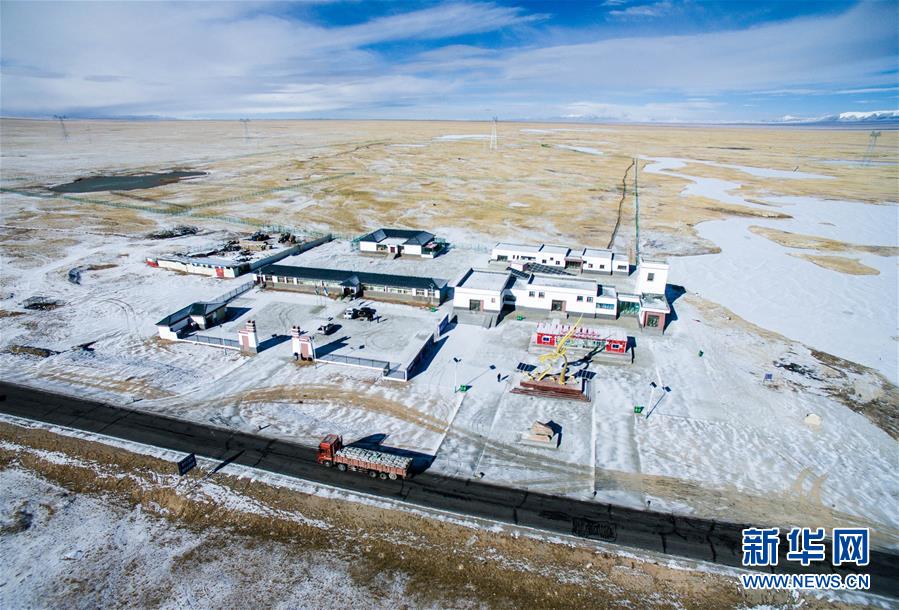
Hoh Xil is not a name suited to being spoken lightly. It is too high, too cold, too vast, and too silent. When a person truly approaches it, what first appears is often not legend but a road: beside the road are mountains thinned by wind, outside the window endless gravel flats, and in the distance an occasional herd of Tibetan antelopes flashing past, like breath suddenly rising from the gray-brown earth.
Qinghai Hoh Xil, China / from the 1990s to the present | Tibetan antelopes, mountain patrols, Sonam Dargye, and the road of protection in the no-man’s-land
1. People who entered the wilderness
If this article is imagined as a road, its beginning should not be on a cinema screen, nor before a monument, but inside a vehicle slowly driving into the depths of the plateau. There are few people in the cabin, and they speak little. The altitude makes every breath distinct; the smell of fuel, leather clothing, dry food, and cold air mix together. Outside the window there are no city lights to comfort people, no shade, no walls, only the earth retreating again and again into the distance like an old sheet of paper without an edge.
A recorder arriving here for the first time can easily mistake this for a ‘no-man’s-land.’ Yet Hoh Xil has never truly been empty. It has Tibetan antelopes, wild yaks, Tibetan wild asses, wolves, brown bears, and countless small lives without names; it has female antelopes migrating here every year to give birth; and it once had gold diggers, poachers, transporters, and receivers of stolen goods driven by profit. So-called emptiness only means that the daily order of human society becomes thin here. Roads, law, food, communication, and rescue all become distant. In such a place, good and evil no longer hide inside complicated urban relations; they stand nakedly exposed.
From the late 1980s into the 1990s, expensive products made from Tibetan antelope underfur on the international market stimulated poaching. In the wilderness appeared vehicle lights, gunshots, skins, and transactions. Pregnant antelopes, migrating antelopes, antelopes that had just finished running, were surrounded under strong light, shot, and skinned. Their lives were compressed into goods that could be folded, transported, and sold. In distant places, each skin might be only raw material for a luxury object; in Hoh Xil it meant a fallen body, the interruption of a birthing season, and blood breaking the quiet beside a lake that should have been still.
It was against this background that Sonam Dargye entered Hoh Xil. He was not born as a mythic figure. He was born, studied, worked, had family, illness, and fatigue, and he faced the reality a grassroots cadre had to face: insufficient funds, insufficient equipment, an immature system, while destruction had already arrived first. Public materials record that when he first entered Hoh Xil, his work also included combating illegal gold mining; later, he gradually turned his attention toward wildlife protection. That turn matters because it was not a slogan-like awakening, but a person being pushed there little by little by facts after seeing bodies, skins, and damaged breeding grounds at the scene.
2. The calving ground of the Tibetan antelope
On a map, Hoh Xil is a large high-altitude land in the northeastern Qinghai-Tibet Plateau. UNESCO’s description of Qinghai Hoh Xil emphasizes that it preserves important plateau ecosystems and Tibetan antelope migration routes. For Tibetan antelopes, this is not an abstract ‘habitat,’ but a life road that must be completed every year.
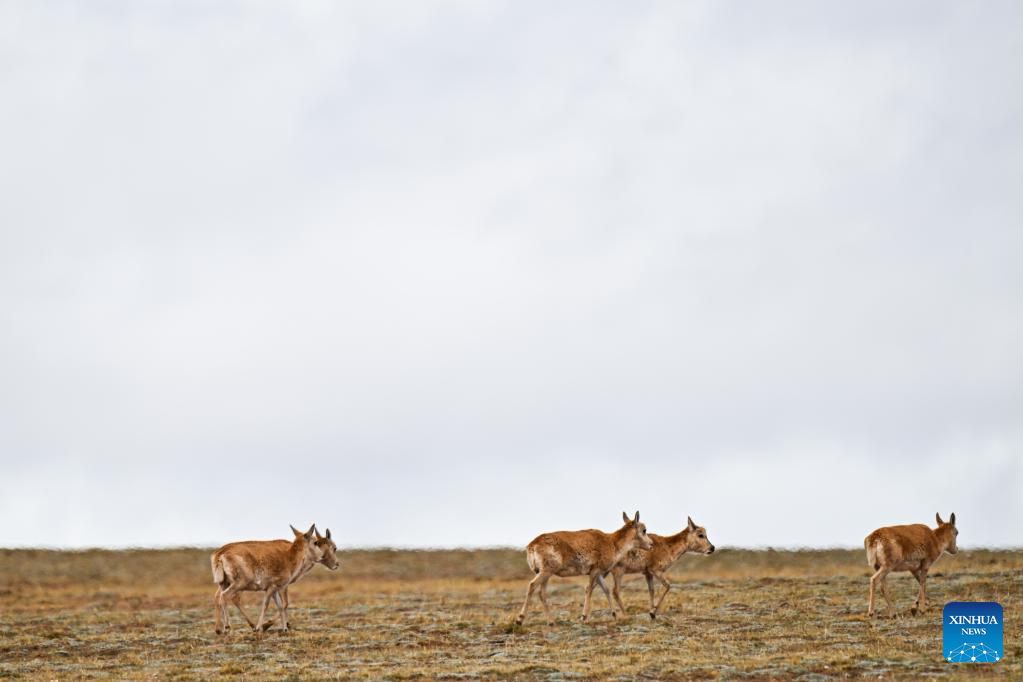
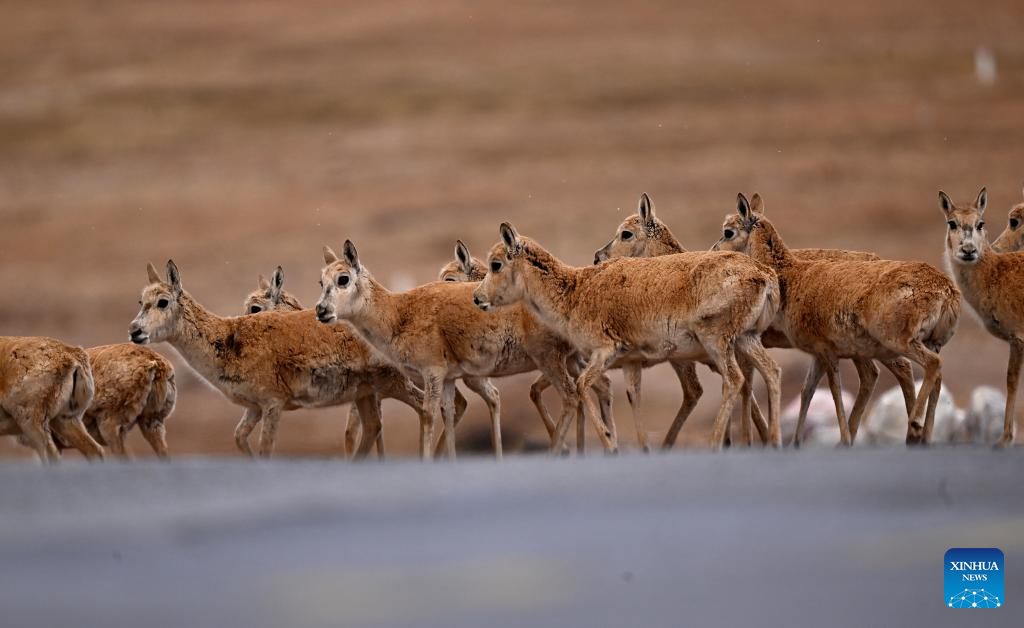
Around May each year, pregnant female Tibetan antelopes begin migrating toward the Zonag Lake area. In recent reports, Xinhua has called Zonag Lake the ‘delivery room’ of the Tibetan antelope: mothers arrive between May and July, give birth there, and around August leave with their newborn lives. An outsider may see only a group of animals crossing the road; a patroller sees an entire species entrusting its future to this wilderness.
The word ‘delivery room’ is gentle, but Hoh Xil’s delivery room is not soft. The wind is strong, nights are cold, oxygen is thin, and roads are long. Newborn calves must stand quickly and keep up with their mothers. Along the migration route are predators, weather, roads, and once the most terrifying danger: human killing. Today, when patrollers temporarily stop vehicles to let herds cross the road, the gesture appears simple, but it contains decades of cost: people died here, people guarded here for years, people spent their youth in protection stations and on patrol lines, and only then did vehicles learn to stop, people learn to wait, and herds become able to pass.
3. Before the gunfire
Documentary writing must not turn a person into a statue who knew the ending from the start. Sonam Dargye certainly did not know how later generations would remember him. Each time he entered the mountains, he first faced concrete questions: could the vehicle still run, was there enough fuel, would team members suffer altitude sickness, were there poaching gangs ahead, how should captured people be escorted, how should the injured be rescued, and where could they shelter from the wind at night?
One detail in public materials is unforgettable: when he first entered Hoh Xil, he carried books about mineral development; later, the books in his pocket became lists of endangered species. This change is not like a grand declaration, yet it is more powerful than one. It shows that a person was changed by the scene. He may first have come to manage resources, but later he saw life standing behind the word ‘resources.’ Fallen Tibetan antelopes were not numbers, not ‘ecological assets,’ not loss items in a report. They had once run, once lowered their heads to graze, once protected calves beside them in the wind.
In that era, entering Hoh Xil to patrol was not only arduous, but dangerous. Poachers were not empty-handed. They had guns, vehicles, people familiar with routes, chains of profit, and the psychology of taking desperate risks in the no-man’s-land. The patrol teams, however, had very limited equipment and institutional support. In a sense, early protection in Hoh Xil was not the operation of a complete machine, but some people pushing themselves first into places where the machine had not yet arrived. With insufficient vehicles, insufficient guns, and insufficient supplies, they faced violence and profit that had already taken shape.
This is also the most painful part of the Hoh Xil story: protection often arrives later than destruction. To harm an animal may require only one bullet, one chase, one knife; to build a protection mechanism requires institutions, funds, personnel, public understanding, and long time. The tragedy and grandeur of Sonam Dargye and later patrollers came precisely from this time gap. They stood at the edge not yet fully covered by law and order, and first filled the breach with human will.
4. The twelfth patrol into the mountains
In January 1994, Sonam Dargye entered the Hoh Xil no-man’s-land for his twelfth patrol. Public records say that on January 8 he set out from Golmud. Over the following days, the team investigated illegal sand-fox hunting and illegal gold-mining sites, and seized guns, bullets, poison, and skins. Around January 16, near the junction of Qinghai, Tibet, and Xinjiang, the team captured two groups of poachers and seized vehicles and large quantities of Tibetan antelope skins.
When these numbers are written in documents, they feel cold: how many guns, how many bullets, how many skins, how many vehicles. But if the lens moves closer, they are not cold at all. A gun meant a patroller might die; a bullet meant every stop at night required alertness; a skin meant a Tibetan antelope had been stripped from its body; piles of skins on vehicles meant poaching was not a momentary impulse, but a business already calculated.
According to public records, one of the captured people was in critical physical condition, and Sonam Dargye arranged for personnel to take him to a hospital overnight. This detail should not be passed over lightly. A person pursuing poachers was not facing the pure enemy-and-friend poles of literature, but the complexity of the real world: offenders were still human beings, and the injured still needed treatment; yet the animals they had harmed could no longer be sent to a hospital. In the wilderness there is no perfect moral posture, only choices made in each concrete moment.
The later gunfight and sacrifice have become part of Hoh Xil’s public memory. A 2020 Xinhua retrospective said that on the night of January 18, 1994, Sonam Dargye and four teammates captured 20 poachers in Hoh Xil, seized seven vehicles and more than 1,800 Tibetan antelope skins, and were attacked near Sun Lake during the escort. The report also wrote that he confronted armed poachers in the no-man’s-land, shed his last drop of blood, and was shaped by minus-40-degree wind and snow into an ice sculpture. This detail remains deeply unsettling because it turns ‘sacrifice’ back from an abstract word into a real person: a 40-year-old man standing before wind, snow, and gun muzzles, behind him seized skins, damaged breeding grounds, an incomplete protection system, and also a road that more and more people would later walk.
This was not a film scene, nor rhetoric added to make the article seem tragic. It comes from the sacrifice scene repeatedly recorded in public reports: poaching gangs, guns, vehicles, Tibetan antelope skins, a sudden counterattack during escort, and the extreme cold of the wilderness night. Many years later, when people offer khata scarves and flowers before protection stations, monuments, and statues, what they remember is not a simplified symbol, but the person who reached the scene before the system had fully arrived.
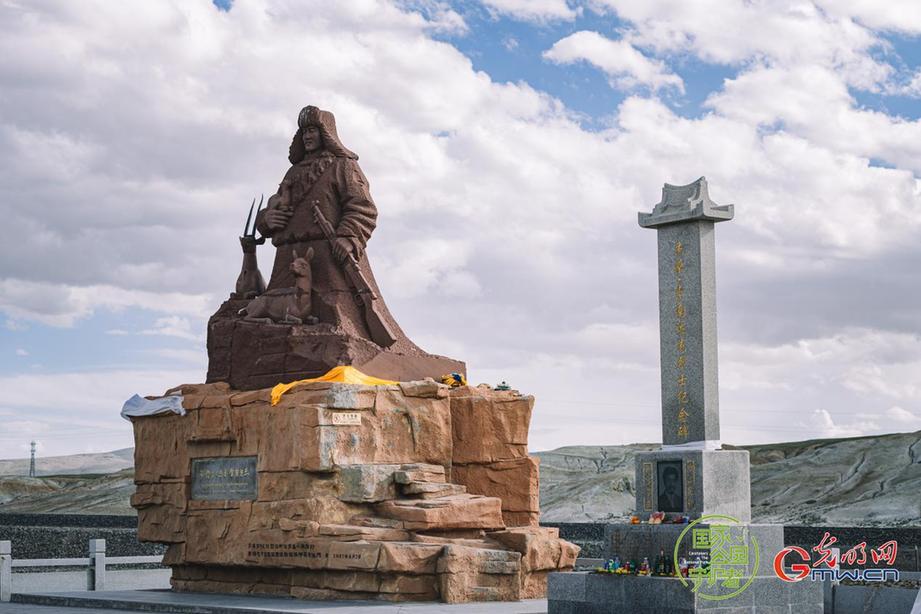
We cannot write death beautifully. Death is not beautiful. It means family losing a loved one, companions losing a partner, and a place losing one of the earliest people who stood up for it. Precisely because death is not beautiful, remembrance cannot be written lightly. Sonam Dargye’s meaning is not that he was shaped into a fearless hero, but that as a person who could be tired, ill, uncertain, and burdened by judgment, he still chose to keep walking inward.
5. Those who came after in wind and snow
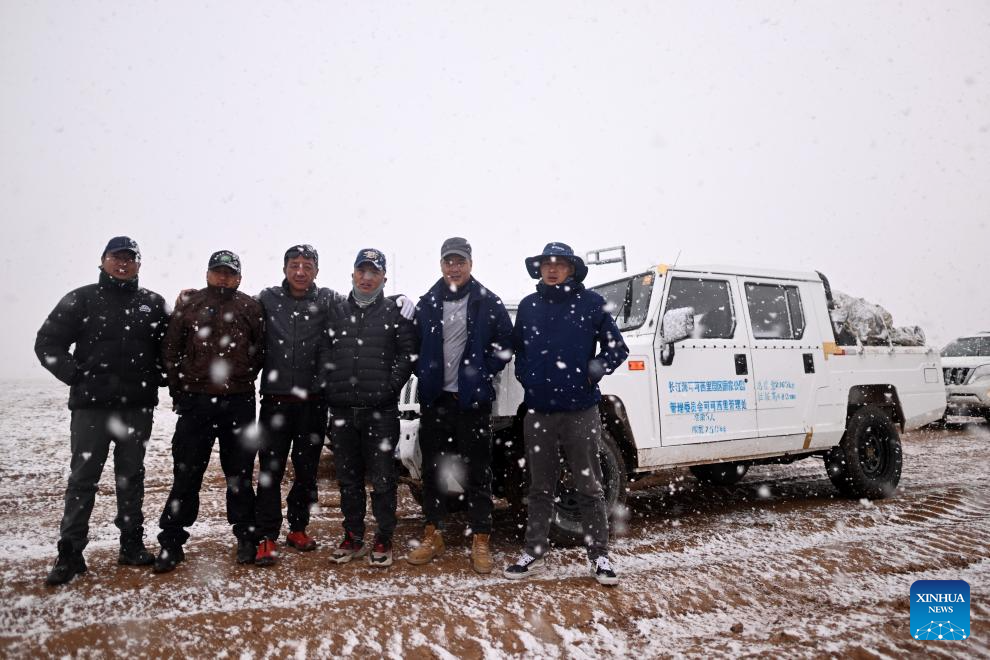
After Sonam Dargye’s death, Hoh Xil’s story did not end. Later protection stations, mountain patrol teams, volunteers, and management agencies continued entering this land. A 2023 Xinhua photo report mentioned that Hoh Xil had established multiple protection stations, with small patrols about once every three days and large patrols at least once a month, and three generations of patrollers continuing to guard the land. Behind those figures are many ordinary days: checking roads, observing animals, inspecting lake areas, rescuing calves, recording traces, repairing vehicles, enduring altitude sickness, waiting for signal, and reporting safety to families far away.
Patrol is not travel. Travelers may feel shocked by Hoh Xil, photograph the vast sky and distant animals, then leave. Patrollers cannot merely be shocked. They must judge how deeply wheels are stuck, know where illegal mining traces may appear, distinguish whether distant lights are abnormal at night, and care for teammates’ bodies on the plateau. They face not a landscape photograph, but a long-term responsibility.
Inside the protection stations, another Hoh Xil also appears. There are not only gun checks, checkpoints, and pursuit, but also rescued calves. Young Tibetan antelopes need milk, warmth, observation, and people to make their hands gentle and their voices low. The image of a patroller kneeling to feed a calf is as important as the image of chasing poachers. The former shows protection is not only anger; the latter shows anger must become action. Without anger, cruelty is let go lightly; without care, protection becomes an empty posture.
6. The film brought the wilderness to more people
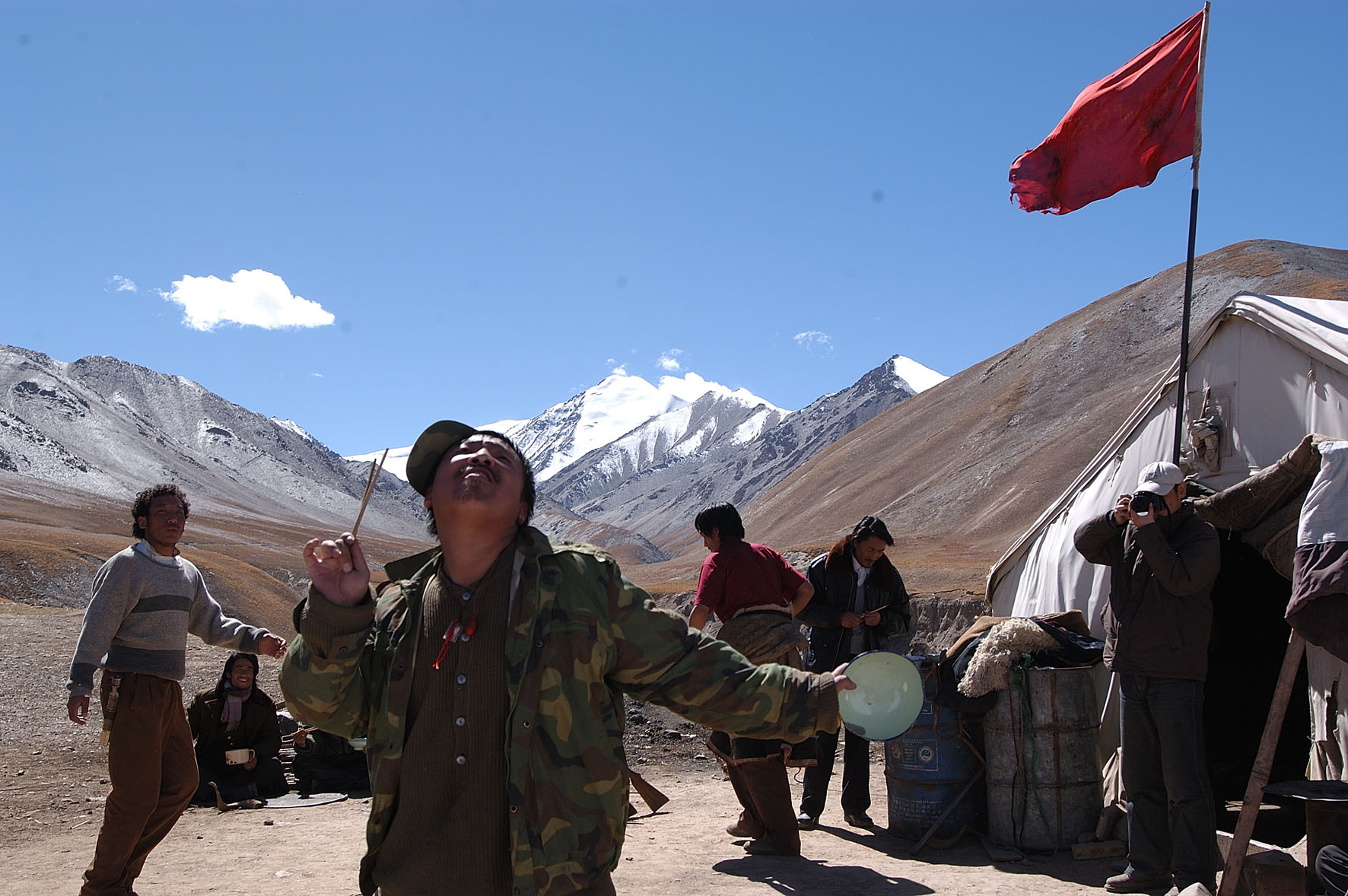
Many people first truly became aware of Hoh Xil through Lu Chuan’s film Kekexili. The film is not the historical scene itself, but it brought a situation before viewers: mountain patrol teams pursuing poachers in an extreme environment, poverty, huge profit, death, conviction, and human dignity entangled together. Trigon-film’s film page also explains that the film follows a journalist entering Hoh Xil with a patrol team, tracking poaching and the remains of Tibetan antelopes.
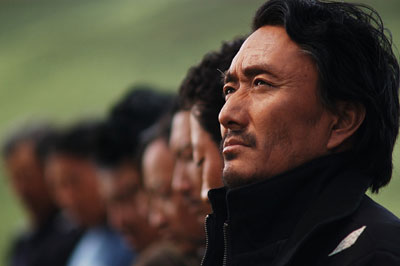
When this site uses film stills, the boundary must be kept clear: they are cinematic reenactments, not the scene of Sonam Dargye’s sacrifice, and not photographs from any specific real poaching scene. Yet cinematic reenactment still has public value. Many people may never finish reading a reserve chronology or look through case files one by one, but may be struck by a film’s silent wilderness, tired human faces, skinned remains, and irreversible deaths. Art cannot replace fact, but sometimes it can bring fact to more people’s hearts.
Literary nonfiction about Hoh Xil should also keep this boundary. We may write about wind and snow, headlights, human silence, and the fragility of Tibetan antelopes crossing roads, but we cannot write uncertain details as confirmed facts. Documentary literature does not fabricate emotion; it allows readers, upon a verifiable frame, to feel again the temperature of fact itself.
7. From gunfire to waiting
Today Hoh Xil is no longer described only by the word ‘poaching.’ UNESCO records its high-altitude ecological value as a World Natural Heritage site, and Xinhua continues reporting on Tibetan antelope migration, protection-station operations, and patrollers’ daily work. A 2023 Xinhua report mentioned that the number of Tibetan antelopes in Hoh Xil had grown from fewer than 20,000 in the 1980s to more than 70,000. This number is certainly encouraging, but it should not make us think the story has ended easily.
A species’ recovery is a long repayment. The Tibetan antelopes that fell will not return; Sonam Dargye will not return; the youth lost by many unnamed patrollers will not return. Ecological protection is often presented in numbers, but its cost is paid by concrete lives. The number ‘more than 70,000’ is not only an achievement of protection, but also a late answer to past harm.
The most moving image may not be an arrest, a gunfight, or a memorial ceremony, but a certain migration season when vehicles stop, people stand beside the road, and herds slowly cross. At that moment, human speed temporarily yields to an animal road. Modern traffic, tourism, engineering, and daily life all pause for a moment, allowing pregnant mothers and newborn calves to pass first. This action is small, yet it is like a practice of civilization: we finally learn to admit that at certain moments, the world does not exist only for human haste.
8. Why write this as literary nonfiction
This site places this article in ‘Ecological Chronicles’ not to turn Hoh Xil into a distant heroic legend. Distant legends are easy to admire and easy to forget. What we want more is to preserve a road that people can approach again: from market desire to poaching, from poaching to mountain patrol, from sacrifice to protection station, and from protection station to today’s migration escort.
Along this road there is human darkness: killing for profit, chasing for skins, turning the wilderness into a slaughterhouse for distant luxury goods. There is also the best in humanity: compassion, hatred of cruelty, responsibility, self-sacrifice, and a serious regard for lives that cannot speak human language. Hoh Xil’s power lies here. It does not simply tell us that ‘nature is beautiful,’ but asks us: when beauty is harmed, who is willing to stand up? When law is still on the road, who first places the body in danger? When a species cannot testify for itself, who leaves testimony for them?
If many years from now someone treats Hoh Xil only as a travel destination, a film title, or a World Heritage label, this record should at least preserve another layer of meaning: there were gunshots here, skins here, mountain patrollers who could not return home; there were also calves lifted into human arms, vehicles stopping for migration, and protection-station lights in wind and snow. The wilderness is not naturally merciful. Today’s quiet was won for it by people.
The wind will still blow in Hoh Xil. It will pass the Sonam Dargye Protection Station, pass Zonag Lake, and pass the roads Tibetan antelopes must cross every year. Wind does not keep accounts for humans, so humans must remember for themselves. Remember the animals that were harmed, and remember the people who left their bodies in the wilderness. Remembering is not to remain inside sorrow, but to let those who come later know: when life is treated as merchandise, someone must say no; when the weak cannot speak, someone must walk into the wind and snow.
9. Before the system arrived
When later generations look back on Hoh Xil, it is easy to see everything as natural: the nature reserve would be established, protection stations would appear, patrol routes would become fixed, Tibetan antelope numbers would recover, and World Heritage recognition would come. But standing in the wilderness of the 1990s, none of these later things appeared inevitable. Many things still had no name, no stable funding, no sufficient equipment, no mature enforcement interface, and no public attention as broad as today’s. Protection often first appeared in a clumsy, difficult, even rough-edged form.
This is also something that cannot be avoided when writing Hoh Xil: early protection was not always neat, standardized, or perfect. When people confront huge profit in the wilderness, reality can easily drag them into disorder. Where funds come from, how seized goods are handled, how personnel are restrained, how local interests are coordinated, which acts belong to proper enforcement and which cross boundaries — these questions cannot be solved by shouting slogans at a desk. Precisely because of this, Sonam Dargye’s sacrifice and the later gradual construction of a protection system should not be written as a simple victory, but as the process by which China’s ecological protection searched for institutions through pain.
If poachers turned Hoh Xil into a place without effective rules, protectors had to do more than capture a single group. They had to bring rules back there. Rules are not cold words. They mean Tibetan antelopes cannot be chased and killed at will, vehicles on roads must yield for migration, protection stations must be staffed, and an injured calf found in the wilderness will not become only a small black point on the plateau. Only when institutions land in these concrete scenes do they truly possess life.
10. The light of the protection station
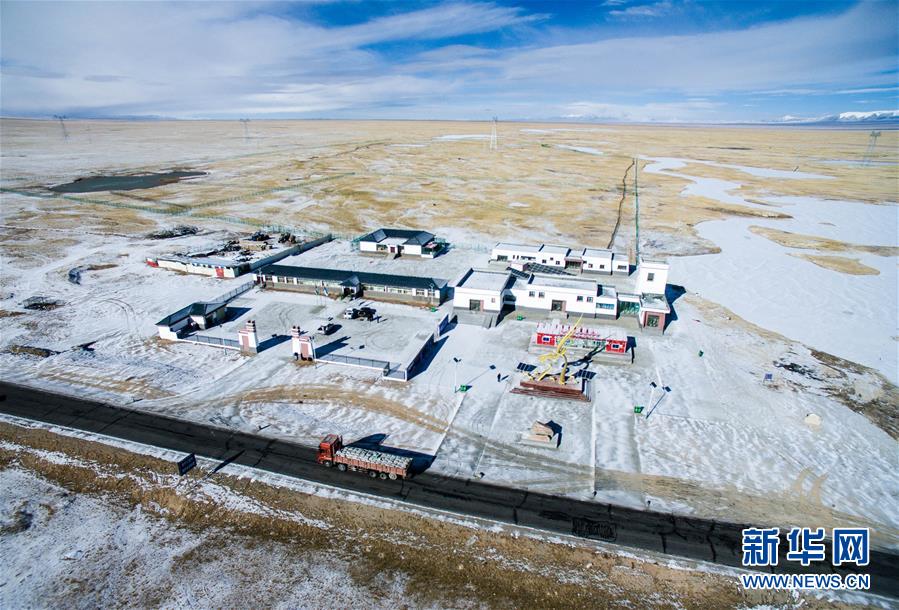
In a place like Hoh Xil, a protection station can sometimes be like a very small light. It cannot illuminate the whole wilderness, but it can tell a lost, injured, or exhausted person: someone is here. Xinhua’s 2017 report on the Sonam Dargye Protection Station recorded this site named after the sacrificed protector. It is both a practical facility beside a transport line and part of public memory. Each time someone stops before this name, they are reminded that Hoh Xil’s quiet was not naturally obtained.
There is daily life in a protection station. Daily life is often less thrilling than a story of sacrifice, but it explains more clearly why protection is difficult. Pots must be heated, vehicles repaired, patrol records written, passing vehicles reminded, animal conditions observed, and bad weather waited out. A person who stays in such a place long enough will understand that grand words finally fall into repeated labor. Protection is not only rushing toward danger on a certain day; it is also setting out as usual on countless mornings without applause.
The participation of volunteers and later generations prevents Sonam Dargye’s story from stopping at personal sacrifice. If one person’s death brings only commemoration, it remains too lonely. If it can bring more people to the scene, bring institutions, stations, patrols, and public awareness, then it truly becomes a road. Hoh Xil’s protection history extends from one person’s name to teams, agencies, volunteer actions, media reports, and ordinary people’s shared memory.
11. Distant shawls and nearby bodies
The most difficult part of the Hoh Xil story is the distance between harm and consumption. Killing happened deep on the plateau, while consumption happened in distant cities; gunshots rang out in the no-man’s-land, while profit flowed through market chains. Buyers and sellers did not need to see a mother antelope fall, did not need to see a calf lose its mother, did not need to smell the blood after skinning. What they faced might only be a soft, expensive, packaged object.
Literary nonfiction has the duty to draw that distance close again. It must let readers know that so-called luxury sometimes begins not with beauty, but with a life being taken. One of humanity’s most dangerous abilities is to process suffering into goods where suffering can no longer be seen; the meaning of record is precisely to make the covered pain visible again. Hoh Xil is not a story about ‘wildlife resources.’ It is first a story about how life was overtaken by distant desire, and how some people desperately tried to stop it.
In this sense, Tibetan antelopes are not a silent background. They are the center of the story. Sonam Dargye, the mountain patrol teams, protection stations, film, World Heritage recognition — all human actions should finally return to this point: those animals should continue running, should give birth to calves in the calving ground, should be waited for on migration routes, rather than being stopped by lights, targeted by guns, and converted by markets into prices.
12. The herd passing today
Today, when a herd of Tibetan antelopes crosses a road, many young people may see only a short video: cars have stopped, a patroller stands aside, animals come from the distance, their bodies light and quick like wind skimming close to the ground. The video is short and ends in a few dozen seconds. But behind those seconds is a long background of decades.
There are the gunshots of January 1994, skins seized in the no-man’s-land, the first protection stations, patrollers struggling forward in snow, rescued calves slowly fed to strength, the film carrying the story to broader audiences, and the later continuous improvement of the protection system. The ‘yielding’ in the short video is not a momentary kindness, but the result of a society gradually learning to include non-human lives in its order.
This change does not mean humanity has fully learned humility. Roads still cut through migration lines, tourism may still bring pressure, climate and environmental changes may still alter animals’ situations, and markets will always search for new gaps. The hope Hoh Xil gives us is not that ‘the problem has ended,’ but proof that when people are willing to admit mistakes, pay costs, build institutions, and keep watch, a place once harmed may slowly recover its breath.
13. For those who come later
Every generation will meet its own Hoh Xil. It may not be that wilderness on the Qinghai Plateau. It may be a polluted river, a trapped wetland, a group of animals turned into trade, or a cruelty that most people treat as a small matter. The real question is never only ‘what happened there,’ but whether, after knowing what happened there, we are willing to change our own position.
Sonam Dargye’s position was to stand before danger. The patrollers’ position is to stand inside long repeated responsibility. The recorder’s position is to stand beside facts and prevent pain from being diluted by time. The ordinary person’s position may be to refuse purchase, share reliable information, support protection action, respect migration routes, or at least lift the foot from the accelerator when seeing a herd cross.
Literary nonfiction should not only make people cry. Crying is too easy, and returning unchanged after tears is also too easy. A good record should leave in the heart a slightly inconvenient sense of responsibility: next time we hear Hoh Xil, we should think not only of vastness and film, but also of lives taken; not only of heroes, but also of why institutions must not always let heroes die first; not only of a distant wilderness, but also of how every daily choice in our lives connects with faraway places.
The wind of Hoh Xil still blows. It blows past the Sonam Dargye Protection Station, and past the calves born today. Wind does not explain history; wind only passes. Explanation and memory are human responsibilities. We leave this article here so that future readers who open the page will know: a group of animals was once chased and killed here, and a group of people chose to chase after that killing and stop it. The former is the shadow of humanity; the latter is its light. Both must be remembered.
14. Do not romanticize sacrifice
Finally, a less stirring sentence must be added: do not romanticize sacrifice. If a society always relies on a few people to fill the lateness of institutions with their lives, that is not glory but debt. Sonam Dargye deserves reverence, but even more he deserves response. The real response is not for later generations to repeatedly praise his courage, but to ensure that later patrollers do not have to face profit and violence in the same isolated, deprived, and dangerous way.
Therefore, Hoh Xil’s literary nonfiction cannot be written only as a hymn to heroes. It should also write the importance of institutional construction: stable funding, professional enforcement, ecological corridors, public education, media supervision, and international cooperation. Heroes can ignite public memory, but a species’ long-term safety cannot rely only on heroes. It requires everyday institutions, and generation after generation turning protection from grandeur into common sense.
When Tibetan antelope numbers recover, when people beside the road learn to wait, and when the protection-station light continues to shine at night, Sonam Dargye’s sacrifice is no longer only a sad ending, but becomes a starting point for later generations to continue repairing the world. What Hoh Xil leaves us is not a simple feeling, but a long-term question: how can goodness no longer have to set out alone, and how can lives that cannot speak also be seriously seen by institutions and continuously protected?
Public sources
- UNESCO World Heritage Centre: Qinghai Hoh Xil
- Xinhua: Pic story of guardians of Hoh Xil in China’s Qinghai
- Xinhua: Peak season arrives for Tibetan antelope migration to Hoh Xil
- Xinhua: World heritage links the world; satellite internet opened at the Sonam Dargye Protection Station
- Trigon-film: Kekexili – Mountain Patrol
- Guangming Online: National Park Guardians: guarding life with life, a romantic letter to Hoh Xil
💬 Leave a Message
Messages are reviewed before publication. Please keep them calm, factual, and respectful.