
Documentary & Investigations
From Hurting Small Animals to Hurting People: An Investigation into Youth Animal Cruelty and Serious Violent Crime

From Hurting Small Animals to Hurting People: An Investigation into Youth Animal Cruelty and Serious Violent Crime
When a child hurts small animals, does it mean he will grow up to hurt people? This question cannot be erased with a casual “children don’t know better,” nor can it be crudely settled with the label “future murderer.” Public research supports a more cautious judgment: early, repeated, active animal cruelty that treats suffering as entertainment is an alarm signal that must be seen within the risk chain of serious violence.
This investigation does not manufacture panic, nor does it look for an excuse for online trials. It asks what modern psychiatry, criminology, child-protection research, law-enforcement agencies, and real cases point to together; which conclusions are reliable, which are myths repeatedly exaggerated in film, television, and online true-crime stories; and why, when society sees minors abusing animals, it cannot end the matter with nothing more than “a little criticism and education.”
This is not an easy subject. At one end are kittens, puppies, birds, hamsters, rabbits, and other lives that are among the weakest and least able to protect themselves; at the other end are school shootings, serial murder, domestic violence, online displays of violence, and public-safety risks. Between them is not a straight line that inevitably leads to murder, but a complex marsh: family trauma, peer encouragement, externalized emotion, low empathy, fascination with weapons, the spectator mechanisms of online platforms, legal gaps, and adults repeatedly treating it as “children fooling around.”
Scope of this article: Animal cruelty is neither a sufficient condition nor a necessary condition for homicidal crime; but repeated, cruel, exhibitionistic animal abuse is a risk signal that calls for professional assessment and public intervention.
Method of this article: Based on DSM-5 / APA, PubMed literature, FBI / OJP materials, mainstream media, and publicly available judicial records, this article avoids turning untraceable online rumors into facts.
1. Why It Is Not “Children Being Naughty”
If a child steps on insects, adults may remind him, “Do not hurt living beings.” But if a child traps a cat and repeatedly tortures it with sticks, fire, knives, ropes, throwing, drowning, or filming videos, adults can no longer simply say, “He is still young.” The difference is not whether the animal is “valuable,” nor whether the animal has an owner. It is that the behavior itself already contains several dangerous elements: actively seeking out the weak, controlling the weak, making the weak suffer, gaining stimulation from suffering, and even turning suffering into something displayable, shareable, and boast-worthy.
The American Psychological Association Dictionary of Psychology includes cruelty to animals among serious behavioral manifestations when explaining conduct disorder; the DSM-5 conduct-disorder criteria table reproduced by the American Academy of Pediatrics also explicitly includes “physical cruelty to animals.” This does not mean every child who harms animals should be given a diagnostic label. It means that, in clinical and developmental psychology, animal abuse has never been a trivial matter.
The British E-Risk longitudinal twin study followed 2,232 children and found that 9% were reported to have been cruel to animals between ages 5 and 12, while 2.6% showed persistence at two or more time points. The study found that such children were more likely to have experienced physical maltreatment, but it also cautioned that most children who were cruel to animals had not been confirmed as physically maltreated. Therefore, this is neither a single-family-cause issue nor a single psychiatric explanation, but a risk signal that requires further understanding.
In a family sample of primary-school children in Chengdu, China, Wong, Mellor, Richardson, and Xu found that childhood cruelty to animals was related to children’s psychological adjustment, family functioning, and coping styles, with “externalizing coping style” more consistently predicting animal cruelty. This reminds us that when a child habitually directs frustration, shame, anger, and helplessness outward as aggression, animals are often the earliest, weakest, and least protected target.
So the question is not “whether the child is born evil.” The question is this: when a child has already begun treating life as material for practicing domination, can the people around him see the danger, can platforms interrupt its spread, can schools intervene, can families face it, and can society provide a pathway that both protects animals and prevents the child from sliding further downward?

2. Research Supports an Association, but Not Fatalism
The relationship between “animal abuse and homicide” is most easily misused through a linear narrative: abuse animals in childhood, and one will certainly kill people as an adult. That claim spreads easily, but it is not accurate enough. Serious research presents a more complex picture: animal cruelty has important associations with later violence, antisocial behavior, domestic violence, and juvenile offending, but it is not a magical indicator that can make predictions on its own.
In 1985, Kellert and Felthous published a study in Human Relations comparing aggressive criminals, nonaggressive criminals, and noncriminal samples, finding that childhood animal abuse was more prominent among aggressive criminals. In 1987, Felthous and Kellert noted in a review in the American Journal of Psychiatry that the existing literature was not entirely consistent, but that direct interviews with repeatedly and severely violent offenders showed an important association between childhood cruelty to animals and serious adult aggression.
In 2004, Tallichet and Hensley and colleagues studied childhood animal abuse and adult violence using a U.S. prison sample. They argued that the repetitiveness, proximity, and degree of cruelty in youth animal abuse mattered more than the single question of “whether the person had ever harmed an animal.” In other words, what truly requires vigilance is not one vague incident, but repeated practice in domination, torture, and watching suffering.
In 1999, Arluke, Levin, Luke, and Ascione studied the criminal records of 153 animal abusers and 153 controls in the Journal of Interpersonal Violence. Their conclusion is important: animal abusers were more likely to show interpersonal violence, but they were also more likely to show property crime, drug offenses, and public-order violations; animal abuse did not always precede interpersonal violence. This challenges the simplistic staircase theory of “first abuse animals, then inevitably escalate to murder,” while supporting the risk perspective that animal cruelty is associated with multiple forms of antisocial behavior.
A 2017 systematic review on animal cruelty, children, and adolescents also noted that animal abuse intersects with bullying, victimization, domestic violence, juvenile offending, trauma, and psychological adjustment problems. In other words, animal cruelty is often not an isolated event, but an outward behavior showing that a child is already in a field where violence is being learned: he may be being hurt, and he may also be hurting others; he may be a victim, and he may already be becoming a perpetrator.
Here it is necessary to explain “statistical significance” clearly. In 2001, Merz-Perez, Heide, and Silverman studied a sample of 45 violent offenders and 45 nonviolent offenders in a maximum-security U.S. prison, examining whether violent offenders were more likely to have abused different types of animals in childhood. The abstract states clearly that there was a statistically significant relationship between childhood animal cruelty and later violence against humans, and that violent offenders were significantly more likely to have abused pet animals in childhood. This conclusion supports the view that “the association truly exists,” but it is still not “a prediction of an individual destiny.”
McEwen, Moffitt, and Arseneault’s E-Risk study offers another important caution: even when there is a statistical association between animal cruelty and childhood physical maltreatment, that does not mean it is a reliable stand-alone screening indicator. The paper specifically discusses positive predictive value (PPV): if a behavior is not rare in the overall population, or if the base rate of the corresponding outcome is low, then a “significant correlation” may still produce many false positives. Therefore, the rigorous formulation should be: animal cruelty has statistically meaningful risk-signaling value, but it must be considered together with persistence, cruelty, whether pleasure is taken, whether the acts are displayed, family violence, weapons, threats, firesetting, school crises, and other signals.
The FBI’s 2016 inclusion of animal cruelty in the NIBRS Group A offense categories also reflects an upgraded law-enforcement understanding of the issue. The FBI Law Enforcement Bulletin and related research have repeatedly noted that animal cruelty is often intertwined with domestic violence, child abuse, elder abuse, and other violent crimes. Harm to animals is not a marginal scrap outside human society; it often stands on the same chain of violence.
This is also the basic boundary of this article: animal cruelty is neither a sufficient condition nor a necessary condition for homicidal crime; but when it is repeated, active, torturous for pleasure, and accompanied by threats, firesetting, weapons, sexual-violence fantasies, domestic violence, or public boasting, it is a serious alarm.
3. Shadows That Recur in Real Cases
Real cases are the easiest to sensationalize. Many articles like to arrange childhood anecdotes about serial killers into lists, as if gathering a few details can explain everything. That style of writing is dangerous: it turns complex crime into a horror story and packages unverified rumors as evidence. This site takes a more cautious approach here: it includes only cases supported by public sources and relevant to the risk theme of this article, and repeatedly stresses that they cannot be used to reason backward about all animal abusers.
 Luka Magnotta
The perpetrator in Canada’s Lin Jun murder case. Before the killing, he drew online pursuit because of videos of killing cats, and later killed Lin Jun in 2012. BBC and other media documented this transnational manhunt. The case is often regarded as one of the typical examples of “online boasting about animal abuse escalating into violence against people.”
Image source: CBS News photo feature page; the original image caption is related to an Interpol / law-enforcement circulated image.
 Nikolas Cruz
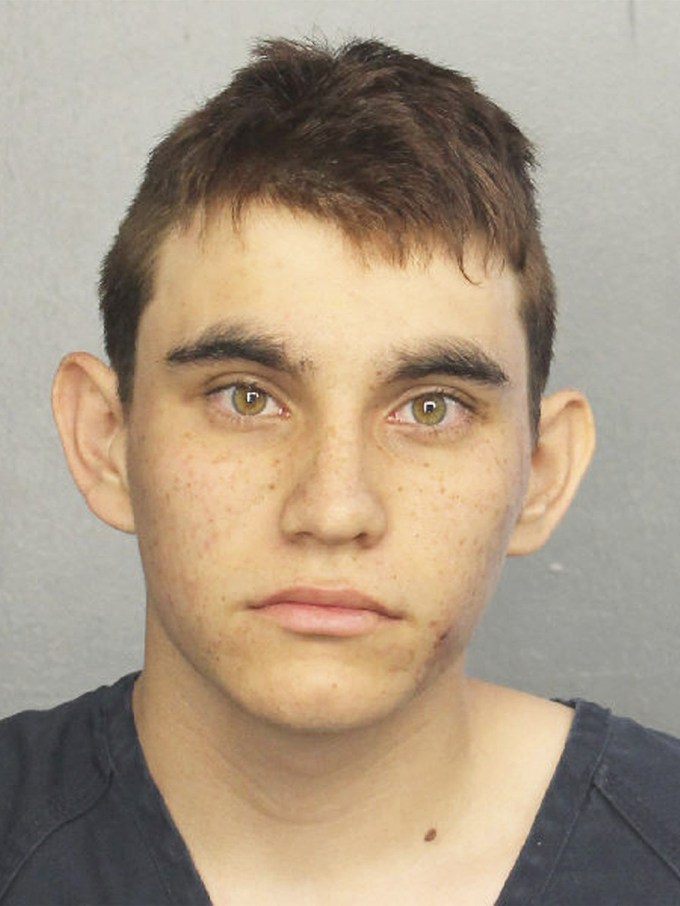
The perpetrator of the 2018 Parkland school shooting in Florida, United States. Multiple media reports and investigative materials mentioned several risk signals in his earlier years, including harming animals, fascination with guns, threats, violent displays on social media, and school disciplinary action. The Washington Post reported in detail on clues from his neighborhood and school.
Image source: Broward County booking photo reproduced by media, used to identify the public Parkland shooting case.
 Luke Woodham
The perpetrator of the 1997 Pearl High School shooting in Mississippi, United States. Public judicial materials confirm the facts of his killing his mother and committing the school shooting; public materials also record that he killed his family’s pet dog before the attack and wrote about that behavior in his personal writings. What deserves attention here is not a single act, but the entanglement of cruelty, peer influence, hate narratives, and real-world violence.
Image source: WLBT / Mississippi Department of Corrections public reporting page.
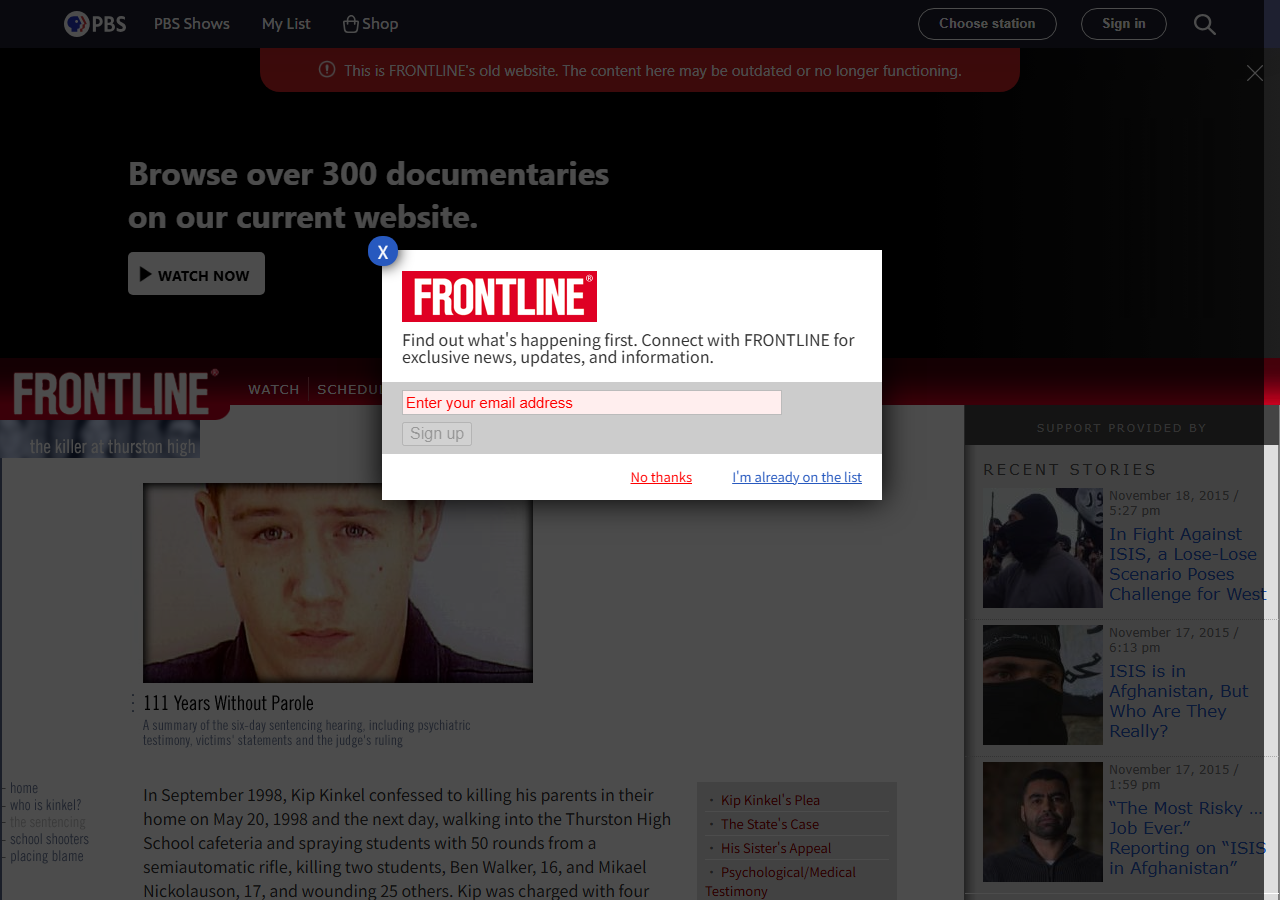
The perpetrator of the 1998 Thurston High School shooting in Oregon, United States. PBS FRONTLINE and an FBI article on school violence documented his family killings, school shooting, and serious mental-health problems. This case shows that serious violence is often not caused by a single sign, but by weapons, mental crisis, family crisis, school risk, and system failures piled together.
An American serial killer. Multiple crime-biography sources record that in childhood he killed cats and other animals; later, in adolescence, he killed his grandparents, and as an adult he committed multiple murders. Such cases show that early cruelty deserves high vigilance, but this article does not treat every detail in crime biographies as evidence of equal strength.
Names such as Jeffrey Dahmer are repeatedly cited in online articles, but some “childhood animal-abuse details” differ across sources. This site does not treat rumors unsupported by stable sources as evidence. What investigation truly needs is traceable judicial material, mainstream media reporting, academic research, and law-enforcement documents.
These cases do not mean that “every child who harms animals will become a murderer.” What is truly valuable is seeing the recurring combinations within them: aggressive behavior left without long-term intervention, indifference to the suffering of the weak, weapons or violent fantasies, failures in family or school systems, and boasting and reinforcement in peer groups or online spaces.
They also remind us that society often hesitates when early signs appear: Is this a private family matter? Is this a joke among children? Is this a psychological problem or a moral problem? Should the school handle it, or should the police handle it? When every system feels it is not the first responsible party, risk passes through the gaps. Animals are hurt first; later it may be classmates, family members, strangers, or the perpetrator himself moving toward irreversible destruction.
It should be explained that photographs of people can only serve a limited function in investigations of this kind: they help readers confirm which public cases the examples refer to, rather than creating sensationalism or worship. This article does not use any perpetrator’s photo as the cover, nor does it use graphic crime-scene images; profile images of people are embedded only in the corresponding case cards as part of the public-source index.
4. Why Animals Become the Earliest Victims
Animals are the victims most easily handled in silence. They do not leave testimony, do not demand compensation, and are not naturally treated by traditional criminal law as victims with independent life value. For someone already learning domination and harm, animals are often the lowest-risk, least-resistant, and easiest targets for repeated practice.
In domestic-violence research, animals are also often observed within the “chain of control.” Companion animals may carry important emotional meaning for children, older people, or victims of abuse, so harming animals can sometimes become a means of intimidation, control, revenge, and silencing victims. Child Abuse, Domestic Violence, and Animal Abuse, edited by Ascione and Arkow, places child abuse, domestic violence, and animal abuse into the same intervention framework: attacking any vulnerable member of a family may place the entire family and community at risk.
If a child often sees violence at home, he may learn that “power means being able to make the weak shut up”; if he sees abuse videos receiving likes on online platforms, he may learn that “suffering can be exchanged for attention”; if, after harming an animal, he receives only “don’t do that next time,” he may learn that “weak lives do not deserve serious consequences.” These lessons do not necessarily push him toward murder, but they are enough to lower the threshold for violence bit by bit.
This also explains why society cannot stare only at the final major criminal case. By the time a person is killed, the risk chain has already reached its end. True public safety should intervene when weak lives are first harmed: recording, questioning, assessing, protecting animals, and protecting people who may be on the same chain of family or community violence.

5. What Should Be Done When Minors Abuse Animals
First, do not turn it into entertainment. Abuse videos should not be circulated as curiosity content, and platform algorithms must not treat them as traffic. Platforms should at least do the following: quickly remove violent content, preserve original evidence, interrupt secondary circulation and imitation, and allow rescuers of victimized animals, witnesses, and reporters to submit materials, rather than handling matters temporarily only after public opinion erupts.
Second, do not turn it into private punishment. Evidence-free doxxing and retaliation against minors, families, and schools can turn a sense of justice into new harm. Animal protection cannot be built on another form of uncontrolled harm. Especially when minors are involved, public discussion must distinguish among “factual records,” “institutional criticism,” “risk intervention,” and “doxxing and retaliation.” The former are necessary; the latter may cause the case to lose focus and may harm the innocent.
Third, do not set it down lightly in an administrative way. If the facts show that the behavior was active, repeated, cruel, and involved pleasure-taking or boasting, there should be professional psychological assessment, family investigation, school intervention, animal-protection arrangements, and necessary law-enforcement records. The term “minor” must not become an eraser that wipes suffering from public view; it should mean earlier, more professional, and more responsible correction and protection.
Fourth, animal rescue must be included in handling the case, rather than only handling “people.” In many incidents, victimized or surviving animals are ultimately left with no one to take responsibility; bystanders are angry online, but offline there is no stable mechanism for placement, medical care, evidence collection, and follow-up care. Truly complete handling should include records of the victimized animal’s body or injuries, veterinary opinions, takeover by rescue organizations, evidence preservation, scene-environment checks, and protection of other animals in the same area.
6. Why Schools, Families, and Platforms Often Miss the Handoff
The hardest part of handling youth animal cruelty is that it often occurs in the gray zone between institutional boundaries. Families may feel ashamed and be unwilling to admit that a child has a serious problem; schools may worry about reputation and only want to keep the matter quiet; platforms may treat videos merely as rule-breaking content to delete, without preserving enough evidence; neighbors and witnesses may fear retaliation or not know whom to contact. Each link handles only the small piece it can see, and in the end the entire risk chain is broken apart.
There is another reason for this missed handoff: in many places, animal victimization is still treated as “secondary harm.” If the victim is human, schools, police, parents, media, and social organizations enter more quickly; if the victim is a small animal, the incident is easily downgraded to a “prank,” “uncivilized behavior,” or “family-education problem.” But research repeatedly warns that precisely this numbness toward the suffering of the weak may constitute an early training ground for more serious violence. The less able a life is to protect itself, the more it can reveal a person’s true understanding of power, suffering, and boundaries.
Therefore, when handling animal abuse by minors, we cannot ask only “can they be punished?” We should ask more: Has this incident been recorded? Has the animal been rescued? Has the video been preserved? Does the child need psychological assessment? Is there violence, neglect, or extreme indulgence in the family? Does the school need continued observation? Has the platform interrupted the spread of similar content? These questions do not all necessarily lead to criminal punishment, but they all lead toward prevention.
7. Difficulties in the Chinese Context: Legal Gaps and Broken Handling
For China, the difficulty also lies in institutional uptake. Existing law often splits animal abuse into frameworks such as property damage, public order, administrative-security penalties, wildlife protection, or food safety, lacking direct evaluation of cruel abuse against companion animals and animals in general. As a result, many incidents can enter heavier legal procedures only through public-opinion pressure, school discipline, administrative handling, or whether the individual case involves public safety. This structural gap allows early risks to repeatedly escape view.
The more realistic difficulty is this: even when society has already seen a minor commit clearly cruel animal abuse, who is responsible for the next step? Can the school conduct long-term follow-up? Will parents cooperate? Does the community keep records? Can public-security organs form effective constraints in the absence of a clearly defined animal-cruelty offense? Who initiates psychological assessment, who pays for it, and who receives the results? Who bears responsibility for animal rescue? If these questions have no institutional answers, individual cases will again and again become “a few days of heated public opinion, and then nothing comes of it.”
But difficulty is not a reason for inaction. Minimum practices can be built first: public platforms preserving evidence; schools and communities recording serious animal-abuse incidents; psychological and family-environment assessments for repeated, cruel, exhibitionistic perpetrators; inclusion of animal-rescue organizations in cooperation; lawful handling of cases involving public danger, group dissemination, threats against others, destruction of property, illegal hunting or killing, or other illegal circumstances; and, at the same time, promotion of legislative discussion on companion animals and animal abuse in general.
8. Why This Site Records Investigations of This Kind
The Global Animal Memory archive records issues of this kind not to push every child who has made a mistake toward a dead end, but to seek earlier intervention, clearer law, more effective platform governance, and more dignified animal protection. Protecting animals is not in conflict with protecting people; very often, it is the first gate to protecting people.
If a society can take seriously the cries of small animals, it will also hear earlier the calls for help from children, older people, victims of abuse, and isolated individuals. Conversely, if it continually downplays the suffering of the weakest lives, then truly dangerous people will also learn through repeated downplaying that apparently harming the weak carries little cost.
So the conclusion is not “people who hurt small animals will all kill people.” The conclusion is: when the alarm has already sounded, do not pretend not to hear it. Record the facts, preserve the evidence, and connect animal protection with child protection, domestic-violence intervention, school-risk assessment, platform governance, and legal improvement. That is the true meaning of investigations of this kind.
For the small animals that have already been harmed, discussing future crime risk cannot lessen their pain. But if their suffering can force society to identify cruelty earlier, interrupt violence earlier, and protect another weak life earlier, then recording still has meaning. They are not research samples; they are lives. Research merely helps human beings finally learn to see them seriously.
Main Public Sources
- American Psychological Association, Dictionary of Psychology: Conduct Disorder. https://dictionary.apa.org/conduct-disorder
- American Academy of Pediatrics / DSM-5 table: Conduct Disorder criterion includes physical cruelty to animals. https://publications.aap.org/…
- McEwen, Moffitt & Arseneault, “Is childhood cruelty to animals a marker for physical maltreatment in a prospective cohort study of children?”, Child Abuse & Neglect, 2014. https://pubmed.ncbi.nlm.nih.gov/24268376/
- Wong, Mellor, Richardson & Xu, “Childhood cruelty to animals in China: the relationship with psychological adjustment and family functioning”, Child Care, Health and Development, 2013. https://pubmed.ncbi.nlm.nih.gov/22970911/
- Felthous & Kellert, “Childhood cruelty to animals and later aggression against people: a review”, American Journal of Psychiatry, 1987. https://pubmed.ncbi.nlm.nih.gov/3591990/
- Kellert & Felthous, “Childhood Cruelty Toward Animals Among Criminals and Noncriminals”, Human Relations, 1985. https://journals.sagepub.com/doi/10.1177/001872678503800202
- Tallichet & Hensley, “Exploring the Link Between Recurrent Acts of Childhood and Adolescent Animal Cruelty and Subsequent Violent Crime”, Criminal Justice Review, 2004. https://journals.sagepub.com/doi/10.1177/073401680402900203
- Merz-Perez, Heide & Silverman, “Childhood Cruelty to Animals and Subsequent Violence against Humans”, International Journal of Offender Therapy and Comparative Criminology, 2001. https://journals.sagepub.com/doi/10.1177/0306624X01455003
- Arluke, Levin, Luke & Ascione, “The Relationship of Animal Abuse to Violence and Other Forms of Antisocial Behavior”, Journal of Interpersonal Violence, 1999. https://journals.sagepub.com/doi/10.1177/088626099014009004
- Longobardi & Badenes-Ribera, “The relationship between animal cruelty in children and adolescent and interpersonal violence: A systematic review”, Aggression and Violent Behavior, 2019. https://www.sciencedirect.com/science/article/abs/pii/S1359178918301537
- Australian Institute of Criminology, “Firesetting as a predictor of violence”, including caution on Macdonald triad evidence. https://www.aic.gov.au/publications/bfab/bfab36
- FBI Law Enforcement Bulletin, “A Link Between Animal Cruelty and Violence Toward People”. https://leb.fbi.gov/…
- FBI NIBRS animal cruelty training guide. https://le.fbi.gov/file-repository/animal-cruelty-training-guide.pdf
- Ascione & Arkow, “Child Abuse, Domestic Violence, and Animal Abuse: Linking the Circles of Compassion for Prevention and Intervention”, OJP record. https://ojp.gov/ncjrs/…
- BBC, Luka Magnotta / Lin Jun case public reporting. https://www.bbc.com/news/world-us-canada-20525060
- CBS News, Luka Magnotta public image gallery. https://www.cbsnews.com/pictures/killer-in-canadian-dismemberment-case-luka-magnotta/
- Hollywood Life / media reproduction of Broward County booking photo used as public case image. https://hollywoodlife.com/feature/who-is-nikolas-cruz-parkland-school-shooter-2896512/
- Washington Post, Nikolas Cruz warning signs and animal-killing reports. https://www.washingtonpost.com/…
- WLBT / Mississippi Department of Corrections public reporting image for Luke Woodham. https://www.wlbt.com/2024/10/17/pearl-high-school-shooter-luke-woodham-denied-parole/
- Justia, Luke T. Woodham v. State of Mississippi. https://law.justia.com/cases/mississippi/supreme-court/2001/conv9952.html
- PBS FRONTLINE, “The Killer at Thurston High” / Kip Kinkel proceedings. https://www.pbs.org/wgbh/pages/frontline/shows/kinkel/trial/index.html
- FBI Law Enforcement Bulletin, “Addressing School Violence”, Kip Kinkel case discussion. https://leb.fbi.gov/articles/featured-articles/addressing-school-violence
Remember and Respond
Offer a Flower
Anonymous flower offerings are limited by IP address to keep this public-interest website sustainable.
Messages
Approved visitor messages will appear here after review.
💬 Leave a Message
Messages are reviewed before publication. Please keep them calm, factual, and respectful.