

In late June 2026, in Pingpu Village, Xinheng Town, Jiedong District, Jieyang, Guangdong, a stray mother dog and her puppies were abused to death, drawing continuing public attention. This tracking report preserves the chain of public reports, official notices, social-platform circulation and later public responses.
Writing boundary: because the case involves minors, this site does not publish names, schools, family backgrounds, addresses or photos that have not been confirmed by authoritative sources. It opposes doxxing and harassment, while firmly condemning the cruelty that led to the animals’ deaths and distinguishing confirmed facts, media reports, and netizen-supplied leads.
I. The Incident
According to the June 30, 2026 notice from the Xinheng Town People’s Government, after an online video about minors harming stray dogs in Xinheng Town spread on June 29, local authorities formed a working group to investigate. The Beijing News reported that the location was Pingpu Village, Xinheng Town, and that several villagers said they had learned of the abuse on June 28.
No authoritative public source has confirmed the mother dog’s official name. After the incident spread, the names “Wangwang” and “Wang Wang” appeared repeatedly in memorial comments, reposts and overseas discussion. This site records that name as an online nickname, not an official name.
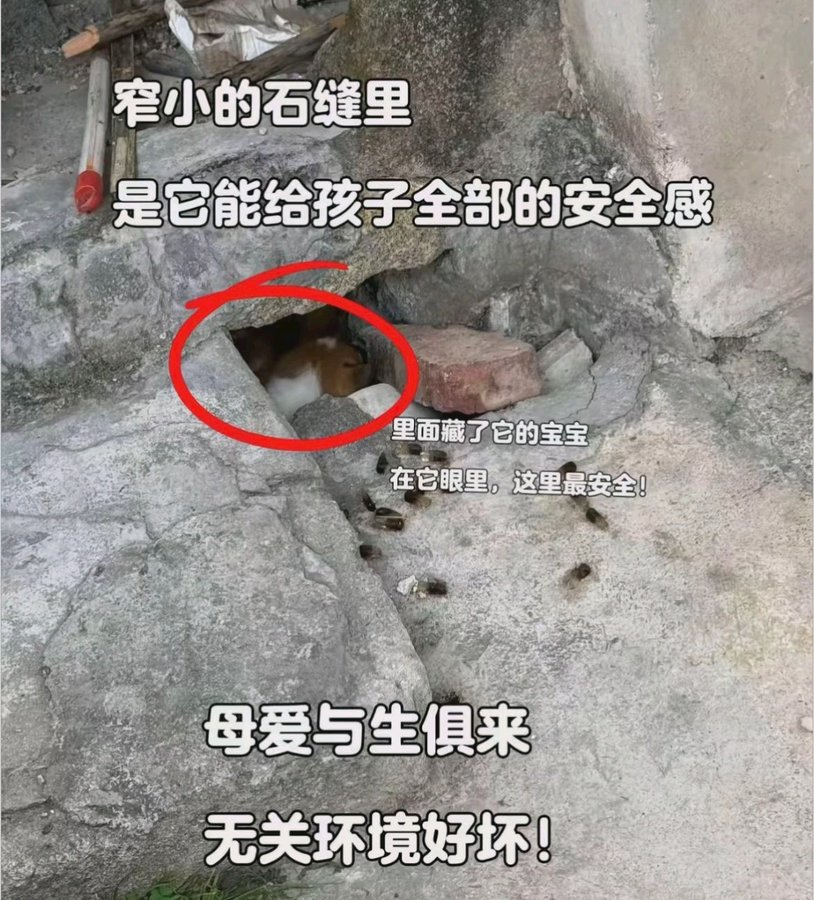
A villager told The Beijing News that the mother dog was usually fed by villagers and was seldom driven away; she had three puppies about half a month old, and the mother dog and puppies were all killed. These details come from media interviews and public reports rather than itemized official confirmation.
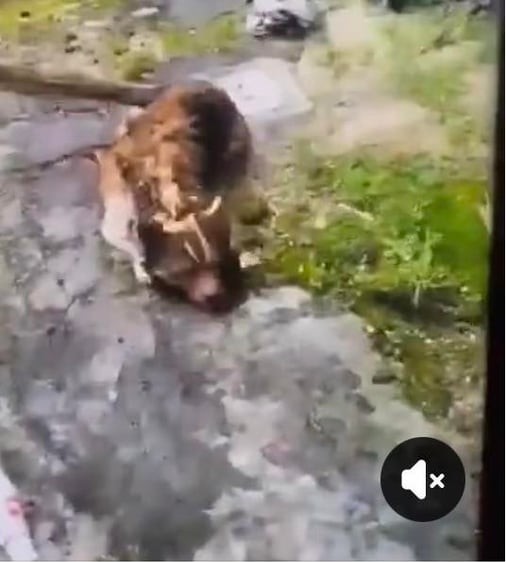
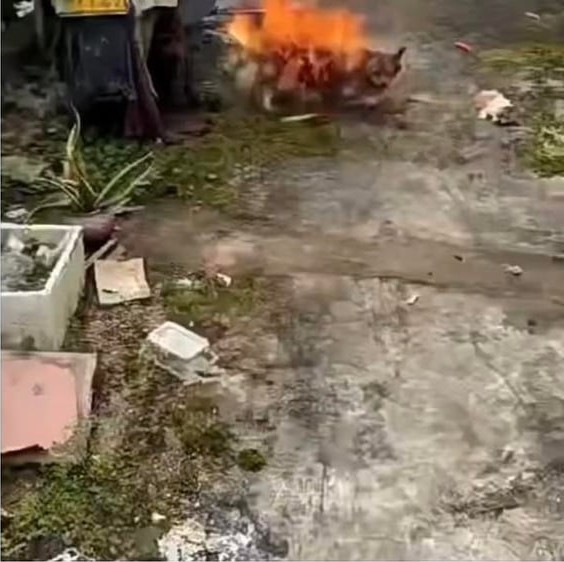
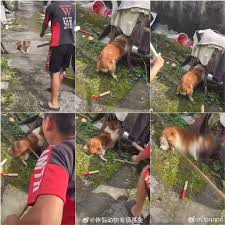
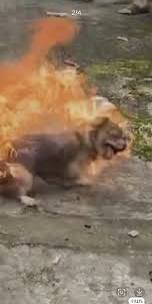
Public reports and reposted materials point to extremely cruel acts: beating with sticks, dragging, suspected gasoline or other accelerants used to burn the mother dog, and abuse of the puppies. Litchi News and Eastweek both carried descriptions of beating and burning. Because the official notice did not list every act, this site uses cautious wording such as “public video reportedly shows,” “media reported,” and “netizens alleged.”
Many people were not only angered by the killing itself, but by the apparent planning, cooperation and coldness described in circulated materials. Netizens repeatedly said the most frightening point was that the juveniles allegedly laughed while watching the dog suffer. This site records these points as public allegations and discussion, not as a judicial finding about personal identity.
These details explain why the reaction was so strong. A mother dog that had been seen and fed by people, and puppies that should have been hiding and growing, were allegedly subjected to deliberate violence. Recording this is a minimum act of respect for lives that could not speak for themselves.
The following daily-life, scene and circulation images have different source levels: some come from overseas platforms such as Threads or X, some from saved screenshots, and some still require tracing back to the original account. This site keeps those source boundaries visible.


Sensitive Scene Images
The following images are circulated screenshots or collages related to the alleged abuse process. Under this site’s rule, graphic or strongly disturbing images receive a removable cover only; they are not permanently blurred or altered.

II. Local Attitude Afterward
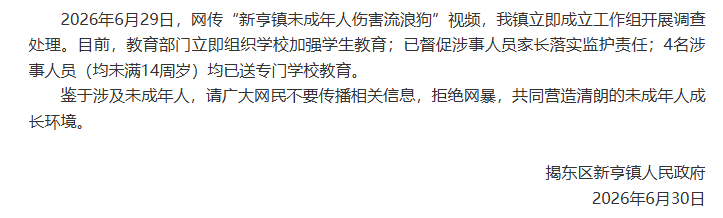
On June 30, 2026, Xinheng Town said a working group had been established, schools would strengthen education, guardians had been urged to fulfill guardianship duties, and the four persons involved were all under fourteen and had been sent to a specialized school. The notice also asked the public not to spread minors’ information and to reject online harassment.
The Beijing News reported that police had opened an investigation. As of this revision, this site has not found a clear public apology, mourning statement, community follow-up, animal-protection education plan, or explicit public condemnation of the abuse from village-level organizations or higher local authorities. Many netizens interpreted that silence as protection or sheltering of the perpetrators.
Public dissatisfaction therefore continued. Many people argued that if the response stopped at “under fourteen,” “sent to a specialized school,” and “do not cyberbully,” without explaining correction, supervision, guardianship responsibility, remains handling and community education, it would not answer the real problem exposed by the case.
Doubts also appeared around the phrase “sent to a specialized school.” Some users claimed the juveniles had not actually entered such a school, that some had gone out or travelled, or that there was no local school of the kind imagined by the public. This site has not verified those claims through authoritative sources, so they are recorded only as public questioning.
This site’s position is that protecting minors’ privacy and rejecting harassment do not conflict with demanding accountability for animal abuse. The age of the perpetrators cannot be used to erase the cruelty, and opposition to harassment cannot become a reason to dissolve public supervision.
III. Domestic Public Opinion
After the case spread, domestic reaction moved from anger and mourning to broader questions about animal-protection law, parental guardianship, platform governance and space for public expression. Many people refused to reduce the case to “children who did not know better,” because circulated materials suggested preparation, watching, filming, repetition and cruelty.
On social platforms, many users asked why a mother dog fed by a community and her puppies could be treated this way, why adults failed to stop it, why local public explanations did not clearly mourn or condemn the abuse, and why discussion was often cooled, deleted or restricted.
Some memorial language itself became part of public memory. People wrote that Wang Wang and her babies should go to a kinder place in the next life, or that they were not familyless because the public would remember them. These comments are not legal facts, but they explain why the dogs were no longer accepted as anonymous “strays.”
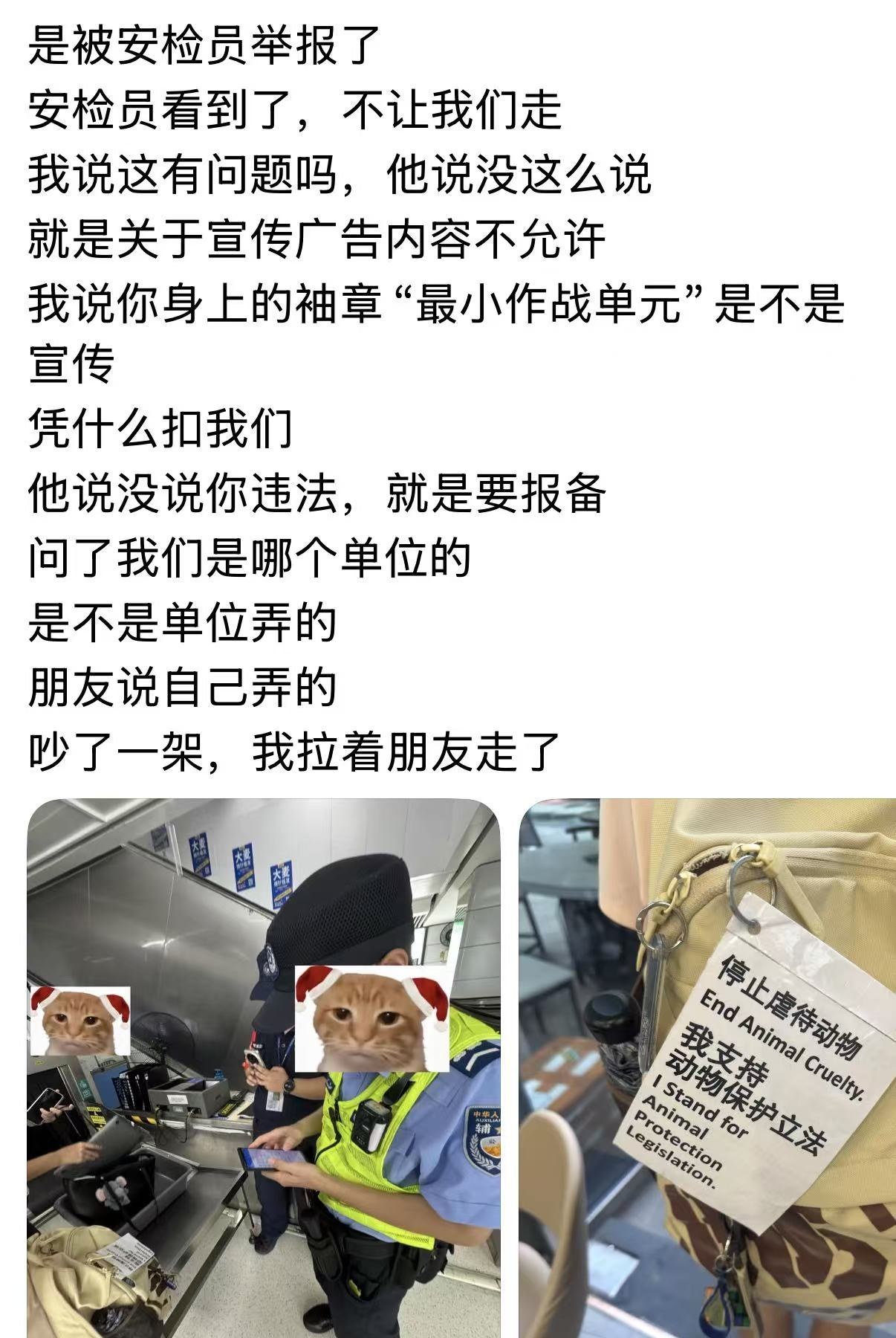
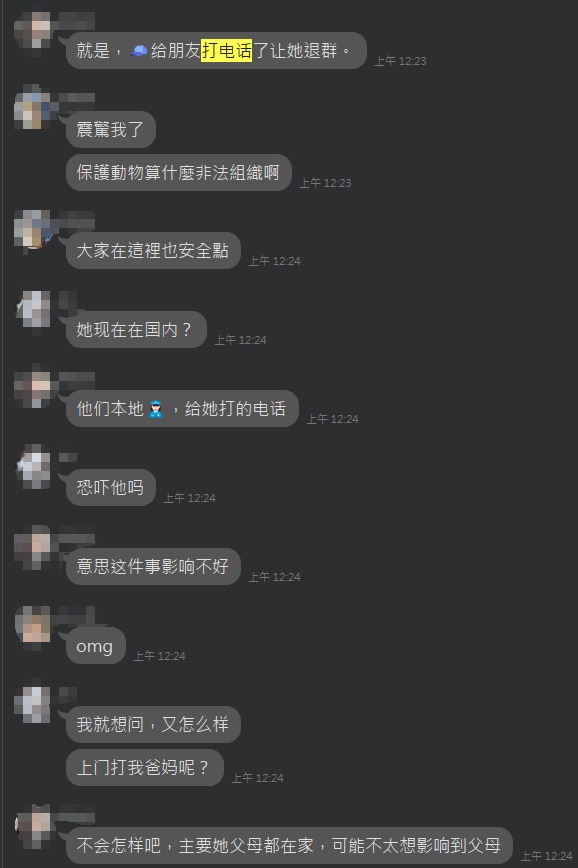
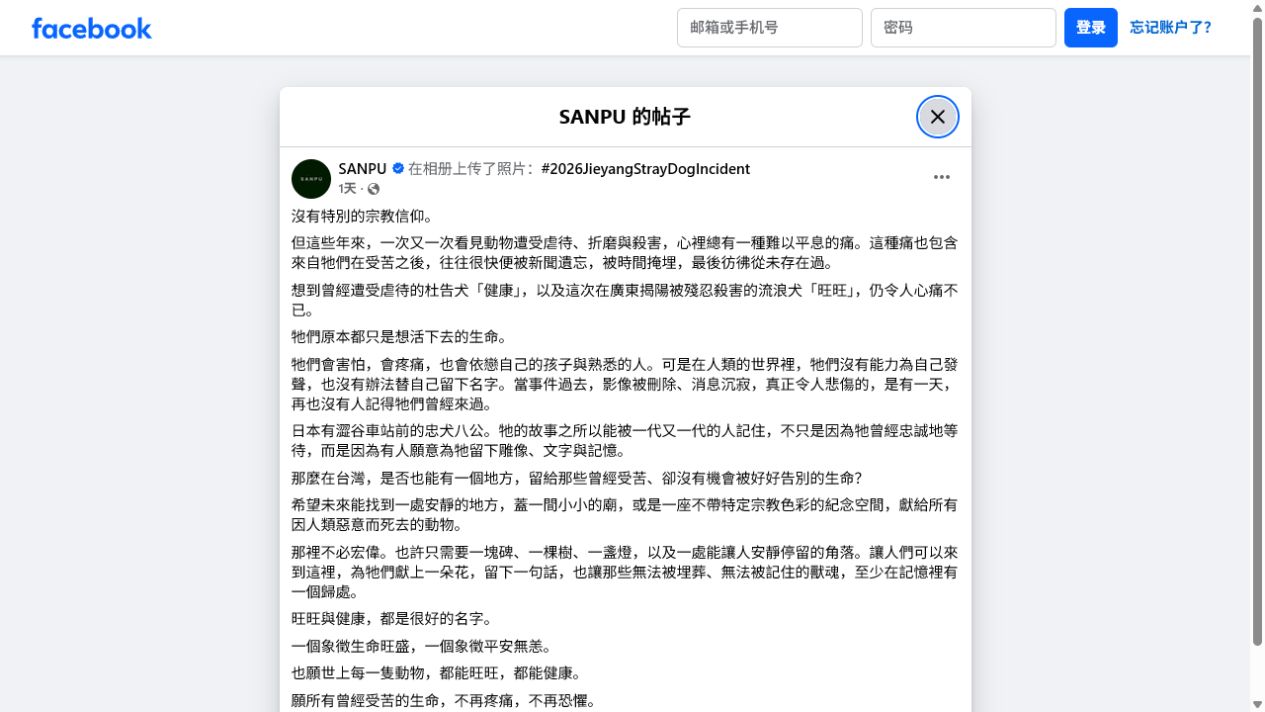
Information supplied by netizens also pointed to a second layer of controversy: posts, videos and discussions about outdoor screens or public billboards were allegedly blocked, removed, restricted, met with security obstruction, persuasion to leave, phone calls or home warnings. This site records such material as netizen-supplied leads, not as official confirmation.
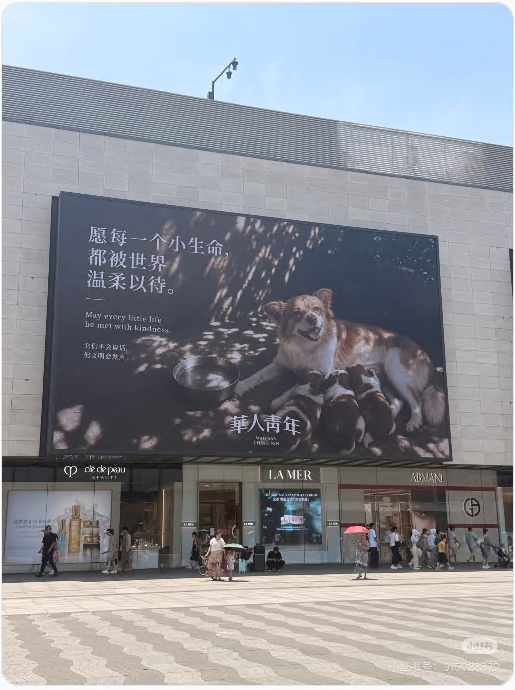
At the same time, public-service screens and outdoor ads saying “Stop animal abuse,” “Every life deserves respect,” and “May every little life be treated gently by the world” appeared in many cities. According to user-supplied information collected around July 15, 2026, netizens reported similar screens or public ads in the following places:
- Zhengzhou, Henan
- Taizhou, Jiangsu
- Weifang, Shandong
- Shenzhen, Guangdong
- Powerlong One Mall, Xiamen, Fujian
- Hangzhou, Zhejiang
- Suzhou Xiangcheng Longfor Paradise Walk, Jiangsu
- Mong Kok, Hong Kong
- Jilin
- Jining, Shandong
- Times Square, New York, United States
- Hohhot, Inner Mongolia
- Chuzhou, Anhui
- Nanjing, Jiangsu
- Shilin Night Market, Taiwan
- Tongxiang Wuyue Plaza, Zhejiang
- Chengdu Outlets
- Enshi Xingguangli, Hubei
- Liying Plaza, Guangzhou
- Taihe Plaza, Quanzhou, Fujian
- Taiyuan, Shanxi
- Chaonan Hesheng Plaza, Guangdong
- Qingmao Port footbridge, Macau
- Yongwangli, Puyang, Henan
- Nanyang Gaoxin Wuyue, Henan
These screens were not all organized by the same sponsor, but together they show that people tried to use visible and peaceful language in public space to say that animal abuse should not be normalized or forgotten. The Jieyang case thus moved beyond one wave of online anger into real-world civic expression.



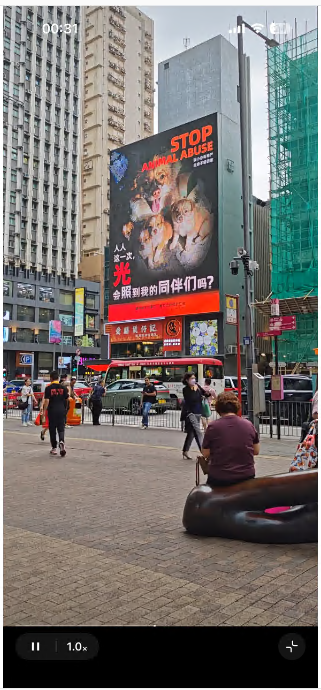

Leads and Information Supplied by Some Netizens
Some netizens further said that after public-service information about the Jieyang case appeared on outdoor billboards, mall screens or public screens in Hong Kong and mainland cities, several displays were forced down within about one day. Around the same issue, users also reported obstruction by security staff, persuasion to leave, takedowns, traffic limits, phone reminders or home visits. The following screenshots are preserved as leads and information supplied by netizens; this site does not present every item as officially confirmed fact.
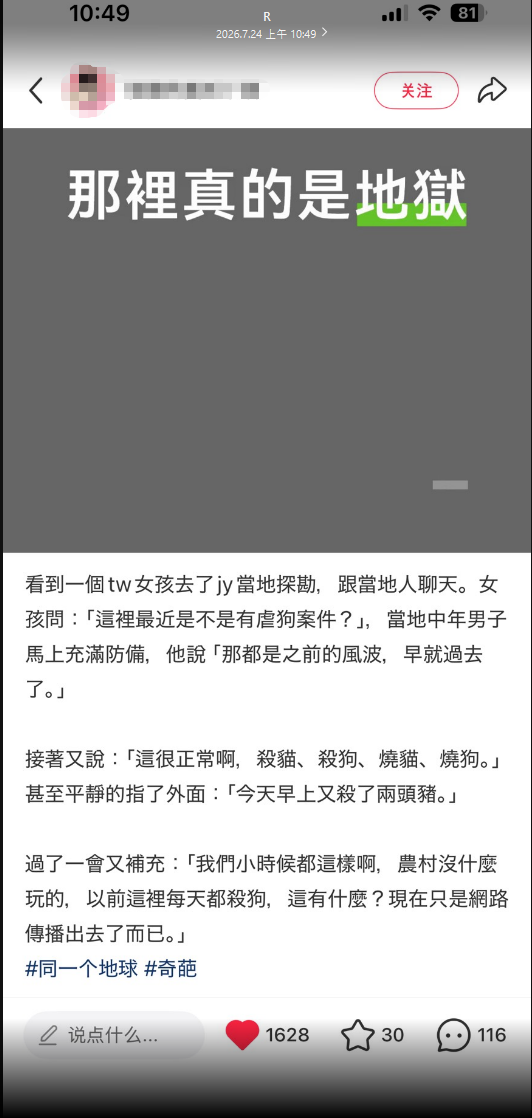
Another netizen-supplied screenshot from a Traditional Chinese social platform claims that a Taiwanese woman had gone to Jieyang to ask about the case and heard a local middle-aged man say that it was “an earlier wave” and had already passed. The screenshot also includes claims that dogs were killed locally in the past and mentions killing cats and burning cats or dogs. This site preserves the screenshot as online rumor and public-opinion material to show continuing concern about the local animal-protection environment. It is not an official notice or judicial finding, and it must not be used as confirmation of specific people, specific acts, or the general condition of the locality.
Why This Case Again Points to Anti-Animal-Abuse Legislation
Many jurisdictions already place serious animal cruelty within clearer legal frameworks. The United Kingdom’s Animal Welfare Act 2006 prohibits unnecessary suffering to protected animals; the United States’ PACT Act made certain extreme animal cruelty a federal felony in 2019; Japan’s Act on Welfare and Management of Animals also contains criminal penalties.
Mainland China still lacks a national anti-animal-cruelty law broadly covering companion animals, strays and ordinary cruelty acts. Real implementation would require police response, evidence collection, veterinary appraisal, video preservation, animal placement, treatment costs, remains handling and long-term supervision, areas where local capacity and interdepartmental coordination remain uneven.
This does not mean there is no hope. Since 2009, scholars such as Chang Jiwen have promoted expert drafts on animal protection or anti-cruelty legislation. In recent years, NPC deputies, CPPCC members, legal professionals and public figures have repeatedly called for the issue to enter the legislative agenda. The Jieyang case again shows that without a clear legal boundary, kindness can only arrive late through public outrage.
IV. Overseas Public Opinion
The Jieyang “Wang Wang” case quickly crossed the Chinese internet and entered Hong Kong media, animal-protection organizations and multilingual social platforms. Eastweek reported on July 15, 2026 on global support for the abused Jieyang mother dog and puppies, public screens, petitions, a Hong Kong animal-protection statement and NPV leaflet actions.
That Eastweek report said Steven Ma posted on social media on July 13 calling for legislation and an end to animal cruelty; Andrew Yuen uploaded a poster supporting animal protection; and Joe Chen reposted support on Weibo on July 14. This site records those celebrity voices as media-reported leads, and does not write other untraceable celebrity rumors as confirmed facts.
The Asia for Animals Coalition listed “Dog Burning in Jieyang Guangdong Province China” in its FAQ, describing it as a serious animal-abuse case involving four juveniles and referring readers to Chinese animal-protection groups. It also reminded the public not to reward abuse content by watching, commenting on or reposting graphic videos, and instead to report such content through platform tools.
OIPA ETS issued a formal action statement on July 17, 2026, saying it had taken action over the killing of “Wang Wang” and her puppies in Jieyang, China. OIPA said it had received hundreds of reports and appeals from Europe and other countries, sent formal letters to relevant Chinese authorities and embassy channels, and called for transparent investigation, prevention and stronger animal legal protection.
South China Morning Post reported on July 16, 2026 that the Hong Kong SPCA cancelled a fundraiser and apologized after backlash over a proposal to remove dog-killing videos. The report also said SPCA described itself as saddened and angered, and again called for stronger animal-protection laws and education.
This site records that tension clearly: violent images should not be turned into entertainment or traffic, but deletion and throttling cannot replace preservation of facts. A more responsible approach is to protect minors’ privacy, avoid identity exposure and harassment, while preserving verifiable reports, organizational statements, public-service screens, screenshots and follow-up handling.

X Platform Circulation and Overseas Attention
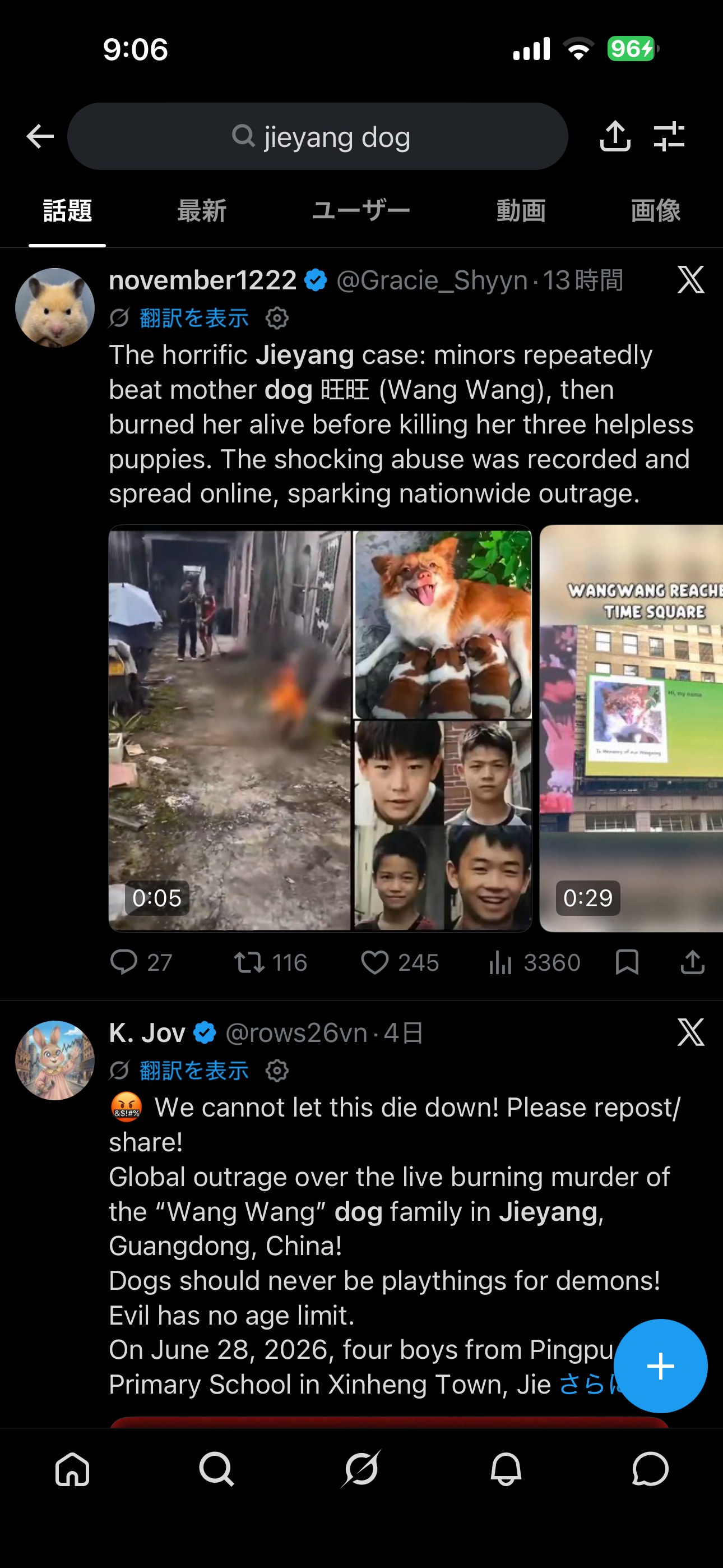
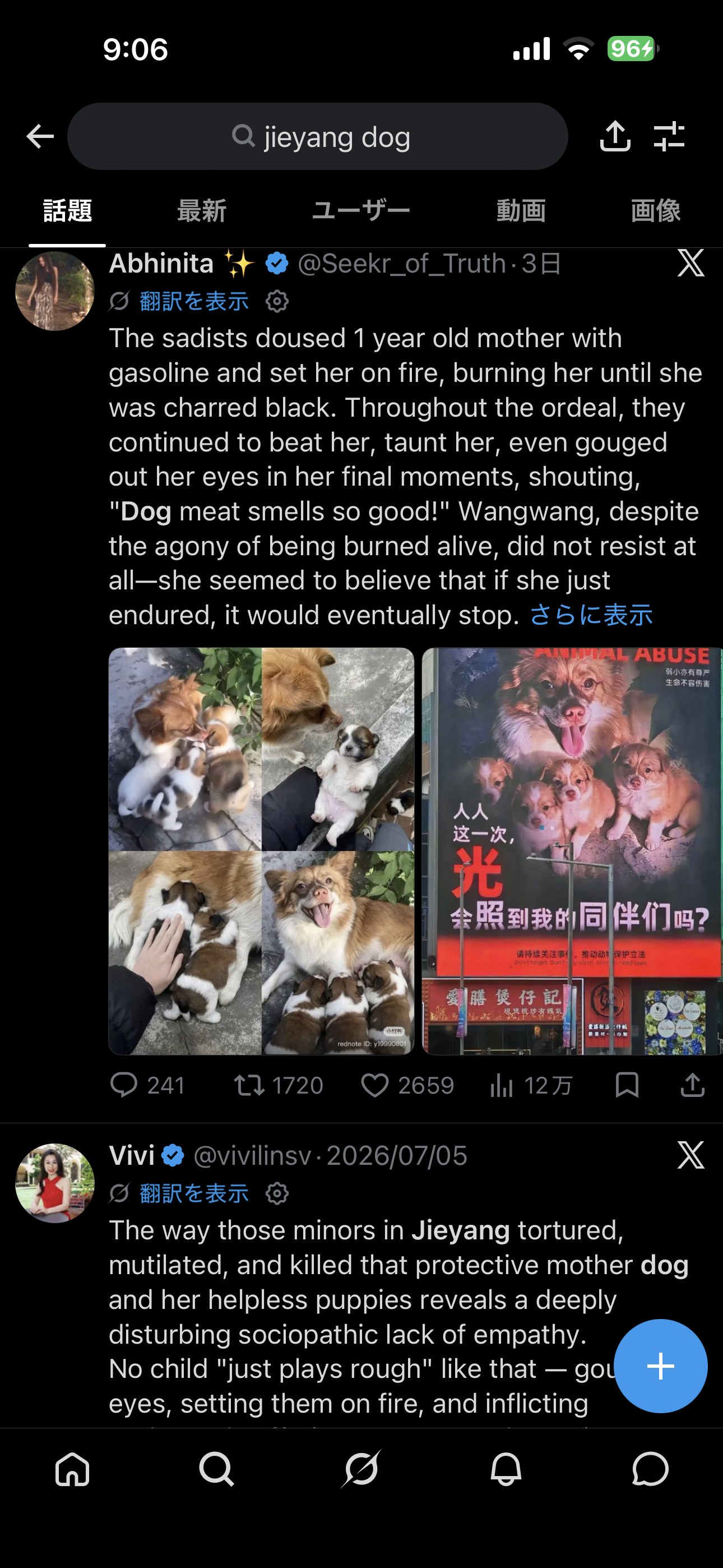
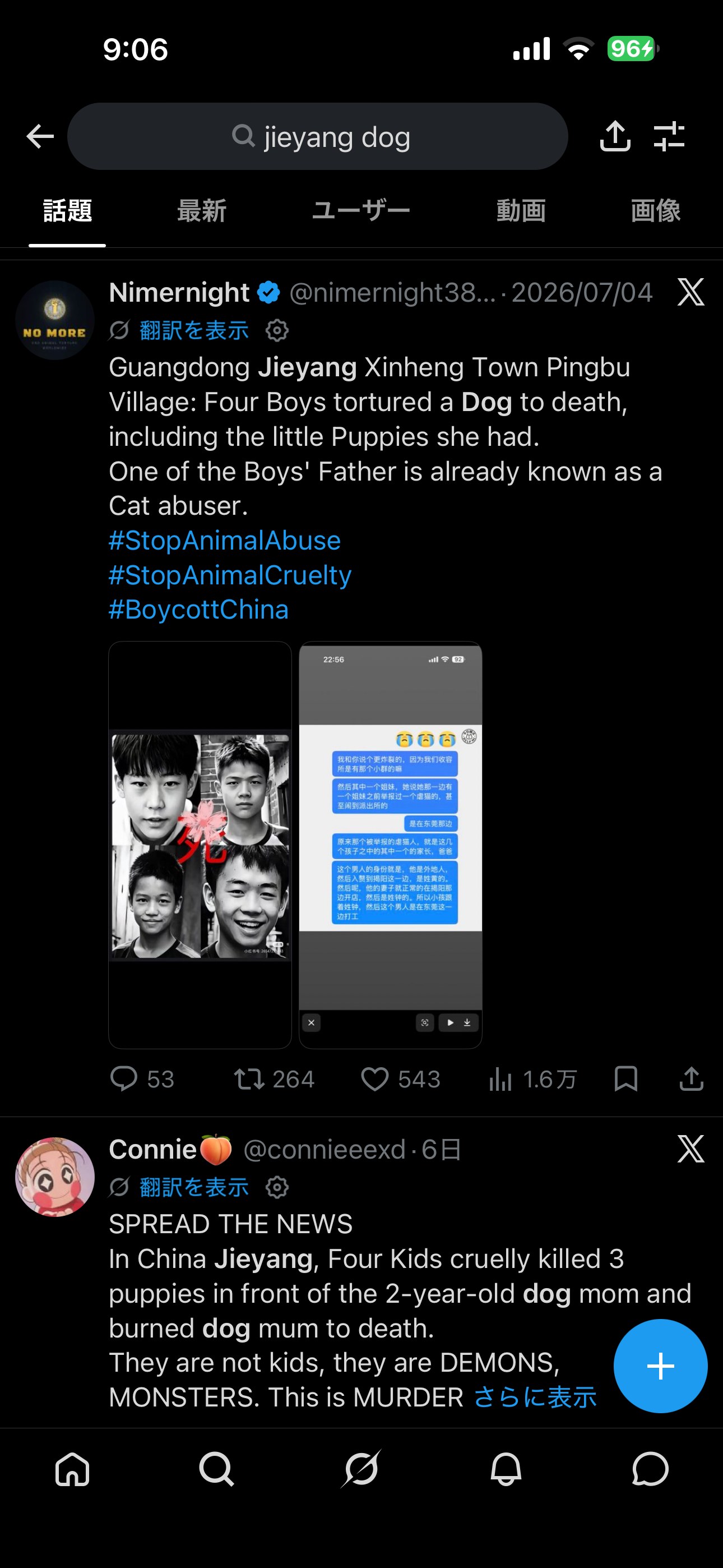
Beyond media and organizations, users on X continued to discuss and condemn the case, connecting it with animal-protection legislation, public screens, platform restriction and international support. The following screenshots are preserved as evidence of overseas circulation; specific account identities and original context should be checked against retrievable sources if cited in detail.




Timeline
- Around 2026-06-28: In interviews with The Beijing News, several local villagers said they had learned of the juvenile abuse case.
- 2026-06-29: The online video about minors harming stray dogs in Xinheng Town drew public attention.
- Around 11:00 on 2026-06-30: The Beijing News said it learned from Jiedong police that an investigation had been opened.
- 2026-06-30: Xinheng Town issued a notice saying the four people involved were all under 14 and had been sent to a specialized school.
- Early to mid-July 2026: Mourning, doubt, legislative discussion and public-service screens appeared across social platforms and public spaces.
- 2026-07-15: Eastweek reported global support, public screens, Hong Kong animal-protection groups and NPV actions.
- 2026-07-16: SCMP reported that Hong Kong SPCA cancelled a fundraiser and apologized amid controversy over removing dog-killing videos.
- 2026-07-17: OIPA ETS issued a formal action statement over the killing of Wang Wang and her puppies.
Sources
- Jiedong District People’s Government of Jieyang: situation notice, 2026-06-30. https://www.jiedong.gov.cn/zwgk/zwdt/jddt/content/post_1030624.html
- The Beijing News: report on four juveniles in Jieyang and specialized-school handling, 2026-06-30. https://www.bjnews.com.cn/detail/1782803708168037.html
- JSTV Litchi News: report reposting the Jieyang notice, 2026-06-30. https://m.jstv.com/news/2026/6/30/1521524936024416256.html
- Nanfang Net / Yue Study: Jiedong report on minors harming stray dogs, 2026-06-30. https://news.southcn.com/node_17a07e5926/8d9b5d22f9.shtml
- Guancha.cn repost of the Wenming Jiedong notice and related reports, 2026-06-30. https://www.guancha.cn/politics/2026_06_30_822055.shtml
- Eastweek: report on global support for the abused Jieyang mother dog and puppies, 2026-07-15. eastweek.stheadline.com
- Asia for Animals Coalition FAQ: Dog Burning in Jieyang Guangdong Province China. https://www.asiaforanimals.com/faqs
- OIPA ETS: OIPA takes formal action over the killing of Wang Wang and her puppies in Jieyang, China, 2026-07-17. https://www.oipa.org/international/oipa-action-jieyang-animal-cruelty-case-china/
- South China Morning Post: Hong Kong SPCA cancels fundraiser amid backlash over bid to remove dog-killing videos, 2026-07-16. https://www.scmp.com/news/hong-kong/society/article/3360827/…
- Public social-media materials from Reddit, Facebook, X, Pincong and Google Image Search, together with screenshots and follow-up leads supplied by netizens. Unverified claims are recorded only with attribution and source-boundary language.
💬 Leave a Message
Messages are reviewed before publication. Please keep them calm, factual, and respectful.