
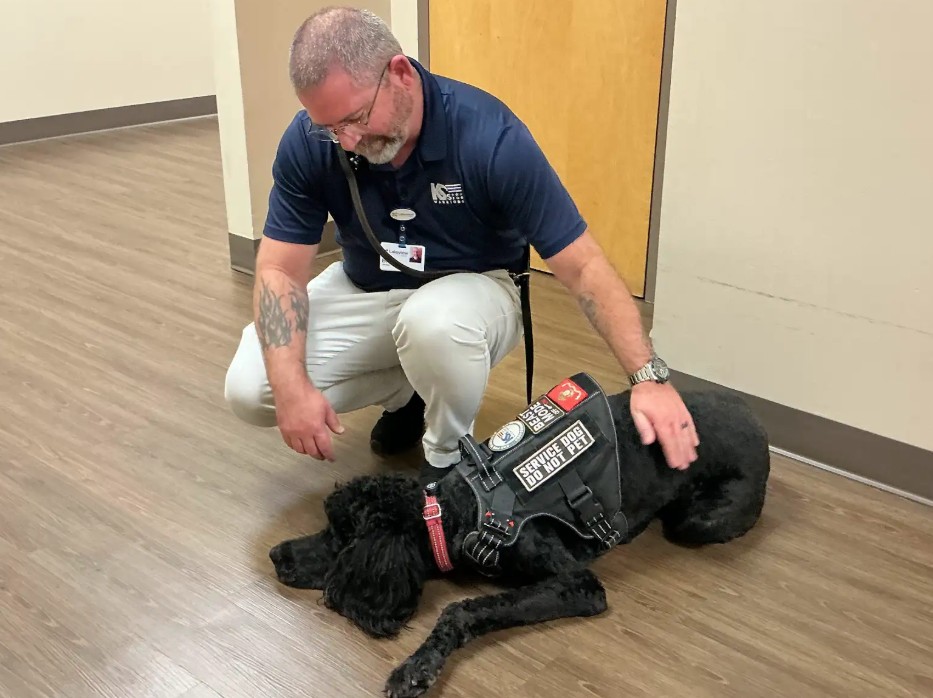
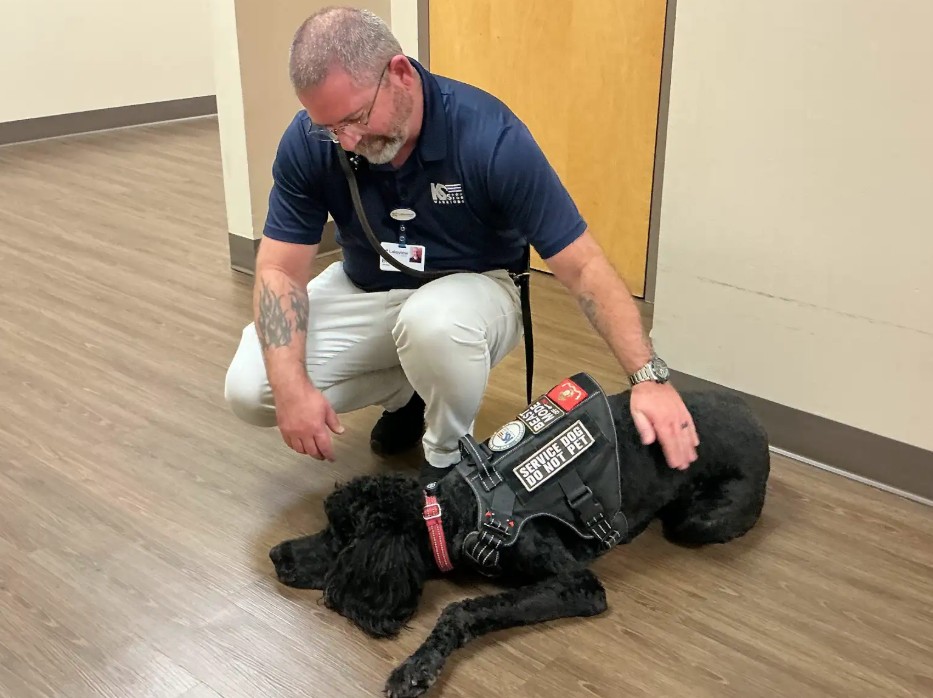
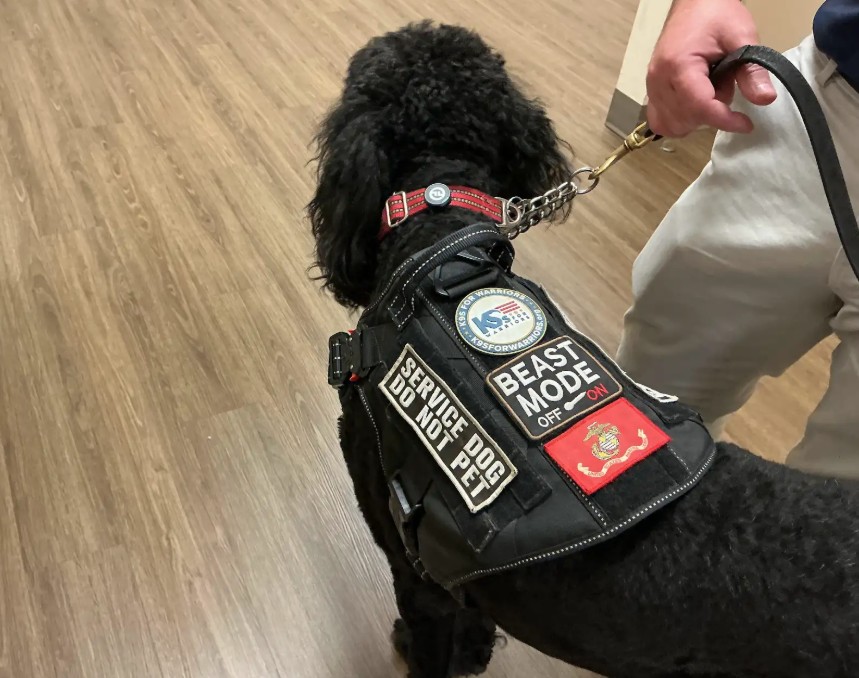
Homer is a large schnoodle service dog from K9s for Warriors. When it entered the life of Army veteran Brian Johnson of Pensacola, Florida, it not only woke him up every morning, but also helped him re-enter the crowd with PTSD, anxiety, and hypervigilance. Later, Brian became a Certified Peer Recovery Support Specialist at Lakeview Center, and Homer followed him into the workplace, bringing a sense of security to more people who needed help.
time:WUSF reported on July 4, 2026; subject of story after Brian Johnson received treatment for PTSD and was paired with HomerPlace:Pensacola, Florida, USA, Lakeview Center and related rehabilitation service scenesmain character:Service dog Homer with U.S. Marine Corps veteran Brian Johnson
From the morning when I don’t want to get up, to the morning when my collar rings softly
WUSF’s report begins with a small sound: the soft click of Homer’s collar at seven in the morning. For the average person, this may just be a daily routine with a dog at home; for Brian Johnson, it means that the day no longer starts with fear, drugs, anxiety and high alert. Homer wakes him up on time, gets him up, and puts an external rhythm into life again.
Brian is a U.S. Marine Corps veteran who deployed during the 2003 invasion of Iraq. He said in the report that his PTSD was related to his combat experience, and some of the things he had seen and experienced still remained in his dreams and physical reactions many years later. Returning home does not automatically end the war. For a long time, he was just trying to maintain, rather than live stably.
Later, during a crisis, Brian called the U.S. 988 suicide and crisis hotline. That request for help became a turning point. Therapy stabilized the situation, and then he and his therapist began discussing the need for a new layer of support: a service dog. Brian’s only request at the time was a little modest and a little funny: He didn’t want a poodle. When the door to the training ground opened and a big furry head appeared, his first reaction was, isn’t that a poodle? Homer is actually a giant schnoodle, a giant schnauzer-poodle mix.
A relaxed dog teaches people to walk through crowds again
Homer from K9s for Warriors. The nonprofit pairs veterans with hidden combat wounds, such as PTSD, with trained service dogs for free. For Brian, Homer is not an abstract comfort, but a companion who can change his body’s reactions in real-life situations. One of the most powerful moments in the coverage occurred during an airport training session: As they walked through the crowd, Brian looked down and saw Homer relaxed. At that moment, he suddenly realized that he was not scanning everyone around him like he used to.
This is not to say that a dog makes the trauma go away. Rather, Homer gives Brian an anchor he can trust. Homer’s composure, pace, breathing, and body position gave him the opportunity to turn his attention away from the threat search and regain the sense that he was not alone in danger. For those who experience PTSD, this change can be harder and more precious than outsiders imagine.
Homer puts on a vest when he goes to work. Once the vest is on, the family companion becomes a service dog at work. It knows when it needs silence, when it needs closeness, and when just leaving its body there is enough. Animal help is not always a heroic run, but sometimes a long, whispered, repeatable presence.
The person who was rescued went to pick up others again
Brian later worked at Lakeview Center in Pensacola as a Certified Peer Recovery Support Specialist. This facility provides counseling, psychiatric care, crisis support and residential treatment to people in Northwest Florida facing mental health or substance use issues. Brian’s job is to use his own experiences to tell clients when they are at their most vulnerable and uncertain: The person you are speaking to has been in a similar place.
Lakeview Center leaders explained in the report that peer support differs from traditional clinical treatment. Clinical staff bring diagnostic and treatment skills, while peer supporters bring testimony of experience, recovery, and still moving forward. Brian tells clients his diagnosis and how long he has been recovering. For many, this candor is more powerful than slogans.
Homer sometimes becomes part of the job. Brian recalls one child who barely spoke during the evaluation until he met Homer. The child sat down on the ground, close to it, and then answered every question almost without pause. It’s not that the dog erased the trauma, but that in that moment, it made the child safe enough to speak. This is the reason why this site includes this story: people who have been protected by animals take animals with them to protect others.
Records of this site
Homer’s story doesn’t win by miracle, but by the believability of long-term companionship. It wakes Brian every morning, walks with him through crowds, follows him to work, and lies down quietly in front of strange children. It allows a person to move from “barely alive” to “can help others survive.” Such animal stories deserve to be preserved, because they remind us that the relationship between humans and animals is often not about one-way care, but about pulling each other back from the edge of falling.
This article is compiled based on WUSF public reports. Regarding psychological crisis content, this site only reproduces public sources and does not provide medical advice; if readers or people around them are in urgent danger, they should contact the local emergency rescue system.
timeline
- 2003Brian Johnson deployed as a United States Marine during the invasion of Iraq.
- Many years after retirementBrian suffers from long-term PTSD, anxiety and hypervigilance related to combat experiences, and calls 988 for help in crises.
- during treatmentBrian discusses service dog support with a therapist and is paired with Homer through K9s for Warriors.
- After pairingHomer helped Brian readjust to people and daily rhythms, and later joined the Lakeview Center worksite.
- 2026-07-04WUSF publishes a long story documenting how Brian and Homer extended their personal recovery into work helping others.
💬 Leave a Message
Messages are reviewed before publication. Please keep them calm, factual, and respectful.