
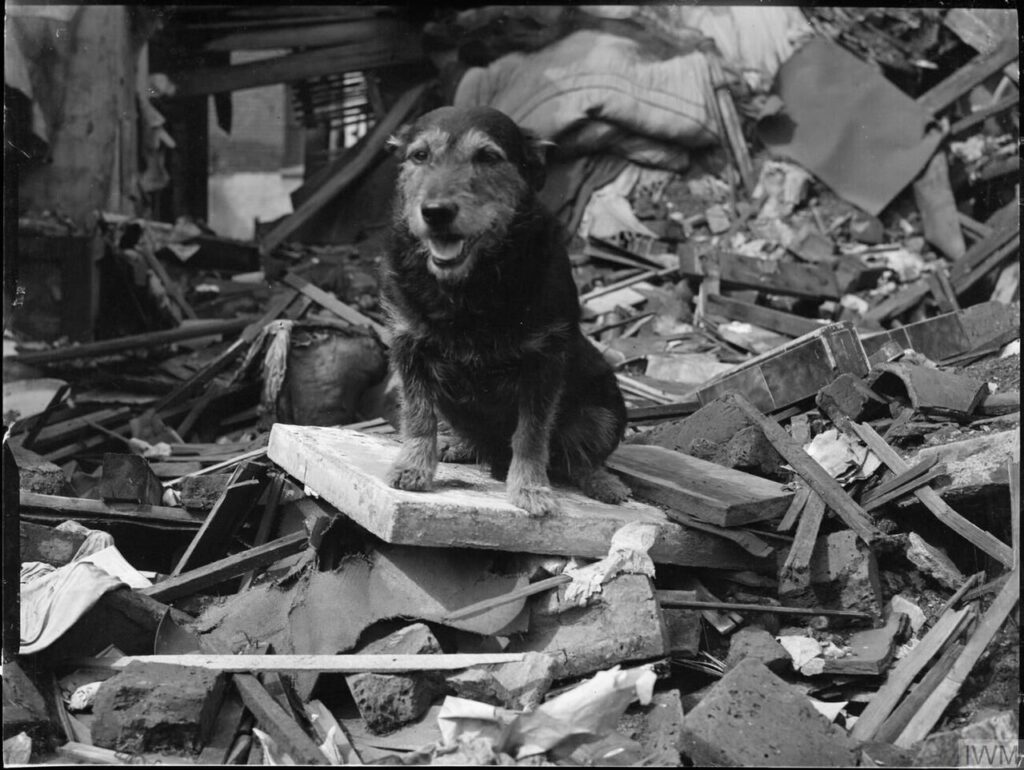
Rip は戦時下ロンドンの雑種テリアで、1940年に Poplar の爆撃後、空襲監視員に見つけられた。その後、民間防衛で使われた初期の捜索救助犬の一頭となった。
英国ロンドン
From a bombed street into rescue work
In 1940, after heavy bombing in Poplar, East London, Rip was found by an air-raid warden. He did not begin as a formally trained dog; he was brought into rescue work from the ruins of a wartime neighborhood.
Rip then searched collapsed buildings during the London Blitz. Public records describe him as one of the earliest search and rescue dogs used by the civil defense service.
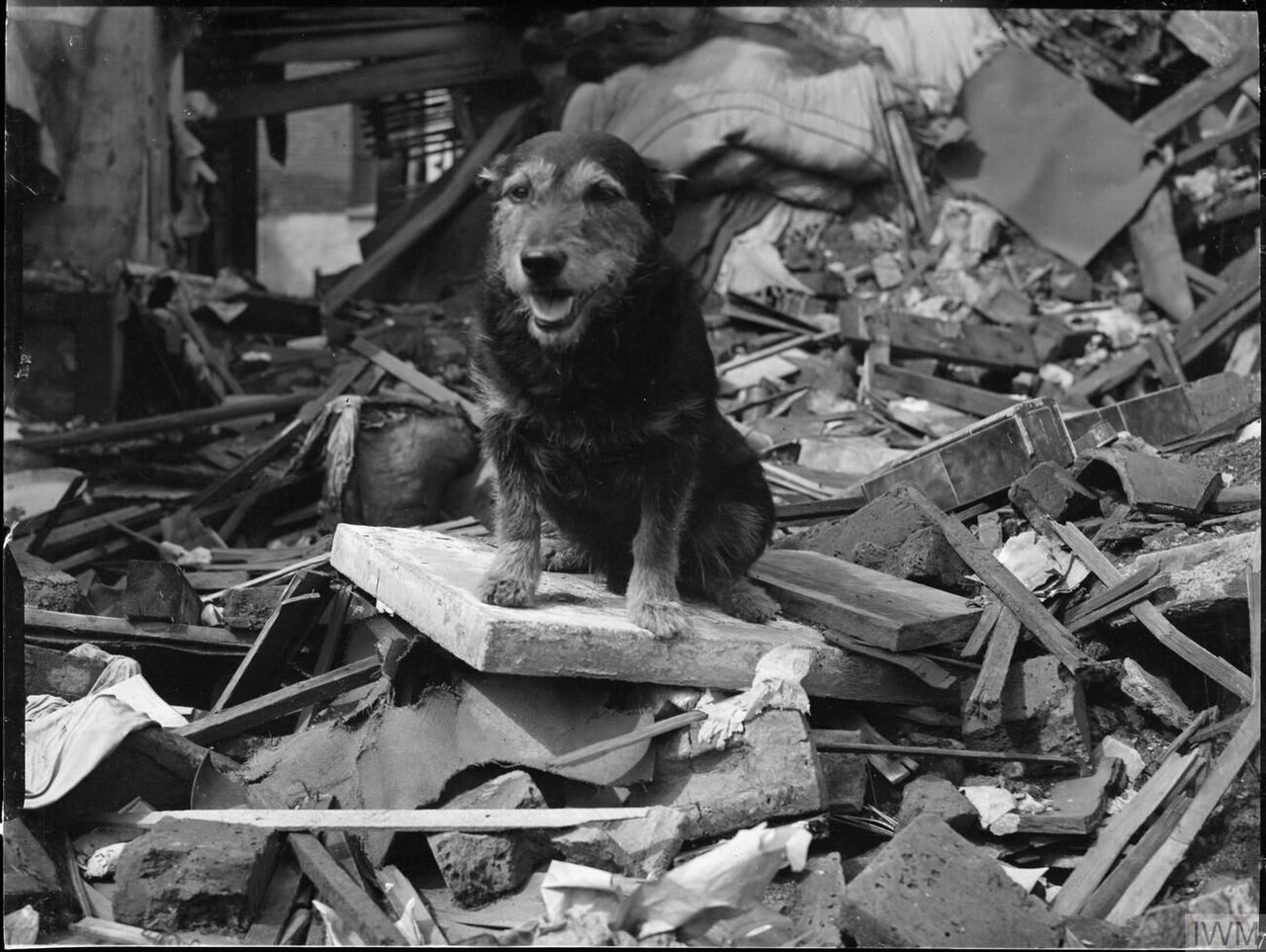
A small body in the rubble
Rip was not a large specialist breed; he was a mixed-breed terrier. His small body helped him move through rubble, timbers and narrow gaps, indicating places where people might be trapped.
He is often credited with saving more than 100 people. This record uses phrases such as 'credited with' and 'public records state' because wartime rescue statistics cannot be verified item by item in the way modern rescue files sometimes can.
A Dickin Medal
In 1945, Rip received the PDSA Dickin Medal, often described as the animal equivalent of the Victoria Cross for bravery in war.
The medal put Rip's name into public memory, but what matters is not only the honor. It is the repeated work of entering a bombed city, searching rubble and helping humans locate people who were still alive.
Why this record matters
Rip's story shows that search dog systems did not always begin with fully formal training. Sometimes a found dog, through environment, temperament and human trust, became an effective partner in rescue.
Recording Rip means remembering another kind of labor in wartime ruins: an animal without tools or words using scent, body and repeated entry into danger to bring trapped people back into human sight.
タイムライン
- 1940 Rip was found by an air-raid warden after bombing in Poplar, London.
- 1940s Rip searched Blitz rubble and is publicly credited with helping save more than 100 people.
- 1945 Rip received the PDSA Dickin Medal.
- 1946 Rip died.
💬 メッセージを残す
Messages are reviewed before publication. Please keep them calm, factual, and respectful.