
Documentary & Investigations
The Three-North Shelterbelt: a green wall on the edge of wind and sand
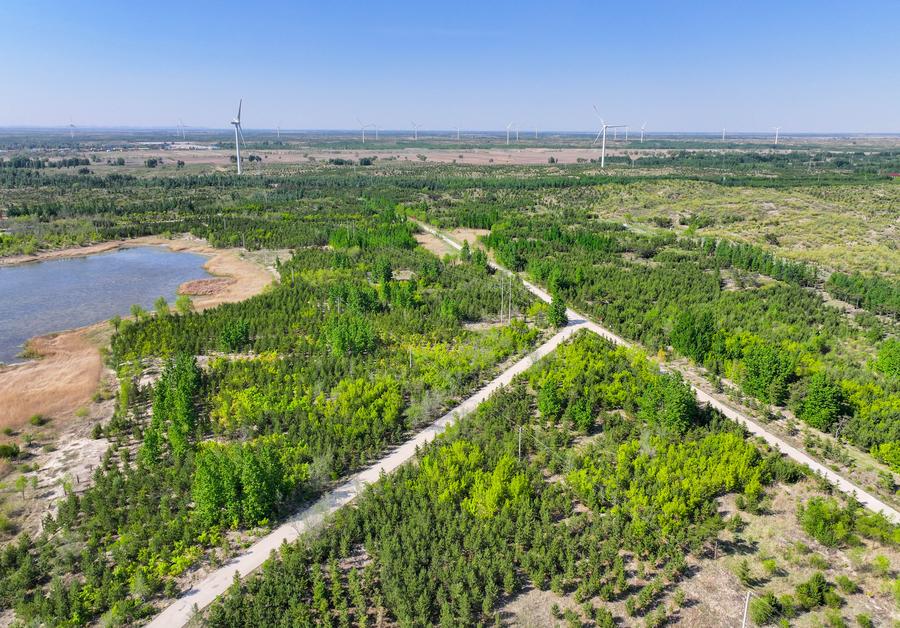
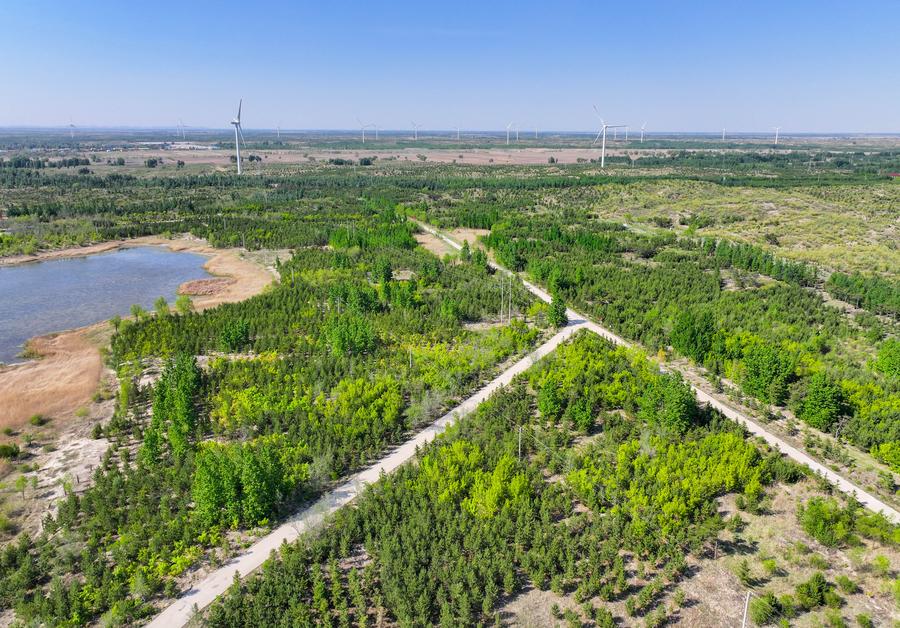
1. Where the wind blows, it’s not just that there are no trees
If the Three-North Shelterbelt is only described as a green project, it will be underestimated. The truly moving part of Sanbei lies not in the number of green patches on the map, but in the small sounds of life coming back behind those green patches: grass seeds falling to the ground, ants moving their nests, rats and rabbits digging holes again, lizards leaving thin lines on the sand, skylarks rising from the grass, geese and ducks gathering on the wetland water, foxes, roe deer, hares, hedgehogs, snakes and countless insects regaining shelter, food and breeding space.
The Three North Region spans northwest, north and northeast China, starting from Heilongjiang in the east and Xinjiang in the west, covering large areas of arid, semi-arid and sandstorm-affected areas. This is not a landscape, but a set of extremely complex ecological boundaries: grasslands and sandy lands, farmland and barren slopes, river valleys and lakes, wetlands and saline-alkali lands, artificial forests and natural shrubs intertwined with each other. One place is suitable for trees, while another place may only be suitable for grass; one place needs to be enclosed, while another place needs to control groundwater consumption; a successful experience in one place may become a new mistake when moved to another place.
Therefore, the story of Sanbei cannot be written as a single-line narrative in which “man conquers nature”. It is more like a long documentary literature: people once pushed the grasslands to sandy land due to reclamation, overgrazing, lumbering, and water and soil damage; people were later forced back to reality by sandstorms, poverty, and animals that lost their habitats, and began to learn how to return land to grass, return water to wetlands, return gaps to animals, and leave a way to survive for themselves.
2. Desert is not a blank; desertification is a blank
A true desert is not devoid of life. Sand lizards, jerboas, foxes, birds of prey, drought-tolerant shrubs, lichens, mosses, beetles and nocturnal critters all have their place. But desertification is different. Desertification often means that land that originally supported grasses, insects, birds and animals has been so disturbed that only shifting sands, bare surfaces and broken food chains remain.
When the grass roots cannot grip the soil, the wind takes away the finest soil and seeds on the surface; when the grass seeds have no chance to fall to the ground, there are fewer insects; with fewer insects, there are fewer birds that eat insects; with fewer birds, there are fewer raptors; the burrows of rats and small animals are destroyed, and foxes, weasels, snakes and owls also lose food. On the surface, it looks like a piece of sand; looking deeper, it looks like a torn net.
The initial goals of the Three-North Project were to prevent wind and sand, conserve soil and water, and protect farmland and villages. But from an animal perspective, its meaning is more complex: it is not simply turning sandy land into woods, but re-suturing broken ecology where possible. Even just a few rows of shrubs, a closed pasture, or a stretch of river bank that is no longer trampled by livestock can become the first places for small animals and birds to return.
3. Plants came back first, followed by insects.
Animals don’t come back out of thin air. The first things to change are often the plants. Herbs keep the soil surface from being completely bare, shrubs provide shade and branches, and trees modify wind speeds and microclimates. The more plants and litter there are, the more soil organic matter begins to accumulate; with more stable soil, microorganisms, earthworms, ants, beetles and spiders will increase.
These small lives are often ignored in the grand narrative, but they are the bottom layer of the entire ecological restoration. Without insects, many birds would have no food; without pollinators, the reproduction of many herbs and shrubs would be affected; without decomposers, litter cannot be returned to the soil smoothly. Whether a place is beginning to recover should not just look at the height of the trees, but also whether there are insects chirping in the grass, whether there are crawling marks on the sand, and whether there are small animals moving around at night.
Over-reliance on a single tree species in some places in the early days, and later the emergence of degraded forests, pests and diseases, and water stress is itself a chapter in the story of the Three Norths that must be written honestly. Really mature ecological restoration is not to plant a variety of tree species neatly, but to restore the structure of trees, shrubs and grasses based on water, soil, topography and original ecology. For animals, structure is much more important than “looking good”: low grass provides insects and nestlings, shrubs provide small mammals and passerine birds, and taller trees provide the possibility for birds of prey to rest and build nests.
4. Birds are the first creatures to respond to letters
Birds are often the most sensitive messengers of ecological restoration. They can fly and can quickly discover new water surfaces, grass and forest belts; they are also picky and will not stay long when they lack food, shelter and breeding grounds. Whether a place can move from desolation to stability is one of the most intuitive evidences of the changes in migratory, resident and breeding birds.
In the Horqin area, sandy land, grassland and wetland intersect. According to public information, Horqin National Nature Reserve is regarded as an important resting place and breeding ground on the migratory route of migratory birds, and its protection targets include red-crowned cranes, white cranes, Oriental white storks, blue-headed pochards and other rare and endangered birds. This site does not mechanically extrapolate the data from a protected area to the entire Three Norths, but this area illustrates a key fact: when conditions such as wetland water systems, meadows, sandy forests, shrubs, and artificial nests coexist, birds will regard this area as an usable space again.
In a large-scale project like Sanbei, changes in birds are particularly worth recording. Birds of prey need open space and prey, geese and ducks need water and shoals, cranes need wetlands and less disturbed breeding environments, and birds need grass seeds, insects and shrubs. When a certain kind of bird comes back, there is often a set of conditions behind it.
If a site contains only trees but no insects, grass seeds, shallow water, dead wood, and shelter, it will not be truly rich in birds. Conversely, when the number of bird species increases, it means that the ecological space begins to become hierarchical: there is food on the ground, shelter in the bushes, resting places by the water, and migration routes in the air. The change in the richness of animal species is the main thread that should be written down in the story of Sanbei.
5. Beasts come back slower and more honestly
Beasts do not reappear as easily as birds. They need continuous habitat, quietness, a large enough range of activities, and a step back from human activities. Rabbits, hedgehogs, weasels, foxes, roe deer, wild boars, wolves, red deer and even larger ungulates have different habitat requirements, but what they have in common is this: they will not come back because of slogans, but will only come back because the food chain and hiding conditions have really improved.
The recovery of mammals in different areas of the Three Norths cannot be generalized into one conclusion. The woodlands and wetlands in the northeast may form another set of relationships with roe deer, red deer, wild boars, martens, foxes, owls, and raptors; the grasslands, sandy lands, and shrublands of Inner Mongolia are more related to the balance between herbivores, small rodents, foxes, stoats, and raptors; and the desert and semi-desert areas of the northwest are connected with goose-throated antelope, argali, blue sheep, wild ass, lizards, desert birds, and road obstruction issues.
In academic research, the design of wildlife passages in desert landscapes has taken into account ungulates such as ibex, argali, goose-throated gazelle, etc. This shows that a new understanding is emerging: ecological engineering should not only consider plants, but also consider how animals cross roads, how to find water sources, and how to avoid overgrazing and human interference.
The process of animals returning is often not as easy to calculate as the survival rate of saplings. But it’s more telling. Because mammals need a complete chain: herbs and shrubs provide food, small animals provide prey, terrain provides concealment, and human management reduces hunting and driving. A night-time infrared camera that captures a fox doesn’t just capture a fox, it captures a place that can finally accommodate foxes again.
6. Wetlands are the softest heart of the Great Green Wall
Sanbei cannot just write about Lin. A lot of really important animal changes happen in wetlands. Wetlands are not just open spaces with “more water”. They are a stopover for migrating birds, a complex system of fish, amphibians, insects and aquatic plants. They are also the most precious gathering point of life in arid and semi-arid areas.
The example of Horqin Wetland is particularly illustrative. This is not only a key area of the northern sand control belt, but also a place where rivers, meadows, sandy lands and swamps are embedded. Public information mentions that the reserve has strengthened management and protection through river and lake connections, river dredging, video surveillance and migratory bird banding, and has become an important habitat for a variety of rare and endangered birds. For animals, this type of restoration is not an abstract policy, but a question of whether they can safely rest, reproduce, and raise chicks.
When wetlands are restored, the first things to be seen are birds. But the bird is just the surface. The changes in water level, shoals, reeds, submerged plants, benthic animals, fish, shrimps, frogs and insects form the reason why migratory birds are willing to stay. An Oriental white stork’s nest has its chicks alive and well, with water, fish, a nest location, and a low-disturbance environment behind it. There are also people who continue to maintain the artificial nest and monitor risks.
Therefore, changes in life in the Three Norths should not be reduced to forest cover. Forest coverage is important, but the restoration of animal species richness often occurs at the junction of forests, grasslands, wetlands, farmland edges and sandy shrubs. The more complex the boundaries, the greater the chances of life.
7. People are also changing: from fighting against the land to learning to make way
The documentary value of Sanbei lies in its people. What many desertification control researchers initially face is not the poetic wilderness, but the reality of poverty, wind and sand crushing fields, buried roads, degraded pastures and village livelihoods. People need to survive, livestock need to eat grass, crops need to be harvested, and children need to go to school. If ecological protection cannot see these realities, it will become empty talk.
For a truly long-term and effective restoration, both people and animals must have a place. Enclosure is not to drive people away, but to allow certain places to temporarily take a breather from high-intensity use; industrial transformation is not to simply develop tourism or medicinal materials, but to reduce repeated claims on fragile land; grazing bans, rotational grazing, reseeding, water conservation and management all need to be designed together with the income structure of local people.
This is why there are so many iterations in the Three-North Project. In the early days, some places pursued quantity and speed, but later had to face the problem of single tree species, water consumption, pests and diseases, and the transformation of degraded forests. This process is not pretty, but it is real. Ecological protection is not a slogan that is always correct, but learning from mistakes how to get closer to the laws of nature.
For animals, the most important change for humans is from “occupying” to “giving up.” Give up a section of the river bank, a breeding ground, a migration channel, so that no one is constantly disturbed at night, so that the grassland has time to recover, and so that the wetland is not drained randomly. When people are willing to give up a little space, animals can come back.
8. Three Norths is not an answer, but a set of questions
The answer to the Three-North Shelterbelt Forest can easily be written as: when the sand comes, plant trees; when the wind blows, afforestation; when deserted, plant green. But true ecological documentation should admit that it is more like a set of questions.
The first problem is water. In arid and semi-arid areas, water is the bottom line. Tree species selection, density, irrigation methods, and changes in groundwater are all related to whether the restoration can be sustained. Planting more trees in some places may not be better, but grasses and shrubs may be more suitable.
The second issue is diversity. A single tree species can easily form a fragile system, and it is difficult for animals to obtain sufficiently complex food and habitat structures. Only by combining trees, shrubs and grasses, giving priority to native species, retaining dead trees and shrubs, and jointly restoring wetlands and grasslands can we get closer to the living system.
The third issue is connectivity. An isolated forest belt is useful for small birds, but may not be enough to support medium and large mammals. Animals need passage as roads, fences, farmland and towns chop up their habitat. Ecological restoration cannot just look at a certain piece of land, but also depends on whether it is connected to the surrounding space.
The fourth problem is people. Without stable livelihoods, protection will be undermined by reality; without management and education, poaching, poisoning, and destruction of habitats will still occur; without long-term monitoring, the so-called recovery may only look good in the short term.
These questions make Sanbei even more worthy of recording. Because it is not a fairy tale, but a long response of a huge country to wind and sand, poverty, ecological degradation and loss of life for more than half a century.
9. Changes in the richness of animal species are the reason for inclusion on this site
This site is not an archive of forestry projects, so the core of this article should not be the scale of the project, but the way life comes back. The increase in plants is only the first layer; changes in insects, birds, small mammals, raptors, wetland waterfowl, ungulates and carnivores show whether the ecosystem has truly become thicker.
After the sandy land is renovated, if herbaceous plants increase, insects and small rodents will respond first; after the shrubs and forest belts are stabilized, passerine birds, hares, hedgehogs, weasels, and foxes have the opportunity to take advantage; after the wetland water system is restored, migratory birds such as cranes, storks, geese, ducks, and shorebirds will obtain resting and breeding conditions; large ungulates and carnivores rely on larger-scale habitat connections and long-term low-disturbance environments.
This chain of change is more important than simply “going green”. Because green may be just a color, and the richness of life is ecology. True restoration is not about painting the land green, but about allowing life of different sizes, feeding habits, reproduction methods, and migration habits to find their place.
This is also the significance of Sanbei: it allows us to see that protecting animals does not always start with rescuing an injured animal. Sometimes, it starts with a handful of grass seeds, a river ditch, a closure, and a piece of soil that is no longer swept away by the wind. When the birds come back, the animals come back, and the insects come back, people will realize that the so-called ecological projects ultimately protect the entire web of life.
10. Those guardians without names
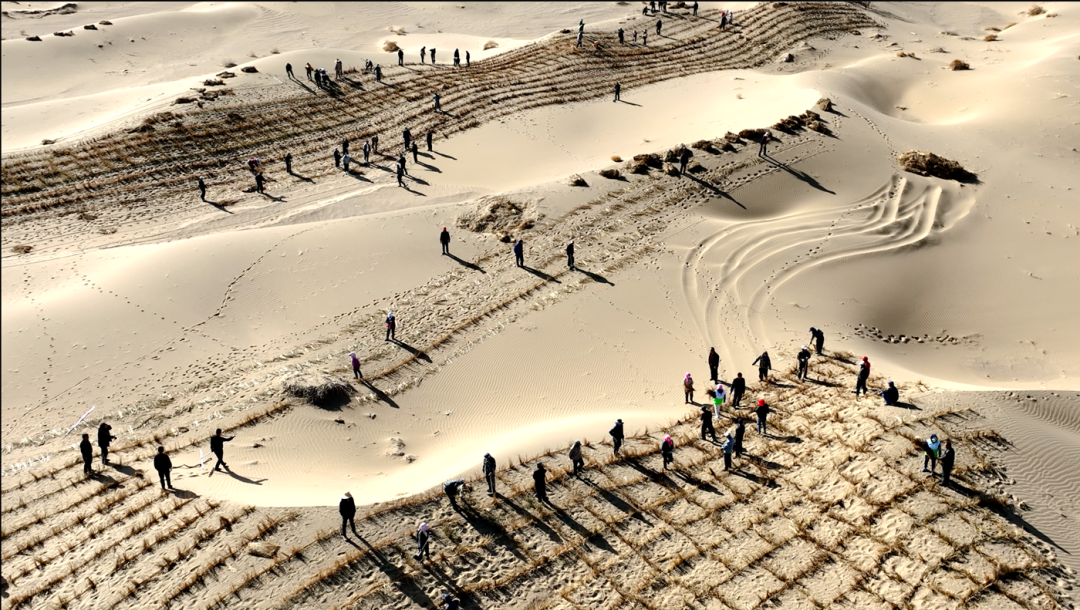
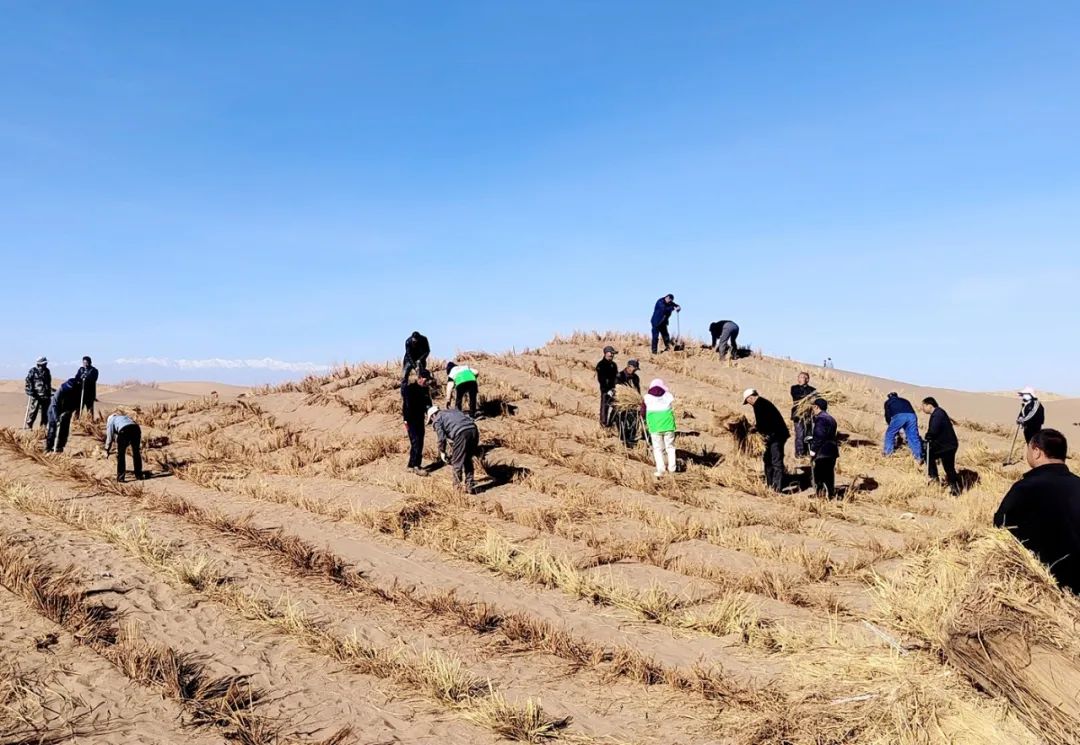
In the public narrative of Sanbei, many names will be remembered, and many more names will not be remembered. Some people are raising seedlings in nurseries, some are pressing grass squares in the sand, some are carrying water in the wind, some are repairing artificial nests near wetlands, some are monitoring birds, some are advising herders to reduce high-intensity grazing, and some are recording animals in infrared cameras.
These tasks may not seem heroic, but they are long. It may take several years to know whether a seedling planted in spring will survive; the water level of a wetland may fluctuate due to a dry year; the success of a bird’s nest may depend on whether someone reinforces it in time, whether someone persuades tourists who get too close, and whether someone keeps out the risks of poaching and poisoning.
The most difficult thing about ecological protection is that it often does not have a dramatic ending. It doesn’t have a pick-up moment like Rescue Story , nor does it have clear villainy like Hurt Files . It is more often about watching, guarding, supplementing, etc. day after day. Wait for a piece of grass to grow, wait for a bird to come back, wait for a place to finally stop being chased by wind and sand.
But these invisible labors are the prerequisite for animals to be visible. Without the patience of these people, migratory birds will not obtain safe water out of thin air; without the concession of these people, hares and foxes will not have the night again; without the learning of these people, green may remain in numbers instead of becoming life.
11. From the Great Green Wall to the Corridor of Life
The term “Great Green Wall” is powerful, but it is also easily misunderstood. The Great Wall makes people think of blocking, but ecological restoration is not just about blocking wind and sand, but also allowing life to flow. For birds, they need migratory stops; for animals, they need continuous corridors; for insects and plants, they need transmission paths; for wetlands, they need water system connections.
If you understand the Three Norths as a wall, you will pay too much attention to the linear protective forest; if you understand it as a life corridor, you will start to pay attention to patches, edges, transition zones and connection points. Where are the forest areas that can serve as resting spots for birds? Where is the shrubbery that connects two meadows? Where do roads need animal crossings? Where would fencing block ungulate migration? These questions are closer to the real needs of animals than “how many trees to plant?”
In the future, if Sanbei wants to continue to transform into a more mature ecological project, animals must be put into assessment centers. We don’t just ask how many trees survive, but whether the grassland is stable, whether insects return, whether birds breed, whether mammals can move through, whether wetlands can be maintained, and whether conflicts between humans and wild animals are reduced.
When these questions are seriously raised, Sanbei is not just a project name, but a deeper social learning: humans finally begin to admit that land does not only belong to people. Sand control, agricultural safety, village livelihoods and animal survival are not isolated matters. They are originally in the same network.
12. Only by looking at the Three Norths from a bird can you know whether the project has a soul.
If you look at Sanbei from a high altitude, you will first see the colors: green, yellow, and brown. The forest belts are like lines, the grass is like patches, and the sand is like a wound that has not yet healed. But if you look at it from the eyes of a migratory bird, color is not the most important thing. What it is looking for is a place to stay, where there is shallow water, where there is an undisturbed night, where there are insects, fish, shrimp or grass seeds to feed on, and where it is safe until the next gust of wind comes.
When a bird fails to migrate, it often does not die from a single cause. It may be that the wetlands have been drained, it may be interference from strong light at night, it may be that the shoals have turned into hardened shorelines, it may be that food has decreased, or it may be that human activities are too close. On the other hand, when it is willing to stop, it means that this place has given enough answers. The value of ecological restoration lies in these very specific answers.
If the Three-North Shelterbelt is only understood as “blocking sandstorms”, the animals will still be just the background. Only if it is understood as a living network of forests, grasslands, wetlands, farm edges, desert scrub and migratory nodes will animals become protagonists again. When writing about Three Norths on this site, we must shift the lens from engineering indicators to these lives: how a bird comes back, how an animal travels, and how a piece of grass supports invisible insects.
13. Only by looking at Sanbei from a fox can we know whether the food chain has been reconnected
The fox is not the rarest animal in Mikita’s story, but it is a suitable object of observation. It does not need a territory that is so vast that it is difficult to satisfy like a large beast, nor is it like some small rodents that can reproduce quickly as long as the local environment improves. Foxes need to eat insects, small animals, bird eggs, fruits and carrion. They also need shelter and a relatively safe space for activities. Whether a place can accommodate foxes indicates that the underlying food and habitat structures already have a certain thickness.
If there are only neat trees in a field but no bushes, grass seeds, insects and small animals, it will be difficult for the fox to stay. Foxes will also retreat if there are too many roads around them, too many lights at night, or too many villages and free-range dog activity. Its appearance is not as simple as “one more animal”, but it shows that this space is no longer just an accessory for human production, and has begun to regain the possibility of wild life using it.
Looking down from the fox, you can see grass, insects, rodents, hares and surface microhabitats; looking up from the fox, you can see raptors, wolves and more complex predatory relationships. The richness of animal species in Sanbei cannot be judged solely by “whether there is a certain star species.” What really matters is whether the food chain is connected, whether predators and prey can coexist, and whether the ecosystem can operate without being interrupted at any time.
14. Failures, disputes and corrections should also be written into records
If ecological documentary only writes about beautiful results, it will become propaganda. A major project like the Three-North Project spans too long a time and covers a vast area, so it is impossible for it to be without deviations. In the early days, some places emphasized the area and speed of afforestation, but did not pay enough attention to tree species selection, density, and water carrying capacity; some artificial forests later deteriorated; some places need to shift from “planting trees” to “planting grass, enclosing, and restoring shrubs and wetlands.” These unseemly parts just show that ecological restoration is not a straight line.
For animals, the wrong fix can also cause harm. A single tree species lacks layers and cannot provide enough food for different animals; too dense a forest consumes water and weakens the herbaceous layer; pursuing only a tidy landscape may clear away dead trees, shrubs, and natural edges, which are exactly the spaces that insects, small animals, and birds need. “Clean” in the eyes of humans is often barren in the eyes of animals.
Therefore, a mature Three-North narrative should include corrections: from simple afforestation to the combination of trees, shrubs and grasses, from pursuing area to focusing on quality, from seeing green to seeing biodiversity, from treating animals as ancillary results to considering whether animals can survive as an evaluation criterion. Only when a project is willing to correct itself can it become a true ecological guardian, not just a huge landscape transformation.
15. Human life is not the enemy of ecology, but we must learn boundaries
There is no no man’s land along the Three Norths. There are villages, pastures, farmland, roads, mining heritage, tourist developments and generations of life. It is not fair to simply write people off as destroyers, because the degradation in many places is related to poverty, livelihood pressure, historical policies, resource allocation and natural conditions. If people want to survive, ecological protection must answer people’s questions.
But human life cannot expand infinitely. Overgrazing will cause the grassland to lose the opportunity to recover, random reclamation will cause the sandy land to reactivate, wetland drainage will cause migratory birds to lose their footing, roads and fences will cut off the paths of mammals, and poisoning and illegal hunting will break the newly restored food chain again. The so-called harmony between man and nature is not a gentle slogan, but a specific boundary: where you can give birth and where you must rest; where you can enter and where you should retreat; when you can use it and when you must let animals reproduce.
These boundaries often need to be established slowly. They rely on laws and management; they rely on compensation and education; they rely on scientific monitoring and local people’s understanding of the significance of a meadow, a wetland, and an animal passage to their future lives. When people no longer regard nature as a warehouse that can be withdrawn indefinitely, ecological restoration can be stabilized.
16. What needs to be written in the ecological protection record is time
The most difficult thing about Sanbei to write about in a short article is time. Wind and sand do not approach in a day, land degradation does not occur in a day, and animals do not leave suddenly one morning. They tend to retreat little by little over many years: the grass becomes shorter, the water becomes shallower, the birds become fewer, and the beasts no longer appear. Children think that there was only wind and sand here.
Recovery has been equally slow. In the first year, it may just be a small patch of sand. In the second year, grass seeds sprout. In the third year, there are more insects. In the fifth year, birds begin to build nests. Ten years later, the bushes form a cover. Twenty years later, people suddenly discover that the once rare hares, foxes, raptors and migratory birds have returned to their daily life. Real ecological changes are often too slow to be newsworthy, but precisely because of their slowness, they are more worthy of being archived.
This is why this site has included it in the “Ecological Guardian Documentary”. It is not an event that happens today and ends tomorrow, but a relationship repair that spans generations. Humans once used the land to an imbalance, and were forced to learn in the face of sandstorms and poverty; animals once retreated, and then tentatively came back in some places. This process does not have a perfect ending, but every time life comes back, it proves that correction is still possible.
17. Why this article must focus on the richness of animal species
If we only write about “how much green space has been added” and “how much work has been completed” in Sanbei, it will be out of touch with the mission of this website. The Global Animal Memory Archive records not a roll of engineering honours, but living relationships. The reason why Sanbei deserves to be included in this website is because it allows us to see that protecting animals does not only happen in shelters, rescue sites or courts, but also happens in whether a grassland can be restored, whether a river ditch can be preserved, and whether a wetland can provide a place for migratory birds to settle down.
Animal species richness is one of the most honest indicators. Trees can be planted, grasses can be reseeded, and water surfaces can be restored in the short term, but if insects, birds, small mammals, raptors, and wetland animals do not form ongoing relationships, the ecosystem remains thin. On the contrary, when animals at different levels begin to appear, it means that food, concealment, reproduction, migration and human interference control are working together.
Therefore, the writing of this article must look back at the project from the animals: Who does the shelterbelt block the wind? For whom does the grass leave its seeds? For whom do wetlands protect water? To whom does the bush provide shelter? For whom does the road leave a passage? Only by asking these questions to the end will Sanbei be no longer an empty green narrative, but a long documentary about how humans relearn to coexist with life.
18. Judging from children’s memories, only ecological restoration can have a future.
Ecological changes eventually enter the memory of a generation. If a child has only seen yellow sand, withered grass and the blinding spring in the wind since he was a child, he will think that barrenness is the original appearance of his hometown; if he sees the grass gradually thickening, sees migratory birds falling on the water, and sees the occasional fox crossing the distant road at night, his understanding of the land will be different.
This memory is important. Because protection cannot only be accomplished by professionals, it requires ordinary people to turn “don’t destroy” into common sense and “leave a way for animals” into a living habit. If a child knows that there are bird nests in the wetland, he may stop approaching them at will; if a herdsman knows that resting on the grassland will allow his livestock to have grass in the future, he will be more likely to accept rotational grazing; if a village knows that foxes and raptors are not disasters, but part of the food chain, there is a chance that conflicts between humans and animals will be reduced.
The long-term significance of the Three Norths lies not only in how much sand is blocked, but also in whether it changes people’s imagination of the land. Land is not an inexhaustible backdrop, and animals are not dispensable decorations. If children can grow up in a recovering ecology, they may be less possessive and more awe-inspiring when facing wilderness, grasslands, wetlands and animals in the future.
19. Looking at a piece of grass seed, a grand project is actually very small.
The Three Norths are often called grand projects, but when grand projects are actually implemented, they are often very small. It might be a grass seed blown by the wind to the back of the dune, or it might be a grass square holding down the quicksand, it might be a river ditch that is no longer filled in at will, or it might be a bush that blocks the cold wind for the little beast in winter. Magnificent not because of the loudness, but because of the countless small movements that lasted for many years.
Animals rely on these little things. Insects need flowers and humus, nestlings need soft grass, snakes and lizards need warm stone crevices, hares need shrub edges, migratory birds need shallows, and raptors need high points where they can observe their prey. As long as one link is ignored, the ecosystem will become thin.
Therefore, when writing about the Three Norths, you cannot just write about the green color on the satellite image. Satellite images tell us about color changes, and details on the ground tell us whether life could live there. True ecological protection is to give life a place at every scale: from grass seeds to shrubs, from insects to migratory birds, from small mammals to large ungulates, from the living arrangements of a village to a cross-regional migration channel.
20. This road is not over yet
The Three-North Shelterbelt is not a completed conclusion. It still faces issues such as climate change, extreme drought, groundwater stress, recurring grassland degradation, exotic species, pests and diseases, road cutting, tourism development and local development needs. Any description of it as “already victorious” would be too rash.
But it is equally thoughtless to only see problems and deny all protection. The wind and sand in many places have indeed receded, the lives of many people have indeed become stable, and many animals have indeed regained their habitat. A truly responsible record is to write down these things at the same time: don’t cover up mistakes, don’t deny efforts; don’t take green as everything, and don’t take controversy as everything.
In the future of the Three Norths, what is most worth looking forward to is not louder slogans, but more detailed ecological judgments: where trees should be planted, where grass should be returned, where moist areas should be maintained, where wilderness should be left, where animals should be allowed to pass, and where human activities should be stepped back. Only in this way will the Great Green Wall slowly transform from a wind-blocking project into a life corridor that allows life to travel, stop, reproduce and continue.
21. Information supplement: the ecological meaning behind the numbers
In public reports, the Three-North Project is often summarized with a few numbers: it was launched in 1978 and planned to last until 2050; it covers key areas affected by wind and sand hazards and soil erosion in northwest, north and northeast China; long-term goals include wind prevention and sand fixation, water and soil conservation, protection of farmland and pasture, and improvement of the human settlement environment. AP mentioned in a 2026 report on China’s “Great Green Wall” that related projects have promoted forest coverage from about 5% to about 14% in 2022 since 1978, and said that the expansion trend of desertified land in China has been reversed since 2000, and the area of desertified land has been reduced by more than 1,000 square kilometers every year.
These numbers are meaningful but cannot be directly equated to animal recovery. The increase in forest coverage indicates that the surface structure has changed; the decrease in desertified land indicates that wind erosion and exposed land surfaces have been controlled to a certain extent; but whether the richness of animal species can be restored depends on more detailed indicators: whether birds breed, whether insects and small animals increase, whether wetlands are stable, whether ungulates can cross roads, and whether predators reappear. Numbers are the entrance, not the conclusion.
This is why this article must be written. The value of the Three Norths should not stop at “greening up”, but should continue to ask “who can come back after becoming green”. If the green is just a single tree species, it has limited meaning to animals; if there are grasslands, shrubs, wetlands, shoals, dead trees, insects and migration corridors behind the green, it can become a habitat for life.
22. Information supplement: Horqin is not an isolated case, but an observation window
The Horqin area is suitable as an observation window in this article because it has sandy land, grassland, wetland and migratory bird migration nodes. Public information shows that Horqin National Nature Reserve and related nationally important wetlands focus on protecting rare and endangered species such as red-crowned cranes, white cranes, oriental white storks, blue-headed pochards and their habitats. This area has been included in discussions related to the East Asian-Australasian migratory bird migration corridor. Wetlands, meadows, sandy areas and sparse forests and shrubs together constitute a composite space that can be used by birds and small animals.
Some information mentions that the bird list of Horqin-related protected areas reaches 239 species in 20 orders, 50 families, and recorded national first- and second-level protected birds. This site must be cautious when using this type of data: this is not an average situation across the entire Three Norths, nor does it mean that all Three North governance areas have reached a similar level. It illustrates that where water systems, wetlands, meadows and shrub structures exist and are managed, animal abundance can be visible evidence of ecological restoration.
Such windows can help readers understand the complexities of Three Norths. What really makes the birds stay is not the word “trees”, but the co-occurrence of water, grass, insects, shoals, nest sites, low-disturbance environment and continuous management and protection. The significance of Horqin lies in its translation of abstract sand control projects into concrete life: where cranes stop, where storks nest, and why blue-headed pochards still need to stabilize wetlands.
23. Information supplement: Water resources are the bottom line for all recovery
Many places along the Three Norths are in arid and semi-arid areas, and water resources determine the boundaries of restoration. Research on the relationship between vegetation and groundwater in arid and semi-arid areas of northern China suggests that groundwater levels, precipitation and soil available moisture will significantly affect vegetation growth; during long-term droughts, declining groundwater levels may threaten vegetation survival. This is especially important for Sanbei: not all places are suitable for high-density afforestation, and more trees is not always better.
For animals, water stress also travels along the food chain. With less water, the herbaceous layer becomes weak; with weak grass, there are fewer insects and small animals; wetlands shrink and migratory birds lose their resting places; shrubs degrade and hares, hedgehogs, foxes and birds lose their hiding places. If ecological restoration ignores water and only pursues surface greening, it may end up looking good in the short term but fragile in the long term.
Therefore, the mature Sanbei writing method must include water. Some places are suitable for trees, and some places are more suitable for shrubs and herbs; some areas should focus on enclosure, and some areas should focus on restoration of wetland water systems and grasslands; some places require animal passages, and some places need to first reduce the intensity of human activities. Water is not a technical detail, but the bottom line of whether life can be left behind.
24. Opinions of this site
The inclusion of the Three-North Shelterbelt on this site is not to sing praises for any project, nor to avoid its past mistakes and controversies. On the contrary, ecological documentaries must write about complexity: when writing about achievements, they also write about the costs; when writing about greening, they also write about water stress; when writing about afforestation, they also write about grasslands and wetlands; when writing about human efforts, they also write about whether animals really come back.
We recognize the long-term, difficult and concrete ecological restoration efforts in the Three-North Project. They have allowed many places to slowly recover new life space from the approaching wind and sand, competition for land between humans and animals, and fragmented habitats. We also believe that in the future, biodiversity should be placed at the center of the Three Norths: whether animals can survive, migrate, and reproduce, whether plant communities are stable, and whether conflicts between humans and wild animals can be reduced are important criteria for measuring success.
If animal injury archives record the worst aspects of human beings, and animal stories record the love and protection between humans and animals, then ecological guardianship records record whether humans can correct their mistakes. The most memorable thing about the Three-North Shelterbelt is not a grand slogan, but the first chirping of insects in the grass after the wind and sand retreated a little, a group of migratory birds falling on the wetland again, and the fact that people finally learned to leave a little way for other lives.
Sources and Notes
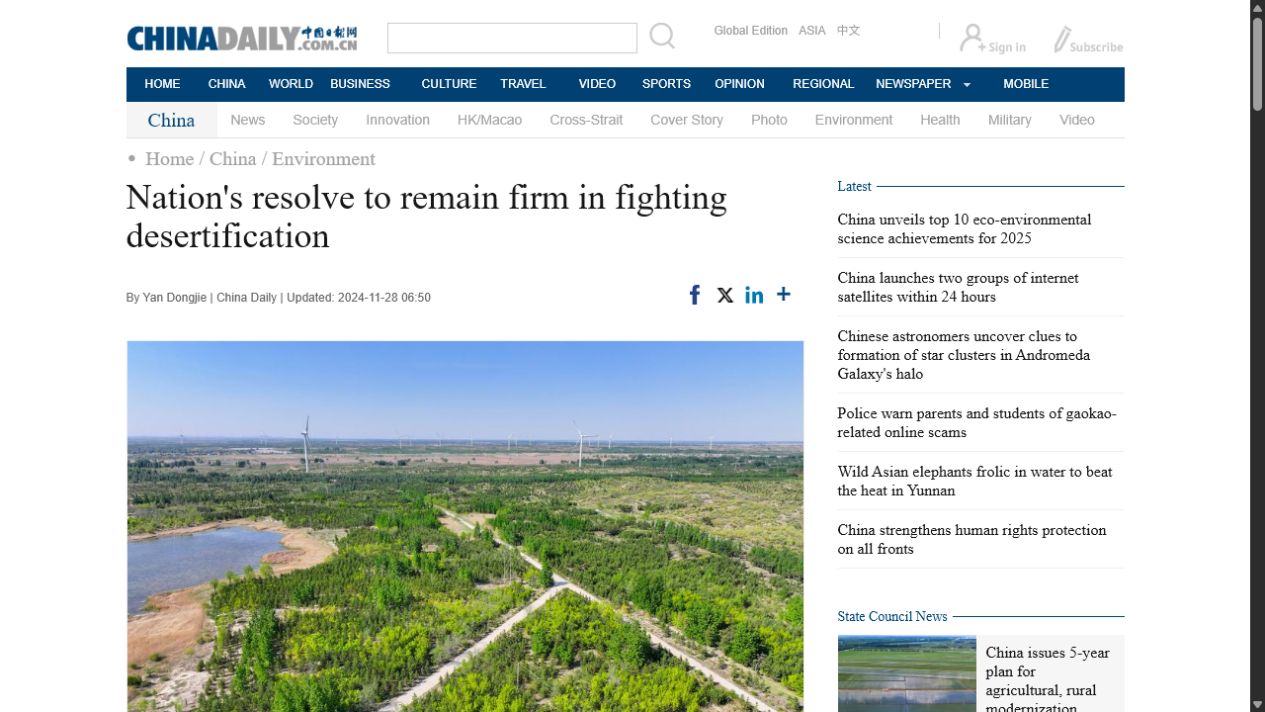
China Daily: Nation’s resolve to remain firm in fighting desertification
China.org.cn: public reporting on the Three-North program and desertification control
Associated Press: China is building a green wall to fight desertification
Zhang et al.: Designing wildlife crossing structures for ungulates in a desert landscape
Also refer to the Three North Project, Horqin National Nature Reserve, National Important Wetlands, East Asia-Australasia Migratory Bird Migration Channel and desertification control public information. This article is an ecological conservation documentary and does not mechanically extrapolate animal changes in a single area to all the Three North Regions; when it comes to species changes, it is expressed separately according to different ecological regions.
Remember and Respond
Offer a Flower
Anonymous flower offerings are limited by IP address to keep this public-interest website sustainable.
Messages
Approved visitor messages will appear here after review.
💬 Leave a Message
Messages are reviewed before publication. Please keep them calm, factual, and respectful.