
Summary
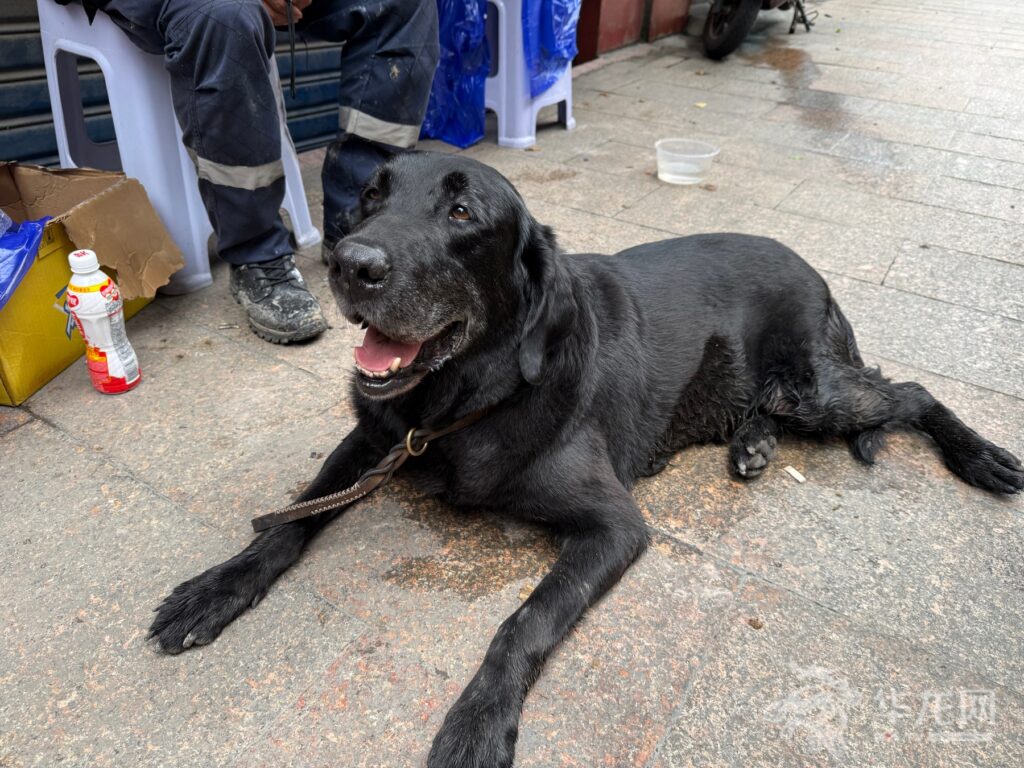
On July 17, 2026, a mountain collapse struck Hanjia Subdistrict in Pengshui, Chongqing. Rain, loosened earth and stone, giant collapsed bodies and the danger of further collapse were tangled together at the site. In the early hours of the next day, Zhong Ming (钟鸣), Hu Huixin (胡汇鑫), Wang Yikai (王一凯) and the search-and-rescue dog Zixie (子歇) arrived from Beijing Exploration Emergency Rescue Promotion Center. This had originally been a memorial journey before Zixie's retirement. After the disaster news appeared, the journey changed direction. Zixie again entered the ruins, twice locked onto the same suspected point in the core collapse area, and life-detection radar later captured continuous, stable signs of human life.
Time
The main public record covers July 17 to July 18, 2026.
Place
The mountain-collapse rescue site in Hanjia Subdistrict, Pengshui County, Chongqing, China.
Animal Involved
- Name: Zixie (子歇)
- Species: dog
- Breed: black Labrador
- Role: search-and-rescue dog
- Team: Zhong Ming, Hu Huixin, Wang Yikai and on-site fire, emergency and engineering rescue forces
A Journey That Was Meant to Mark the Time Before Retirement
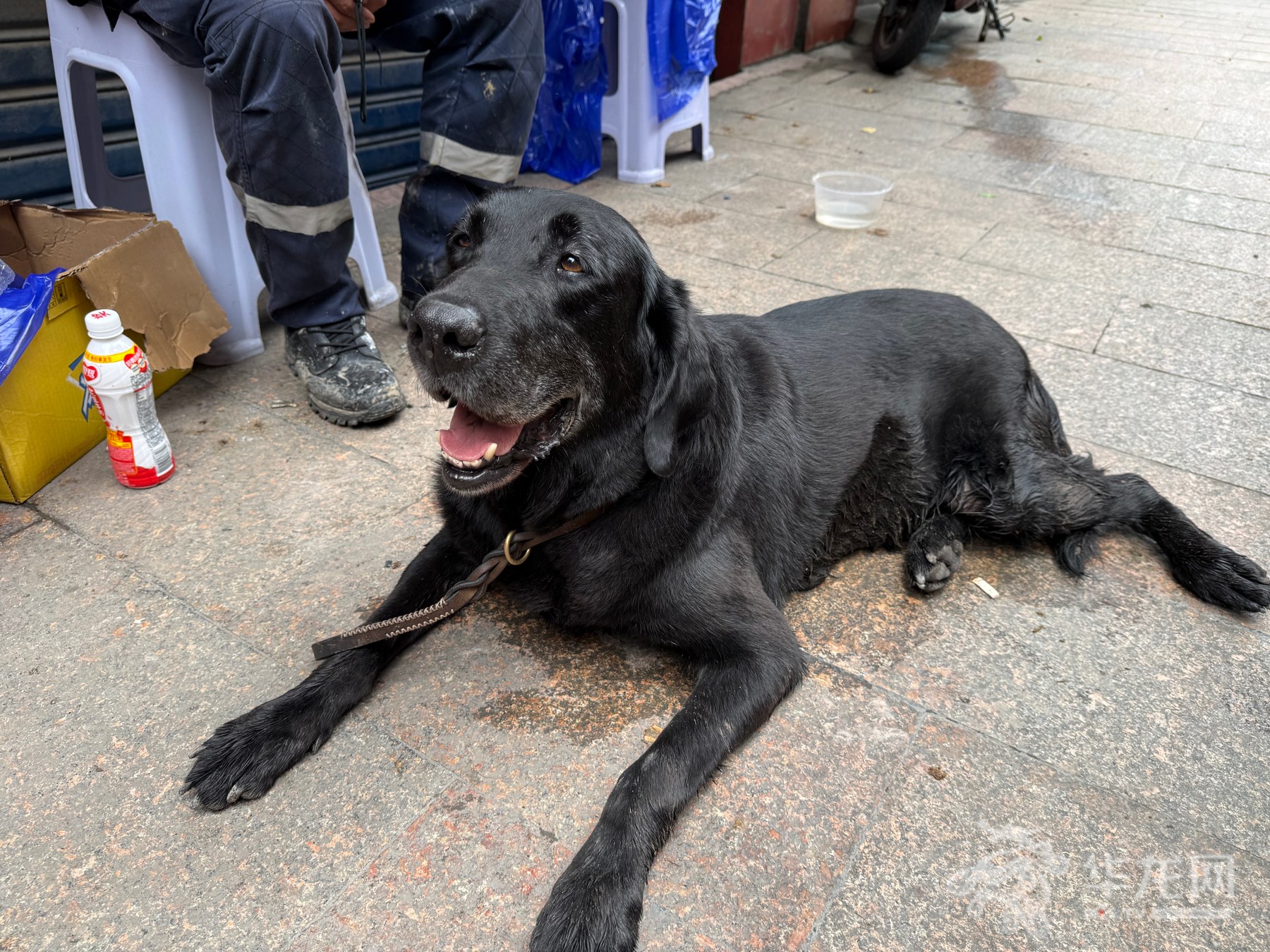
In Beijing Daily's report, Zixie is described as a search-and-rescue dog already old enough for retirement. Before the disaster, Zhong Ming, Hu Huixin and Wang Yikai were traveling with Zixie through Yan'an, Shaanxi, retracing the Long March route and hoping to leave a quiet memory for this old teammate. The plan was gentle: road, companionship, and a farewell to years of demanding work.
The turn came suddenly. News of the mountain collapse in Pengshui appeared on a phone. Public reporting says the three people made the decision in less than one minute: set out for Chongqing. Their vehicle crossed three provinces in heavy rain, with people resting while the vehicle did not. Around 1:30 a.m. on July 18, they arrived at the rescue site in Pengshui and, after brief rest, joined the search.
For a search-and-rescue dog about to retire, this was not a symbolic appearance. The Pengshui site was severe. Xinhua reported that at about 9:10 a.m. on July 17, a mountain collapse in Hanjia Subdistrict buried and left multiple people missing. The Ministry of Emergency Management activated a national Level II geological-disaster emergency response, and Chongqing activated a Level I geological-disaster response for Pengshui. The collapsed mass was large, homes were deeply buried, the site was near the Wujiang River, heavy machinery was difficult to use, and search work was hard.
These facts define the place Zixie entered. It was a scene of mud after rain, unstable slopes, rocks and rock slabs that had to be monitored, and life signals still waiting to be confirmed.
Hu Huixin and the Dogs: Training, Observation and Trust
Hu Huixin is a handler at Beijing Exploration Emergency Rescue Promotion Center. The People's Daily republication of Beijing Daily reported that she joined the center in 2022 and became a handler. She spends every day with the dogs, trains them, and also gives each dog companionship and psychological care according to its condition. The report said that among the search-and-rescue dogs in China certified at the highest international standard, three were trained by Hu Huixin.
In her view, the dogs are not tools. They are teammates, and also like children. Her job is not simply to lead a dog into a site. At a rescue scene, a handler must design the search plan, remove dangers, observe the dog's behavior, and judge suspected points through signals such as stopping, low sniffing, barking and sitting. Once a point is located, breaking teams, fire rescuers and life-detection equipment continue the verification.
Zixie's long training background can be seen in a 2025 Beijing Daily report. It described Zixie as an advanced search-and-rescue dog qualified for international rescue, originally from Mianzhu, Sichuan, and brought by Zhong Ming to the Beijing training base. At the rubble training ground in Dahan Zhuang Village, Shunyi, Zixie would quickly enter the ruins after a command, stop near a buried point and bark. Zhong Ming described Zixie as very persistent and highly focused.
That persistence is not decoration. It is central to a search-and-rescue dog's work. Every stop and every bark on the training ground is meant to help turn uncertain scent, gaps and danger into clues that people can take over in a real ruin.
The Core Collapse Area After Rain
On the morning of July 18, a new round of search began in Pengshui. First Eye TV-CQNews reported from the site that after a night of rain, the collapsed area was soft with earth and stone, loose fragments and layered debris blocking vision. Around 10:50 a.m., fine search work was under way in the core collapse area.
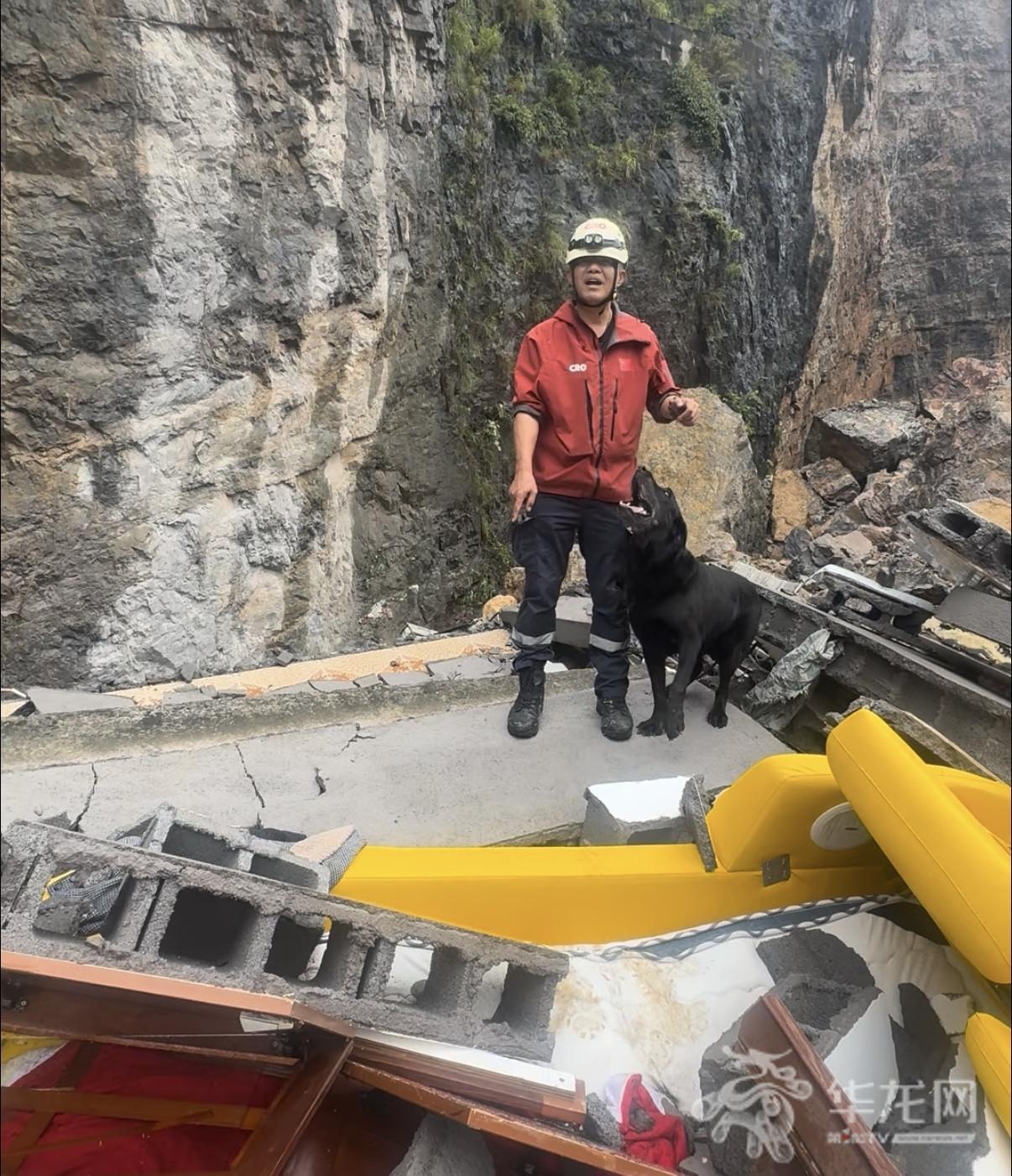
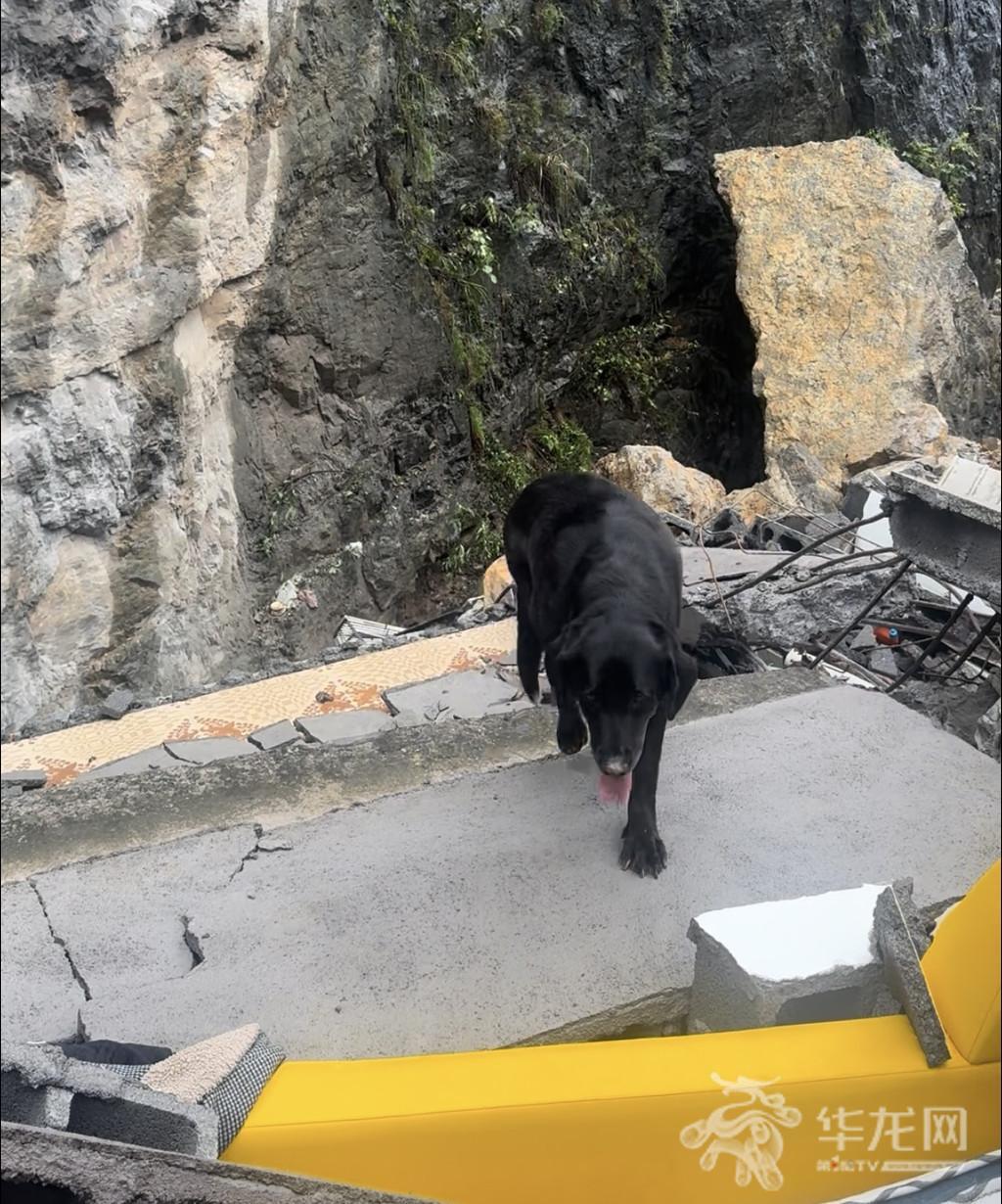
Zixie entered that area. Reports recorded that it moved through the muddy debris, sniffing low as it searched. About two minutes later, it suddenly stopped, its body tense, and barked repeatedly at the same collapsed body.
The most important part of this moment was not wonder, but rigor. Zhong Ming told CQNews that to make the search absolutely careful, they took Zixie away and then had it enter again. The second time, Zixie still locked precisely onto the same place and sat while barking.
After the Bark Came Instruments and Rescuers
Zixie's alert is not written here as a direct conclusion that it “rescued” a specific person. What public sources support is this: after Zixie locked onto a suspected point, rescuers immediately set up life-detection radar. CQNews reported that at a depth of about 1.5 to 3 meters below the search point, radar captured continuous and stable signs of human life. Multiple rounds of cross-checking followed. Two different radar models repeatedly detected the point, fire rescue forces retested it, and four test results matched.
Science and Technology Daily placed the same moment within a decision chain of scientific rescue and life first: at 10:50 a.m. on July 18, Zixie found signs of life beneath a section of debris, while site radar was also monitoring displacement in the landslide rock slab. The on-site command then stopped operations and studied a scientific rescue plan.
That is the restrained and weighty part of disaster rescue. A dog can suggest a possibility; people must confirm it with instruments. After instruments confirm it, the site must still consider slopes, rock slabs, dangerous walls, mechanical vibration and the safety of trapped people. Ao Ning, political instructor of Hongguang Avenue Station under the Chongqing Fire and Rescue Corps Special Service Detachment, said that after the key life point was confirmed, the command adjusted the rescue strategy, fully paused large machinery, first supported dangerous walls and hanging rock nearby, and then created safer conditions for continued rescue.
Zixie's value, therefore, is not exaggerated into a rescue completed alone. It completed one crucial part inside a full rescue system: in ruins human eyes could not see through, it told people where life might still be.
Before Retirement, Still Going Toward Where It Was Needed
Zixie had entered dangerous sites before. Beijing Daily's 2025 background report recorded that in 2018, during a search for a missing man in Binzhou, Shandong, Zixie searched on a frozen lake and stopped to bark at a relevant location later confirmed as consistent with the area where the man had fallen into the water. In December 2023, after the Jishishan earthquake, Zhong Ming took Zixie into the “mud sea” of Jintian Village, Minhe, Qinghai. It struggled forward with all four legs sunk in mud, completed more than 10,000 square meters of search, and only when resting was its tail injury discovered.
Those experiences give the Pengshui journey another layer of meaning. A memorial trip before retirement was interrupted by disaster. Public materials do not turn it into hesitation or tragedy. They confirm this: the team changed direction, drove across three provinces, arrived before dawn; Zixie entered the core area, alerted twice; life-detection equipment then gave signals; the rescue team adjusted the plan and continued.
For an animal story, that is enough. This is not the legend of one dog, but a record of how a working dog's ability, long training, a handler's observation and a rescue system can meet. Hu Huixin has said that after she and a dog complete positioning at a rescue site, they withdraw to the rear and wait for the next command. That step back does not end the story. It means other people, other instruments and other hands have taken over.
Why This Story Matters
A mountain-collapse site should not be romanticized. There are boulders, mud, broken walls, unstable slopes after rain, and rescuers and trapped people who must be carefully protected. Zixie's story deserves to be preserved not because it makes the ruins lighter, but because it shows that animals can be part of public rescue at the heaviest scenes.
“Retirement” is a human institutional word. What can be recorded is the actions Zixie joined, the signals it gave, and the trust formed between it, its handler and the team. Zixie's two alerts in the Pengshui ruins should not be inflated into a claim that it alone saved a life, nor should they disappear as background noise in the news. It was a real relay: the dog noticed first, people confirmed, and rescuers kept moving closer.
When a search-and-rescue dog close to retirement still walks into muddy ruins, what remains is not a slogan. It is a quiet reminder: some forms of protection do not need to be shouted. It lowers its head, sniffs through cracks, stops at one place, and waits for people to catch up.
Timeline
- Around 2012: Beijing Exploration Emergency Rescue Promotion Center gradually built rubble training grounds and developed search-and-rescue dog training.
- 2018: During a missing-person search in Binzhou, Shandong, Zixie stopped and barked at a relevant point on a frozen lake; authorities later confirmed the area was consistent with where the missing man had fallen into the water.
- December 2023: After the Jishishan earthquake, Zixie entered the “mud sea” of Jintian Village, Minhe, Qinghai, and completed more than 10,000 square meters of search.
- Around 9:10 a.m., July 17, 2026: A mountain collapse struck Hanjia Subdistrict, Pengshui, Chongqing, and multiple rescue forces went to the site.
- July 17-18, 2026: Zhong Ming, Hu Huixin and Wang Yikai took the soon-to-retire Zixie from their route near Yan’an, Shaanxi, and drove across three provinces toward Pengshui, Chongqing.
- Around 1:30 a.m., July 18, 2026: The team arrived at the Pengshui rescue site and joined the search after brief rest.
- Around 10:50 a.m., July 18, 2026: Zixie twice locked onto the same suspected point and alerted; life-detection radar later captured continuous and stable signs of human life.
- After July 18, 2026: The site adjusted its rescue strategy according to slope conditions, rock-slab displacement and the safety needs of trapped people, continuing scientific rescue.
Image and Source Note
This article uses three real photographs directly related to the event. All come from the public First Eye TV-CQNews report “Scientific organization of rescue: search-and-rescue dog finds suspected signs of life at the scene,” with photo credit to reporter Xie Pengfei. This site keeps local copies and does not hotlink. The cover uses the first on-site image of Zixie.
Public Sources
- Beijing Daily: “Above the ruins, she and it searched for life signals”
- People’s Daily Sichuan republication of Beijing Daily: “Above the ruins, she and it searched for life signals”
- Beijing Daily site: “To train search-and-rescue dogs, he sold property to build ‘ruins’”
- First Eye TV-CQNews: “Scientific organization of rescue! Search-and-rescue dog finds suspected signs of life at the scene”
- Xinhua Chongqing: “Pengshui County, Chongqing mountain collapse: rescue work intensifies at the site”
- Science and Technology Daily: “Scientific rescue, life first”
💬 Leave a Message
Messages are reviewed before publication. Please keep them calm, factual, and respectful.