
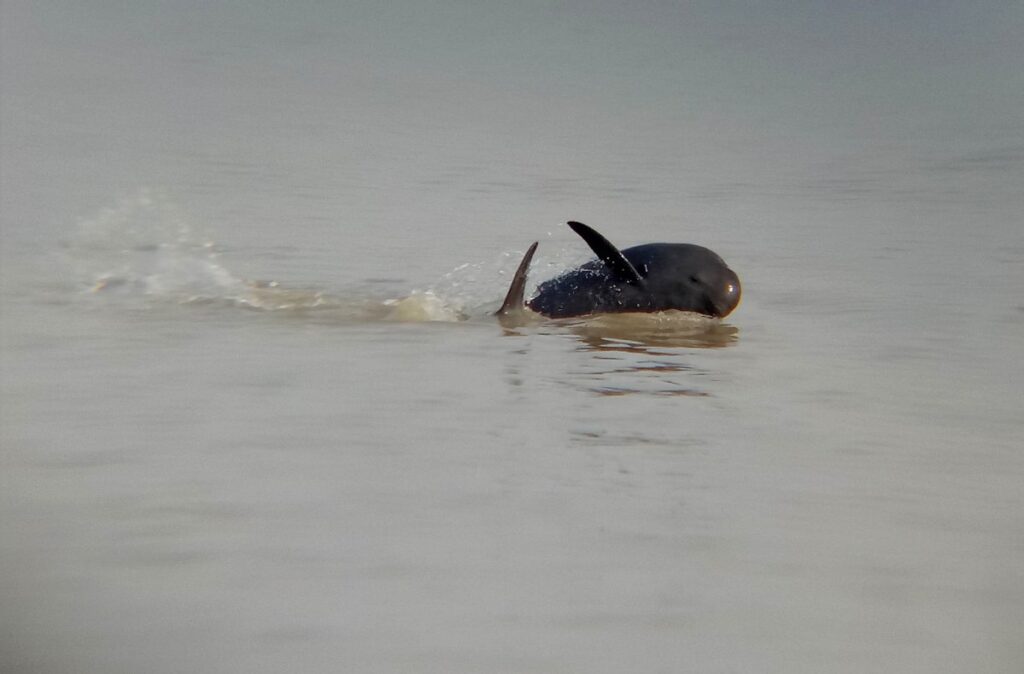
From the blank after the functional extinction of the Baiji dolphin to the number of Yangtze finless porpoises rebounding to approximately 1,249 during the 2022 scientific expedition, it records how ex-situ conservation, scientific research and care, a ten-year fishing ban, and public witnessing jointly returned a large river to life.
Mainstream of the Yangtze River in China, Poyang Lake, Dongting Lake, the old Tian’ezhou Road in Shishou, Hubei, and related protection sites of the Institute of Hydrobiology, Chinese Academy of Sciences
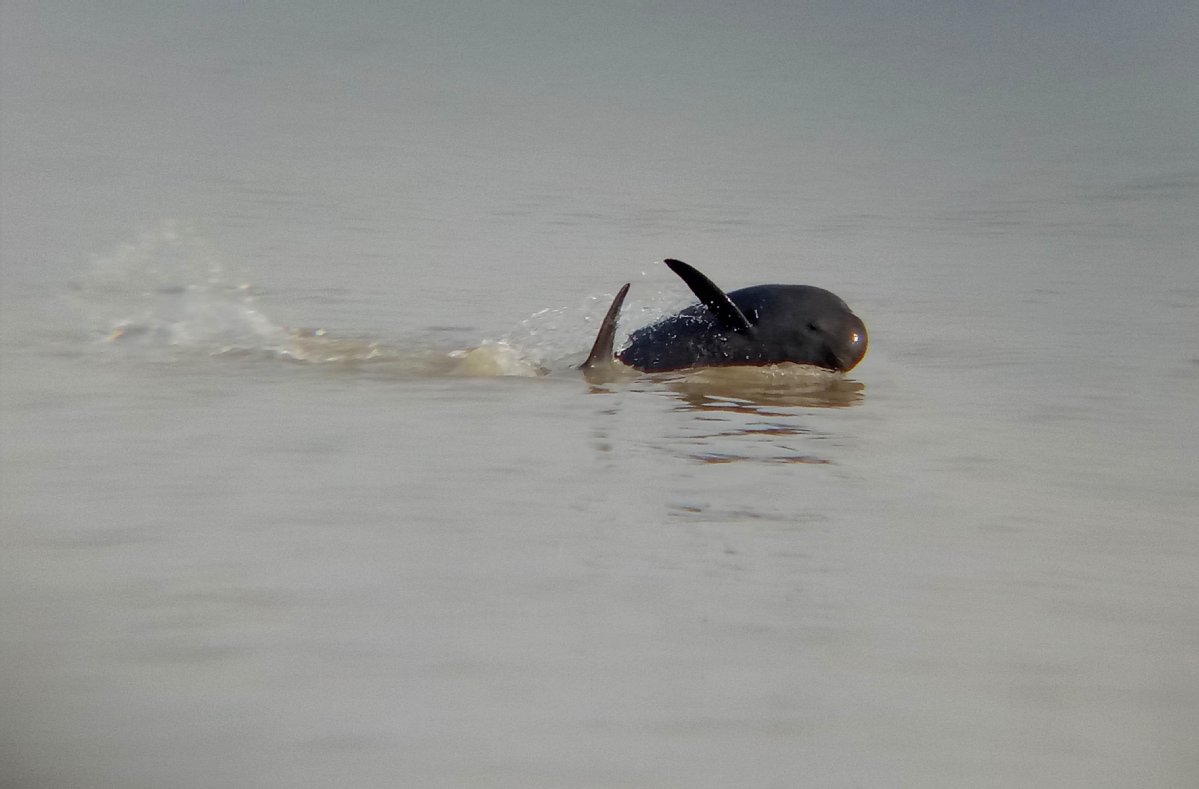
After the disappearance of Baiji dolphins, the last smile left by the Yangtze River
In 2006, an international joint expedition team searched for Baiji dolphins along the Yangtze River, but ultimately no identifiable individual was found. After that survey, the baiji dolphin was widely considered to be functionally extinct. For a river, the departure of a species is not a missing line on a certain list, but a gap in the entire ecological chain, the entire human memory and a way of life. The Yangtze River once had two species of freshwater cetaceans: the Baiji dolphin and the Yangtze finless porpoise. The former is like the lament of an era, while the latter has become the last reminder left by the river to mankind.
Finless porpoise has no dorsal fin, its body is gray and black, its head is round and blunt, and the corners of its mouth are naturally raised. People like to say it is the “smile of the Yangtze River”. This statement is gentle, but also a little stinging. Because a smile doesn’t mean it’s an easy life. It relies on echolocation to find fish and shrimp in turbid river waters, and relies on continuous river sections, quiet waters, sufficient bait and a safe breeding environment to survive. As long as shipping noise, bycatch, illegal fishing gear, water pollution, sand mining, shoreline hardening and declining fish stocks pile up, this smile will disappear little by little below the water’s surface.
If we turn the time back to the early 1990s, public research and conservation organizations often quoted estimates that the number of Yangtze finless porpoises was about two thousand; by around 2006, the number had dropped significantly; a basin-wide survey in 2012 found that there were about one thousand; and a 2017 survey estimated that there were about 1,012. By 2022, the scientific investigation of Yangtze finless porpoises organized by the Ministry of Agriculture and Rural Affairs and other departments has announced that there are approximately 1,249 finless porpoises, an increase of approximately 23% from 2017. This set of numbers constitutes the most important timeline of this article: it is not an upward victory curve, but a life curve that once almost slid to the cliff and only showed signs of stabilizing in recent years.
The purpose of including this article on this site is not to turn the finless porpoise into a cute mascot, nor is it to turn the ten-year ban on fishing in the Yangtze River into a simple slogan. What we are more concerned about is: when the Baiji dolphin has left, have humans learned to stop at the last moment; when a river has fish, beaches, wetlands, and quiet water again, whether the finless porpoise can really float up for air again. The fate of the finless porpoise is not the story of a single species, but ecological evidence of whether the Yangtze River can recover from overexploitation.
I chose to start this documentary with “The Last Smile” because the finless porpoise is the easiest way for ordinary people to see the health of a river. The recovery of fish is invisible to many people; the changes in benthic animals, plankton, and aquatic plants are difficult for ordinary readers to directly understand. But when finless porpoises are photographed by the public again in Poyang Lake, Dongting Lake, Nanjing River Section, and Wuhan River Section, when they jump out of the water, swim in pairs, and appear with their young, abstract ecological restoration has a face, breathing, and moments that can be remembered.
The Yangtze finless porpoise belongs to the Yangtze subspecies of the narrow-ridged finless porpoise. It is one of the very few cetaceans in the world that lives in fresh water for a long time. It is not a “fish that looks like a dolphin,” but a mammal that breathes air, nurses its young, and has complex acoustic abilities and social behavior. This identity determines that it is very sensitive to environmental changes: it is inseparable from the underwater food web and the surface ventilation space; it must avoid ships and rely on sonar positioning in turbid water. Protecting finless porpoises is actually protecting a set of continuous ecological conditions from the bottom to the surface.
The main stream of the Yangtze River, Poyang Lake and Dongting Lake are not the same environment. The main stream has shipping, docks, bridges and urban shorelines. The lake area has seasonal water level changes, shoal wetlands and fishery activities. The old road protection zone also has the safety and limitations of a semi-enclosed water body. The living conditions of finless porpoises in these environments are different, and the protection strategies cannot be exactly the same. Mainstreams need to reduce bycatch and collision risks, lake areas need to maintain water levels, fish, and connectivity, and ex situ reserves need to prevent inbreeding, disease, and water quality fluctuations. Real protection is not about “protecting finless porpoises”, but about breaking down the risks in different waters one by one.
Therefore, there is also spatial variation behind the numerical changes in finless porpoises. Even if the total number of the whole basin rebounds, this recovery will still be incomplete if there are no stable individuals in some river sections for a long time, or if the lake area becomes difficult to support reproduction due to dry water. Whether a species can survive for a long time depends not only on the total number, but also on whether the distribution is continuous, whether the larvae can survive to adulthood, whether females have safe nursery waters, and whether genes can be exchanged between different small groups. The finless porpoise makes us understand that ecological restoration should not only look at “how much is left”, but also “where it is, how it lives, and whether it can continue to reproduce.”
How a great river becomes noisy and barren
The decline of the Yangtze finless porpoise cannot be attributed to just one type of damage. It is experiencing compound pressures: decline in fishery resources has left finless porpoises short of food, intensive shipping and underwater noise interfere with echolocation, illegal or highly harmful fishing methods such as rolling hooks, ecstasy traps, ground cages, and electrofishing have caused bycatch and direct deaths, sand mining has changed the river bed and water flow, shoreline development has compressed slow-flow areas, shoals, and shoals, and pollution and engineering have changed the fish breeding and migration environment. For finless porpoises, danger does not come suddenly one day, but gradually becomes the background of life over decades.
Finless porpoises do not escape in detours like land animals. It lives in the water, and currents, sound waves, schools of fish, and human boats together constitute its world. The low-frequency noise of the ship’s engine will make it difficult to hear the echo, and propellers and high-speed ships will pose a risk of collision; if the river section is cut by a large number of human activities, the safe space for mother dolphins and their young will shrink. Many times, what humans see on the shore is only the wide river surface, but what finless porpoises feel underwater is crowded, noisy and dangerous.
Food is a more fundamental issue. The Yangtze finless porpoise mainly preys on small fish and shrimps, and the decline in fish resources will directly compress its living space. The most terrifying thing about long-term overfishing is not just that there are “less fish”, but that the age structure of fish, breeding groups and food webs are all damaged. The young fish are caught before they grow up, and the parent fish are caught before they finish spawning. Naturally, the food that the finless porpoise can catch becomes less and less. The decline of an apex aquatic mammal is often the result of the entire aquatic food chain being drained.
From the 1990s to the 2010s, the words “reduction,” “critical,” and “last chance” appeared repeatedly in the public narrative of Yangtze finless porpoise conservation. Estimates in 2012 were around a thousand head and in 2017 around 1,012, which means it is approaching an uncomfortably low level. For a species that is distributed in a wide range of waters such as the Yangtze River mainstream, Dongting Lake, Poyang Lake, etc., about a thousand animals is not enough. Localized die-offs, reproductive failure, habitat fragmentation and extreme weather can make certain small groups quickly vulnerable.
The disappearance of Baiji dolphins is a stern warning to people from the Yangtze River. That’s not because humans don’t know it’s precious, but because even after knowing it, they still failed to form effective enough protection in time. The situation of the finless porpoise is more like a make-up test after the Baiji dolphin. Human beings are no longer qualified to say “we can do it later”. If the finless porpoise disappears, the Yangtze River will no longer have native freshwater cetaceans, which will be an extremely heavy page in ecological history.
Therefore, the recovery of finless porpoises cannot only rely on rescuing a few injured individuals. Rescue is of course important, but real protection must go back to the river itself: allowing fish stocks to recover, reducing illegal fishing, quieting down key river sections, keeping lakes and rivers connected, and allowing human activities to give boundaries. What the finless porpoise wants is not the occasional mercy from humans, but a river that can still maintain the cycle of life.
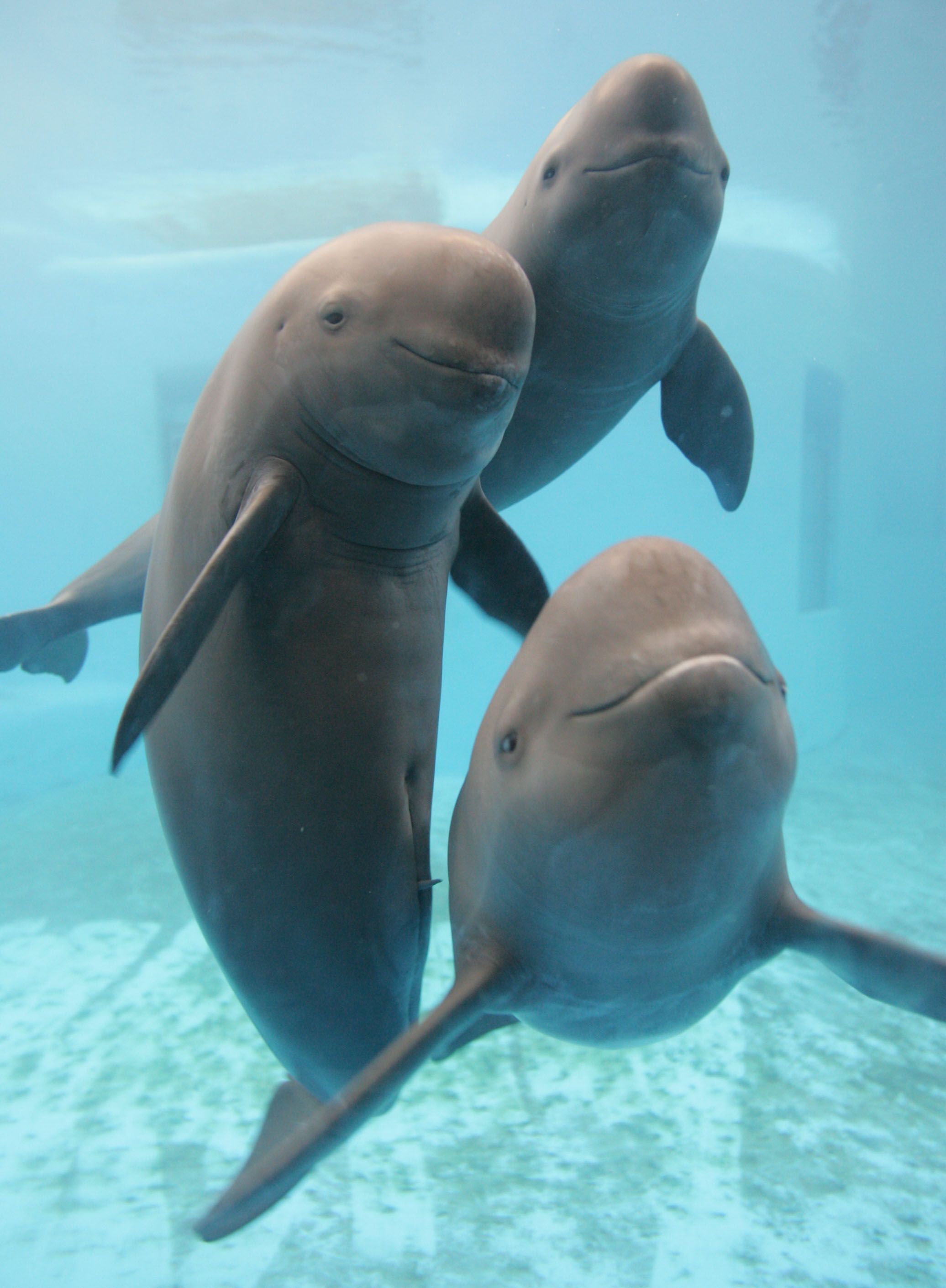
The world of acoustics is particularly easy to overlook. Finless porpoises emit high-frequency clicking sounds underwater and use the echo to determine the location of obstacles, fish schools and companions. When humans stand on the shore and cannot hear these sounds, it is easy to mistakenly think that calm water means safety. In fact, ship engines, propellers, construction noise, and dense traffic can alter the porpoise’s judgment of space. For an animal that relies on sound to “see” the world, noise is not background but may be fog that blocks the eyes.
Bycatch is also the most realistic mortality risk for many aquatic mammals. The harm done to finless porpoises by rolling hooks, dense nets, electrofishing and other intensive fishing methods is not always visible to the public because the carcasses may be carried away by currents or the cause of death may be difficult to trace. In some past reports, clues of finless porpoise stranding, injury, and death were often related to fishing gear, vessels, or the water environment. The death of an individual may seem accidental, but in a population of only a few thousand individuals, it will turn into a heavy loss.
In addition, finless porpoises do not reproduce very quickly. It takes a long time for a female to become pregnant, breastfeed, and raise her young, and the young need to learn to find food, ventilate, and avoid danger under the protection of the mother. If a population has a small number of adult females and high juvenile mortality, even if it appears to have many individuals in the short term, it will be vulnerable in the future. This is why conservation often emphasizes the emergence of young dolphins, the activities of mother and calf dolphins, and the safety of breeding waters. They can tell more about whether a population has a future than a single sighting can.
From Tian’ezhou to the ten-year fishing ban: humans began to make way for big rivers
One of the earliest ways to protect the Yangtze finless porpoise that became known to the public is ex-situ conservation. The old Tian’ezhou Road in Shishou, Hubei Province is an important site for ex-situ conservation of the Yangtze finless porpoise. The so-called old channel is a semi-enclosed water body left after the Yangtze River was diverted. The water flow is relatively stable, and the pressure from ships and fishing is lower than that of the main stream. Scientific researchers transferred some finless porpoises here to establish a relatively safe population, which is equivalent to retaining a life backup for the Yangtze finless porpoises. This approach is not to imprison wild animals for display, but to buy an endangered species time to reproduce and recover when the main stream pressure is too high.
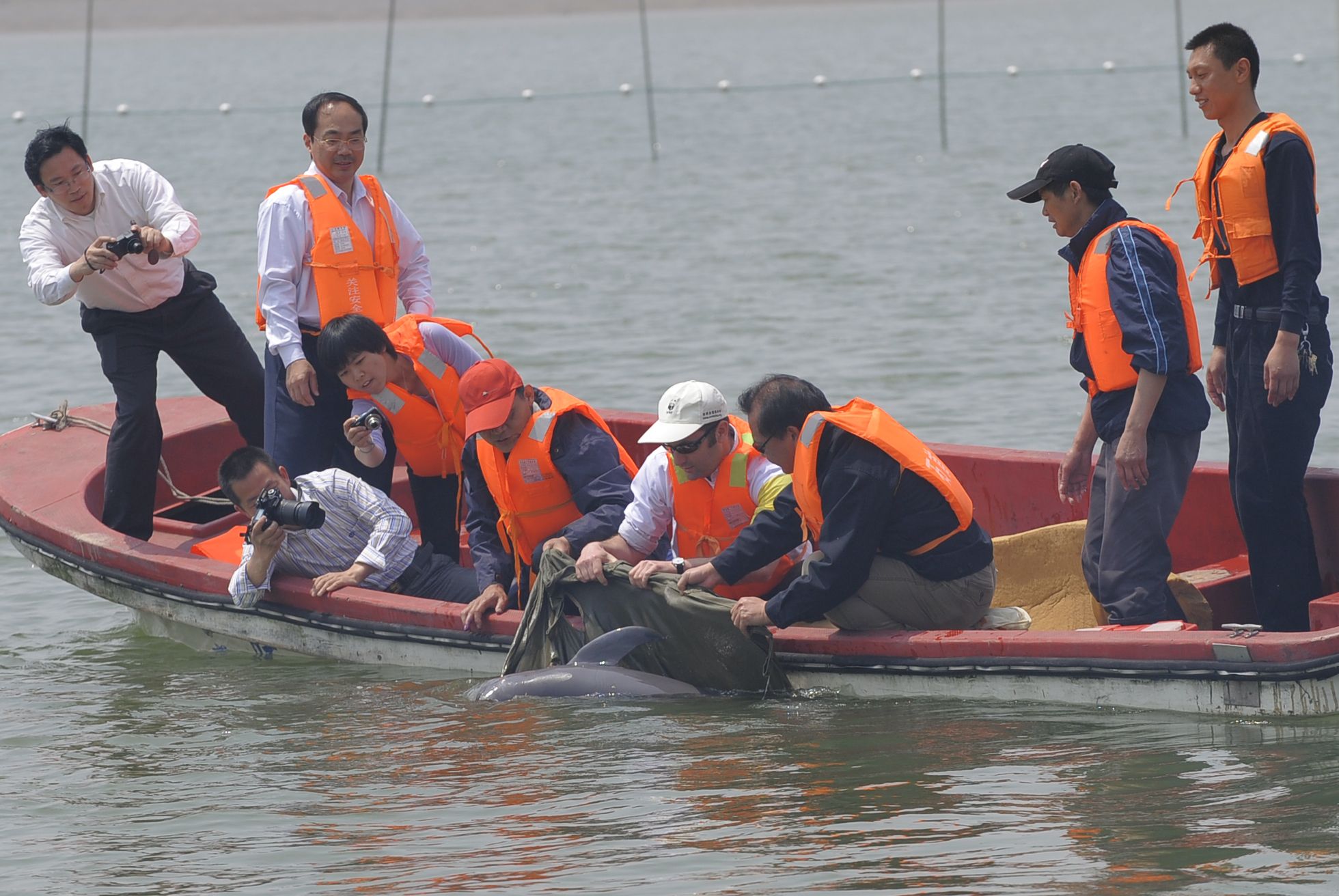
Ex-situ conservation has a strong sense of reality and a sense of last resort. The ideal situation is of course that finless porpoises can live freely in the entire Yangtze River; but when the risks in the main stream are too high and the mortality rate remains high, it may be too late to just “wait for ecological improvement”. The significance of ex-situ protected waters such as Tian’ezhou and Hewangmiao is to provide a relatively quiet breeding space for finless porpoises. Public reports and WWF materials have repeatedly documented the transshipment, soft release, population monitoring, and close care of finless porpoises by scientific researchers. In those photos, the finless porpoise is carefully lifted by many people, the skin is kept moist, and the transfer process is tense and restrained; this is not a performance, but the rescue of a species.
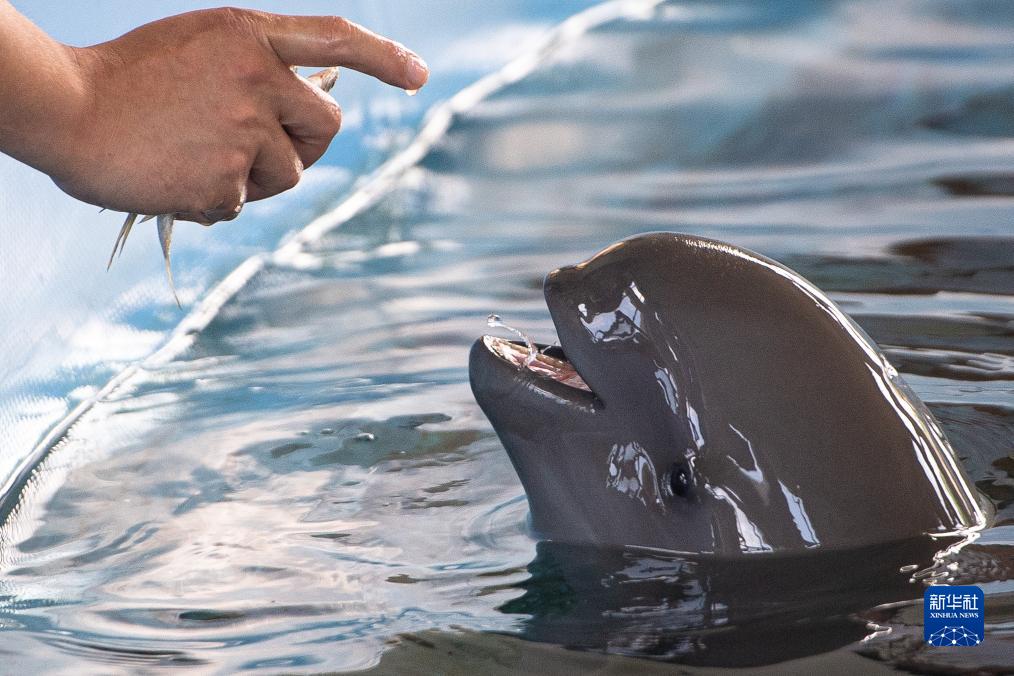
The other line is artificial breeding and scientific research care. The Institute of Hydrobiology of the Chinese Academy of Sciences has long been responsible for research on Yangtze River cetaceans such as Baiji dolphins and finless porpoises. Xinhua News Agency’s 2023 graphic report on “Smiles Protecting the Yangtze River” recorded the scenes of individual finless porpoises in the museum receiving feeding, training, health monitoring and breeding research. For ordinary readers, artificial care is easily misunderstood as “raising animals”; but for endangered species, it is also the accumulation of pathology, reproduction, physiology, acoustics, behavior and rescue technology. Field protection requires on-site protection, and on-site protection also requires long-term laboratory support.
What really changes the overall situation is the ten-year fishing ban in the Yangtze River that will be fully implemented from January 1, 2021. The fishing ban is not just for the finless porpoise, but to allow the Yangtze River’s aquatic biological resources to recuperate as a whole. For the finless porpoise, the key to this policy lies in two aspects: first, to reduce bycatch and casualties caused by fishing gear; second, to give fish resources a chance to recover, thereby restoring the finless porpoise’s food base. The finless porpoise does not live by slogans, it lives by fish. Whether the fish can come back is more important than any slogan.
Behind the ten-year ban on fishing there is also a turnaround in human society. Many fishermen have relied on the river for generations. A fishing ban means switching to other industries, landing on the river, and making a living again. If ecological protection only requires the sacrifice of a certain group of people without providing social support, it will be difficult to sustain it. It can be seen from public reports that fishermen who have retired from fishing have turned into fishermen, rangers, community service personnel, or entered new employment positions. This transition is not romantic. It involves income anxiety, identity changes and lifestyle reconstruction. But from an ecological perspective, humans’ concessions gave the fish a chance to breathe, and the fish’s recovery left a way for the finless porpoise to survive.
A scientific survey in 2022 shows that the number of Yangtze finless porpoises is about 1,249, an increase of about 23% from 2017. This number cannot be exaggerated as “the problem has been solved”, but it is important enough: after years of decline, the number of finless porpoises has given the public a clear signal of stabilization for the first time. It shows that the combination of fishing ban, ex-situ conservation, artificial breeding, patrol law enforcement, public attention and scientific research and monitoring may indeed change the direction of an endangered curve.
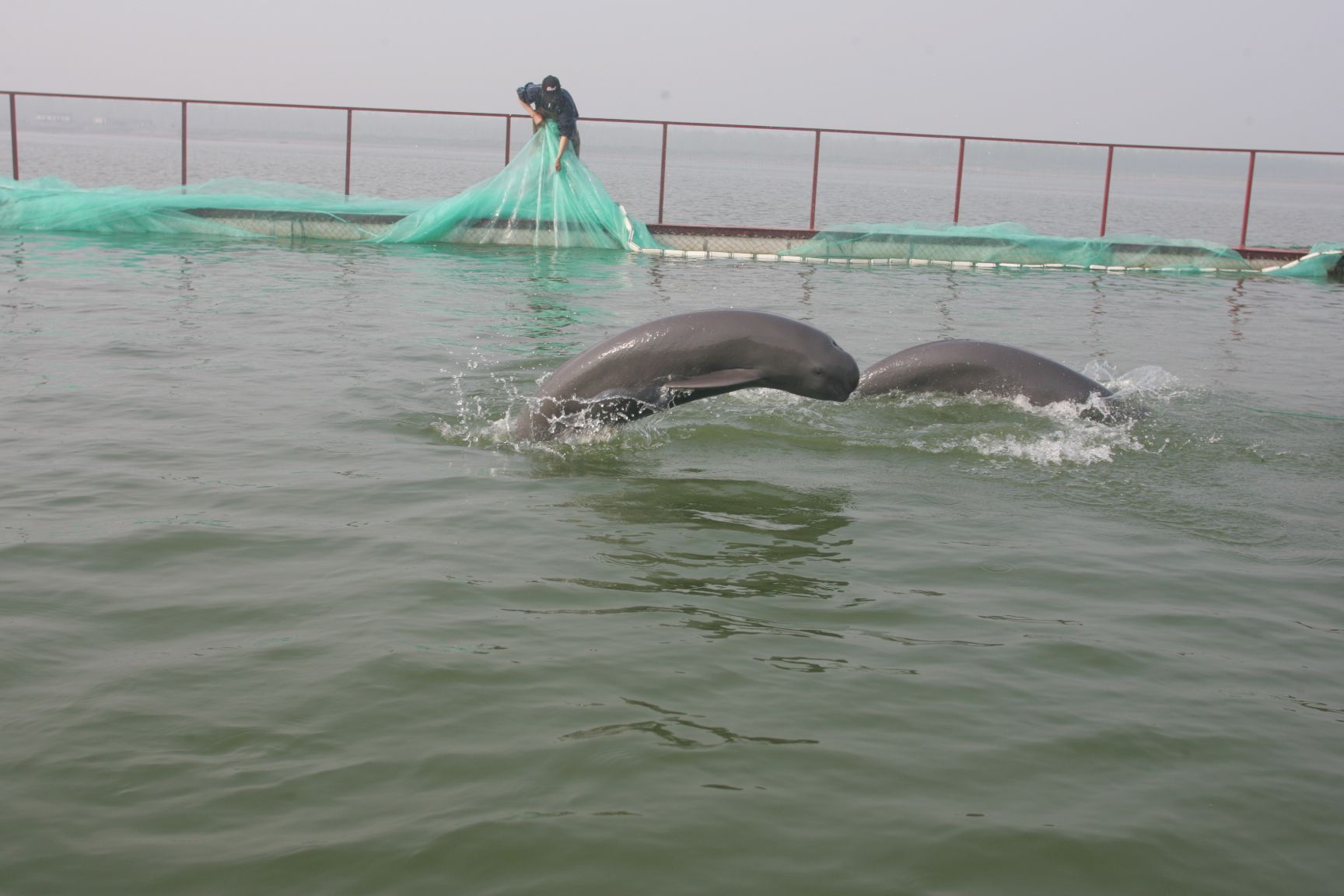
The researchers’ work also includes individual identification, acoustic monitoring, health assessment and cause-of-death analysis. Finless porpoises are not as easy to wear collars and long-term visual tracking as large land animals. Much of the data comes from shipboard observations, passive acoustic equipment, photo records, rescue samples and long-term patrols. Every scientific expedition faces weather, water levels, waterways, safety and funding constraints. What the public sees is the final number, behind which is the patience of countless people waiting on the river for the finless porpoise to surface.
Patrolling after a fishing ban is not just about “seeing if anyone is fishing.” Rangers are required to detect illegal fishing gear, document abnormalities in the waters, assist in rescuing stranded or injured animals, and explain to residents along the river why certain traditional practices cannot continue. Many retired fishermen are familiar with water properties, fish behavior, and waterways where finless porpoises often appear. Their transformation from fishermen to guardians is one of the most noteworthy human transformations in the protection of the Yangtze River. Ecological protection is not about driving people out of nature, but about changing the way people get along with nature.
Ex-situ protected areas are also not set-and-forget safe deposit boxes. Semi-enclosed water bodies can also create new risks if water quality deteriorates, feed is insufficient, disease transmission or genetic exchange is restricted. Conservation personnel need to find a balance between “safety” and “wildness”: they must reduce man-made harm, but they must not completely separate the finless porpoise from natural selection and natural behavior; they must ensure reproduction, but also avoid excessive pressure on the protected area. The significance of Tian’ezhou is to retain a place where the finless porpoise can continue its bloodline in this realistic balance.
Captive-bred individuals also have a dual meaning. On the one hand, they leave research data on reproduction, disease and behavior for endangered species; on the other hand, they remind the public that when the wild environment is destroyed to a certain extent, humans have to use laboratories and conservation ponds to make up for their hesitation. Manual care is not a victory, but a make-up lesson. The more important it is, the more important it is that we cannot allow wild habitats to continue to deteriorate.
Finless porpoise resurfaces: How ecological restoration can be seen
The most moving place of ecological restoration is not in the conference room, but on the river. In recent years, the public has photographed finless porpoises emerging from the water, chasing waves, moving in groups, and mothers raising their calves in many places along the Yangtze River. Records of finless porpoise sightings in Nanjing, Wuhan, Poyang Lake, Dongting Lake and other places often trigger forwarding on social platforms. To ordinary people, those few seconds of video are more immediate than any report: a river with whales and dolphins, a river that has not completely lost the ability to repair itself.
But we also need to be cautious. More sightings could mean an improvement in finless porpoise activity, or it could mean cell phones and social media make sightings easier to record. To strictly judge population changes, we still need to rely on scientific surveys of the entire basin, acoustic monitoring, photo identification, patrol records and long-term data. This site does not write individual videos as evidence of precise populations. What we can say is this: public sightings and media reports combine to form a visible ecological signal, based on the rebound in numbers given by the 2022 survey. The rediscovery of the finless porpoise shows that protection is no longer just a matter of expert reports, but has also entered the emotional world of ordinary people.
Pictures also provide another kind of evidence. Photos of finless porpoises in the waters of Poyang Lake tell readers that finless porpoises still rely on open lake areas and connections between rivers and lakes; photos of finless porpoises in the Baiji Dolphin House of the Institute of Aquatic Biology tell readers that artificial breeding and scientific research and care are still ongoing; photos of transshipment and release at Tiane Island tell readers that ex-situ conservation is not a concept, but an operation specific to stretchers, wet cloths, boats, people and every breath. Ecological documentary cannot only contain words, it needs to preserve these scenes.
The finless porpoise’s recovery also involves broader animal changes. The restoration of fish resources will first benefit not only finless porpoises, but also fish-dependent birds, other aquatic animals and the wetland ecology along the river. The waters have become safer, and the survival chances of finless porpoise larvae have increased. The ecology of shoals, shoals and lakes has improved, and the resting and feeding conditions of waterbirds will also change. Illegal fishing has been reduced, and the risk of accidental injury to many non-target animals has also been reduced. The finless porpoise is a mirror, and what is reflected in the mirror is the food web of the entire river.
However, the Yangtze River is far from returning to a “natural and worry-free” state. Shipping is still intensive, shoreline development is still going on, extreme low water levels and climate change will affect lake water levels, and river-lake obstruction and hydrological changes will still alter fish reproduction. An early and too long dry season in Poyang Lake will compress the habitat space for aquatic life; mainstream shipping and urban shoreline activities will also continue to affect the activities of finless porpoises. The rebound in the number of finless porpoises is only a phased signal, not the end.
The ideal recovery is not to allow the finless porpoise to become an isolated population in a few protected areas, but to allow it to form a safer and more continuous life network in the main stream of the Yangtze River, Dongting Lake, Poyang Lake and connected waters. It requires fish resources and quiet water; it requires ex-situ conservation and wild habitat quality; it requires scientific researchers, as well as fishermen, rangers, urban residents and tourists to abide by boundaries. When a species is protected to the end, the object of protection is often no longer just the species itself, but the way the entire ecosystem operates.
From an animal perspective, the most noteworthy ones are the young dolphins. The appearance of a mother dolphin with her cubs in public images often makes people very excited, because it means that reproduction is taking place, and it also means that a certain area of water can provide relatively safe conditions for raising cubs, at least for a period of time. The swimming speed, ventilation rhythm and risk avoidance ability of young dolphins are not as good as those of adult individuals. Female dolphins need quieter waters with less interference and more food. If mother and calf dolphins frequently appear in an urban river section, it means not only that the “landscape has improved”, but that the ecological security boundary is being truly tested.
Data on fish recovery also need to be accumulated over a long period of time. After the fishing ban, some public reports mentioned positive changes in fish resources and rare aquatic life activities in key waters. However, simple horizontal comparisons cannot be made between different river sections, different years, and different monitoring methods. For this site, the safe way to write it is to acknowledge the trend: fishing bans reduce fishing pressure and create conditions for fish reproduction; fish recovery provides a food foundation for finless porpoises; but specific to a certain river section, a certain type of fish, and a certain year, more detailed monitoring data is needed to support it.
There is another dimension of ecological restoration that is easily overlooked: season. During the wet season, the connectivity between rivers and lakes is enhanced, and finless porpoises may enter wider waters to forage; during the dry season, water levels drop, shoals are exposed, and lake areas are fragmented, finless porpoises’ activity space and fish distribution will change. Extreme drought events in recent years have shown the public that protecting finless porpoises cannot rely solely on fishing bans, but must also face more complex issues such as climate change, water resource regulation, lake and wetland protection, and river-lake connectivity.
The return of finless porpoises in urban river sections is particularly educational. If finless porpoises can be seen stably near cities such as Nanjing and Wuhan, it shows that high-density human life and wild animals are not absolutely incompatible with coexistence; but this also requires cities to provide more detailed management, such as speed control, key water reminders, avoidance during construction, public dolphin viewing distance, and interference management by drones and cruise ships. It’s easy to regard the finless porpoise as a city’s business card, but it’s harder to actually give it water and peace.
Why is this site included: Returning a river to life
This website writes the Yangtze finless porpoise into the ecological conservation record because it contains sadness, redemption and hope at the same time. Sadness comes from the loss of Baiji dolphins; remedies come from ex-situ conservation, scientific research and care, fishing bans and patrols; hope comes from the recovery signal of about 1,249 dolphins in the 2022 survey, and the public’s surprise of seeing finless porpoises on the river again. Such a story is not suitable to be written as a vague hymn, nor is it suitable to be written as a cold entry on species. It should be written as a documentary of how humans finally began to restrain themselves.
The finless porpoise reminds us that the most difficult thing in ecological protection is not the phrase “love animals”, but taking a real step back from human activities. Fishing less, making less noise, occupying less shoreline, and treating rivers less as unlimited resources may not sound drastic, but they are all difficult choices. Because behind every retreat, there are adjustments in industry, employment, urban construction and living habits. The ten-year ban on fishing in the Yangtze River is important because it turns “protection” from a slogan into a real social rearrangement.
This article also maintains a sense of caution: the rebound in the number of finless porpoises does not mean that the Yangtze River is safe. After an endangered species recovers from a low point, it is most afraid of the public letting go too early. 1,249 fish is still a very fragile population; any localized water pollution incident, bycatch, extreme drought, shipping collisions or a rebound in illegal fishing could undermine recovery efforts. True ecological conservation is not a short-term campaign, but decades of continuous monitoring, enforcement, restoration, and public oversight.
What we hope readers will remember is the community of life behind the finless porpoise. Finless porpoises need fish, and fish need spawning grounds, migratory channels, aquatic plants, benthic animals, and stable hydrology; wetland birds need shoals, fish and shrimp; humans along the river need safe drinking water, healthy fishery resources, and rivers that are not overdrafted. Protecting the finless porpoise is not about elevating an animal to the center of human emotions, but using it to re-understand: a river is not a waterway, a water pipe, or a resource warehouse. It is first and foremost a life system.
If we continue to write this article in the future, the most valuable material will not be more lyrical, but more specific data: how the fish resource index of key river sections has changed after the fishing ban, whether the proportion of finless porpoise larvae has increased, how high-frequency click signals are distributed in acoustic monitoring, which river sections are still high-risk areas for death, which lake area water level changes most affect finless porpoise activities, and what are the long-term effects of retired fishermen participating in patrols. The more touching the ecological documentary is, the more data it needs to support it.
There are two ways of writing this kind of documentary: one is to write only about tragedy, and the finless porpoise is written as a victim destined to disappear; the other is to write only about achievements, and the recovery figures are written as a happy ending. The reality is somewhere in between. The finless porpoise was indeed once very dangerous, and the disappearance of the Baiji dolphin also proves the cost of late protection; but the finless porpoise does show signs of stabilization, indicating that as long as humans exercise sufficient restraint, continue to invest, and respect science, it is still possible to pull the situation back a little bit.
If this article were placed between the three sections of this site, it would be related to both animal injury files and animal stories. Animal harm files record that when individuals are treated cruelly, humans should remember the sin; animal stories record that when individuals protect and accompany humans, humans should remember kindness; and ecological guardianship records record a larger question: when life is not a cat, a dog, or a specific name, but an entire species and food web in a river, are humans still willing to take responsibility?
Finless porpoises have no way to claim rights from humans. It cannot write petitions, nor send out a cry for help that can be heard from the shore before disappearing. All it can do is briefly surface, take a breath, and then dive back into the river. Precisely because it is silent, it is even more necessary for humans to record it. Recording is not about saying nice things for it, but preserving the facts, figures, pictures and responsibilities we know to avoid saying “we don’t know” in the future.
Long-term monitoring also requires public participation, but public participation cannot turn into onlookers and interruptions. When seeing a finless porpoise, the best thing to do is not to chase, whistle, drive a boat close, or use a drone to hover at low altitude, but to keep a distance, record the time, location, quantity, behavior and water conditions, and hand over the clues to the local conservation agency or scientific research team. For finless porpoises, human kindness may become new pressure if there are no boundaries. Truly mature public participation is to turn every sighting into valuable data, rather than letting every surprise turn into a containment of animals.
This is also a principle of the writing of this website: we welcome touching pictures, but we do not force animals in front of the camera. The few seconds the finless porpoise surfaces are its own breathing, which is not a performance that humans can ask for infinitely. In the future, if more cities regard the finless porpoise as an ecological business card, they should simultaneously establish observation regulations, ship avoidance tips, speed limits in key waters, breeding season interference control and public science education, instead of just using its smile in promotional videos.
The “smile” of the Yangtze finless porpoise should not be consumed as a meme. It is the expression of a survivor, the last chance left to mankind by the Yangtze River after the departure of the Baiji dolphins. The moment it surfaces, it reminds us: the river has not completely given up on itself, but it will not forgive humans indefinitely. Returning a river to fish, birds, and finless porpoises is also giving the future back to people.
Source and explanation: This article refers to the public results of the 2022 Yangtze River finless porpoise scientific expedition, public information related to the ten-year fishing ban in the Yangtze River, Xinhua News Agency’s graphic report on “The Smile that Guards the Yangtze River”, China Daily’s reprint of Xinhua News Agency’s Poyang Lake finless porpoise photo report, WWF’s photo data on the ex-situ conservation and soft release of Tian’ezhou finless porpoise, IUCN’s explanation of the endangered status of the Yangtze finless porpoise, and AP 2025 International reports on the stabilization of the Yangtze finless porpoise in 2016. When it comes to changes in numbers, this article uses the common caliber of public reports: about more than 2,000 heads in the 1990s, about 1,012 heads in 2017, and about 1,249 heads in 2022. When it comes to public sightings, this article only uses it as a clue to dissemination and visibility, and does not regard a single video as demographic evidence.
💬 Leave a Message
Messages are reviewed before publication. Please keep them calm, factual, and respectful.