
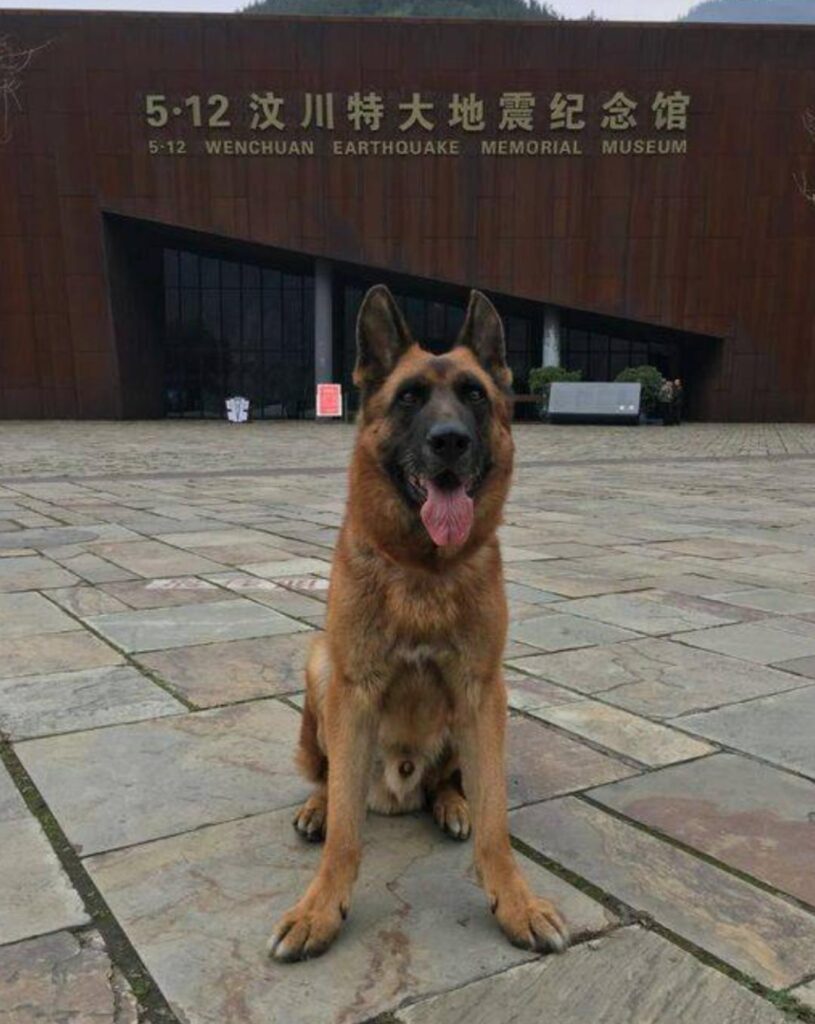
Starting slowly with the word hero
This report deliberately narrows its scope. There are many stories about dogs in disasters: abandoned animals after a catastrophe, companion animals, police dogs, therapy dogs and rescue dogs. All deserve memory, but they cannot be folded into one loose category. Here we write only about dogs that entered organized search-and-rescue systems, received training, and were sent to disaster sites to search for signs of life.
The point of view is the human-dog team. A search dog does not become a hero alone. Behind every dog are handlers, fire services, rescue associations, training grounds, vehicles, medical care and retirement arrangements. A bark in ruins may last only seconds, but it may stand on years of training; one accurate indication in rubble may leave injuries that follow a dog for life.
The true core is not simply that dogs are clever or loyal. The truth is steadiness after long training, danger at disaster sites, and a near-instinctive trust between dog and handler. In places where human eyes cannot see and human ears cannot hear, the dog searches with its nose for someone still alive.
That is why the report follows two lines. The first is Japan: a handler's helplessness after the 2011 earthquake and tsunami, years of training, and Coco's ten minutes inside a collapsed building after the 2024 Noto Peninsula earthquake. The second is Wenchuan: Bingjie, Shenhu and the 67 search dogs who went into the ruins in 2008, and who have now all died.
Japan: from helplessness after 3/11 to Coco's ten minutes in the ruins
A member of Team 7 of the Japan Rescue Dog Association wrote on Nippon.com that when the Great East Japan Earthquake and tsunami struck in 2011, he could do nothing. That helplessness stayed with him. Later he bought a Border Collie named Coco and joined the Japan Rescue Dog Association, hoping to use a dog's ability where it was truly needed.
Coco later passed training and certification as a rescue dog. The process was not romantic: obedience, rubble search, scent work, joint training with fire departments, and repeated certification. Before a disaster ever comes, dog and handler have already rehearsed failure, correction, reward and trying again on many ordinary days.
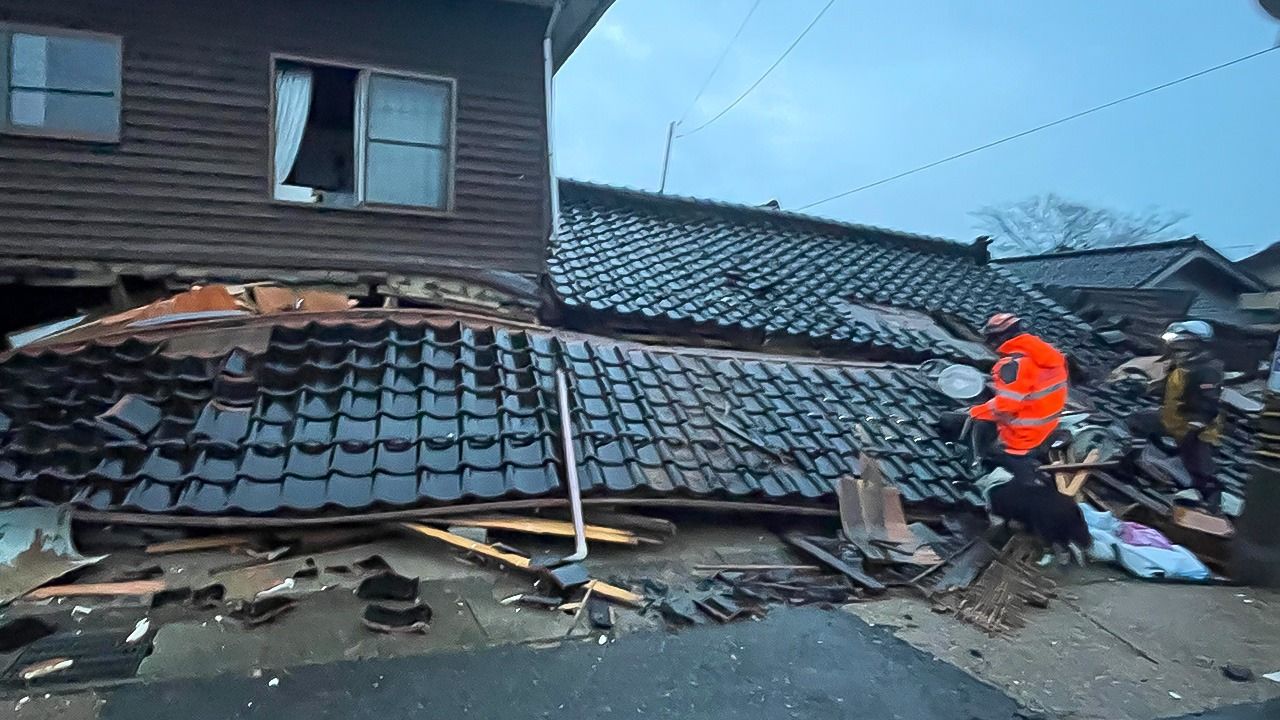
Japan: the road into Noto and the work that did not need applause
On January 1, 2024, the Noto Peninsula earthquake struck. Thirty minutes after the quake, Coco's handler received instructions from the association. At 1:30 a.m. on January 3, he left Chiba with Coco, picked up teammates in Tokyo, and headed toward the Monzen area of Wajima, Ishikawa Prefecture.
The trip itself was part of the rescue. The team prepared water, emergency food, fuel, sleeping bags and warmers, and also four days of dog food, water, treats, toys, pads and cleaning supplies. Disaster areas may lack power, water and open stores. Rescue cannot rely on impulse; it needs logistics, discipline, and a view of the dog as a team member rather than cargo in a vehicle.
Roads were cracked, red cones marked danger, rain began, and landslides blocked routes. A white SUV stopped them to warn that the road ahead had collapsed. Before they had even seen a trapped person, they had entered the second layer of danger: aftershocks, landslides, broken roads, rain and unfamiliar terrain.
At around 4:30 p.m. they reached a fire station used as a rescue base. They were soon sent to a collapsed house. The first floor had been crushed, nearby utility poles leaned, wires hung low, and darkness was coming. The handler put on a helmet and brought Coco out of the crate. On an ordinary day he would have let Coco settle into the surroundings first. That day there was no time.
Search dogs do not simply rush in and sniff. The team checked wind direction, because the scent of a trapped person moves with air. Coco was sent into the living area and then into a garage pressed under the second floor. The handler could not see him. Coco weighed only about 14 kilograms, so his steps on rubble were almost silent. Calling him back might interrupt the search; not calling meant trusting him in the dark.
The notes say a search dog's peak focus is limited, about ten minutes. Coco was recalled, and other dogs searched after him. They did not bark. At 5:11 p.m., with darkness falling, the search was suspended. The next day, other forces continued. This was not a dramatic rescue scene. It was a real part of search-and-rescue work: sometimes the dog is deployed, sometimes not needed, sometimes safely brought back without a headline.
The handler wrote that it may be a good thing when search dogs are not used, because it can mean other teams have already completed the search or dogs do not need to be sent into greater danger. Mature rescue work is not performance. A dog offers one more possibility when machines, eyes and ears are insufficient; that possibility helps rescuers spend precious time more wisely.
The ordinary days before disaster
If we write only about disaster sites, search dogs look like heroes who suddenly appear. In reality, most of their lives happen on days without alarms. There is no collapsed building, no crowd and no camera: only commands, ropes, rewards, repetition and breathing.
A dog first learns ordinary obedience: stop, wait, return, follow and remain steady. Only later can it enter more complicated search work: moving through rubble, distinguishing target scent from unfamiliar smells, ignoring noise, and marking a target with barking or another trained signal.
The handler is trained as well. He must read the dog's body language: tail movement, ear direction, sudden pauses, circling, digging, head-lifting, looking back. He must know when to let the dog continue, when to recall it, and when to stop the task to protect it. A good search dog is not merely brave. It has drive, but also control; it works, but can be stopped.
Human responsibility does not end when a dog is dispatched. Search dogs need medical care, rest, retirement and old-age support. Japan's Team 7 checklist included food, water, toys and pads for Coco. The stories of Shenhu and Bingjie remind us that care after rescue can last many years.
Wenchuan: Bingjie, Shenhu, and 67 silent names
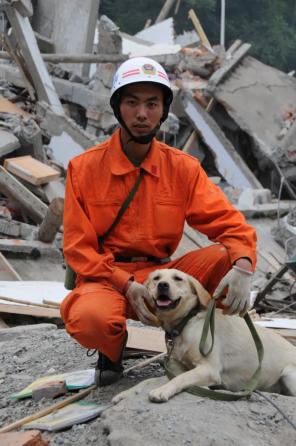
On May 12, 2008, the Wenchuan earthquake struck. After that day, the word ruins became concrete for many people in China: grey cement, black steel bars, white dust, crying, shouting, machinery and brief silences after aftershocks. Into that landscape went 67 search dogs.
Public reports by The Paper, CCTV and China News Service state that 67 search dogs took part in Wenchuan earthquake rescue. They moved through several severely affected areas and worked for days. The number should not be read too quickly. Sixty-seven means 67 bodies, 67 trained lives, 67 human-dog teams pushed into a real disaster.
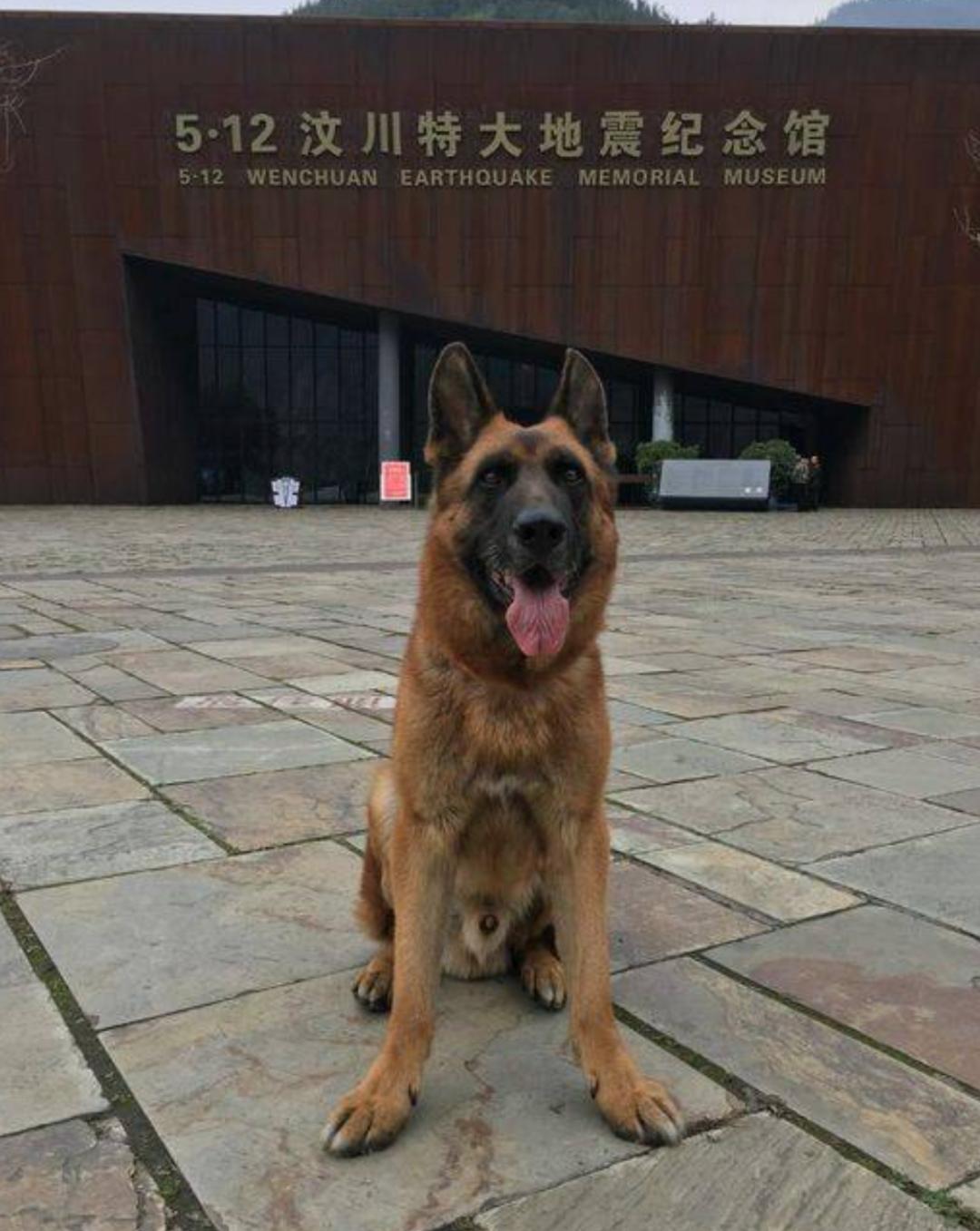
Bingjie: a young dog, a saved child, and time returning fourteen years later
Bingjie's story carries a quiet and cruel echo. CCTV reported in 2021 that Bingjie was just over one year old when she joined the Wenchuan rescue, roughly like a seven- or eight-year-old child in human comparison. Her handler Ouyang Honghong was 24, and Bingjie was the first search dog he handled. In the ruins, she was frightened at first. Ouyang had to encourage her and guide her forward.
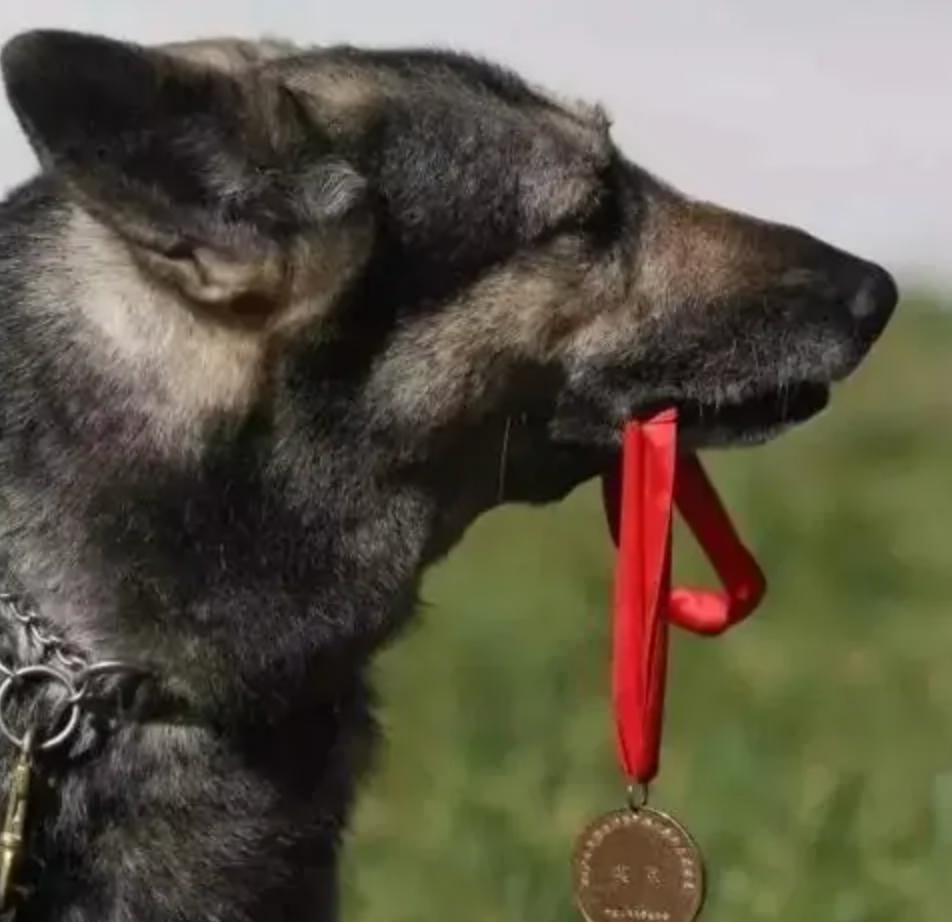
Bingjie found 13 survivors in the Wenchuan rescue. Reports also say broken glass and stones cut her nose, her mouth was full of blood, yet she continued working. After returning to Nanjing she became a meritorious dog, but she also carried injuries: declining heart and lung function and a damaged left hind leg. Later she joined rescue work after the 2008 snow disaster, the 2014 Kunshan dust explosion, and the 2016 Funing tornado.
Among the lives connected to Bingjie was a girl named Ren Siyu. Years after the quake, she looked for Bingjie. The search itself felt like an echo: in 2008 Bingjie found the child in the ruins; fourteen years later, the grown child searched through the world of humans for the dog that had once located her.
Time did not wait. When Ren Siyu looked for Bingjie, the dog was already old and physically changed by years of work and illness. A child could say, I have grown up. A dog could only show, through an aging body, that she had left her best years in rescue.
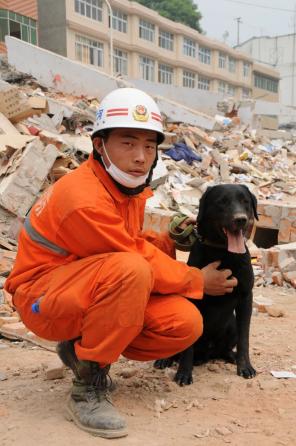
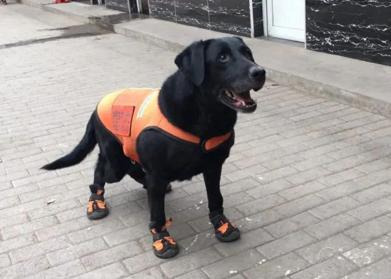
Shenhu: the dog who saved fifteen people and grew old in a handler's arms
Shenhu is another name repeatedly remembered. CCTV reported that in the Wenchuan rescue, Jiangsu sent six search dogs, including Shenhu from Nanjing Fire. He was three years old. The Paper reposted that during 14 days of high-intensity rescue, Shenhu helped rescue 15 survivors by identifying faint living scent.
The phrase 14 days should not pass lightly. For a human, 14 days can push body and will to the edge; for a dog, it means working, waiting, moving and working again in high-risk terrain. Reports say Shenhu's paw pads were cut by stones on the first day. After simple treatment and bandaging, he continued. To avoid delaying rescue, he ate compressed biscuits, was often thirsty, lost more than ten jin after the mission, and later suffered urinary stones and serious heart-lung damage.
Those details make the word merit concrete. It is not only a medal. It is cut paws, dust-filled breath, thirst, compressed biscuits, and the handler's pain at watching the dog continue.
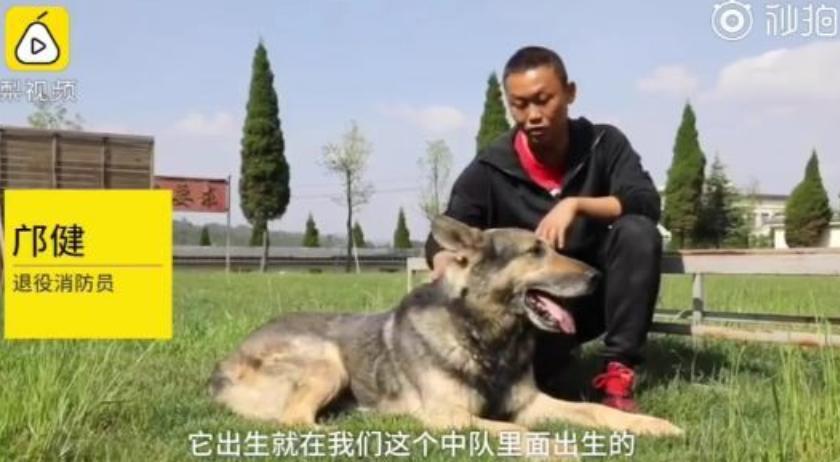
Shenhu retired in 2016 at age ten. Public reports describe the hope that he no longer had to be a great hero and could simply be a dog who basked in the sun and acted spoiled. But old age came quickly. In 2019 he suffered a stroke; after emergency treatment his health declined, and his handler could only push him outside for walks. On September 29, 2019, Shenhu died. Reports say he was 14, comparable to 98 human years; that night he suffered gastric torsion and died in the arms of his handler's wife on the way to hospital.
On May 12, 2020, a statue of Shenhu was completed. To build a statue for a dog is a late form of gratitude and an imperfect farewell. He once searched for living people in ruins; later he became a quiet image in sunlight, receiving remembrance for many search dogs who cannot all be named one by one.
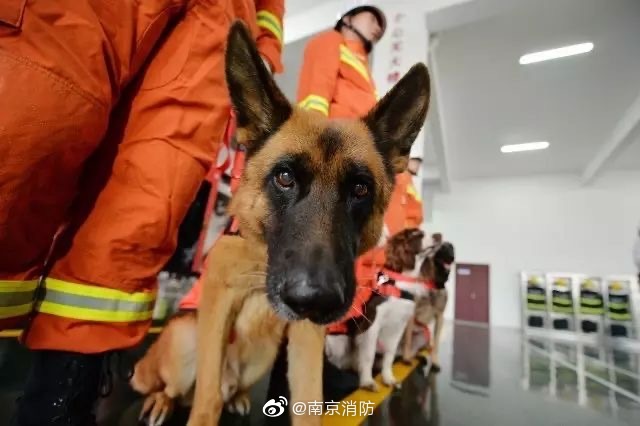
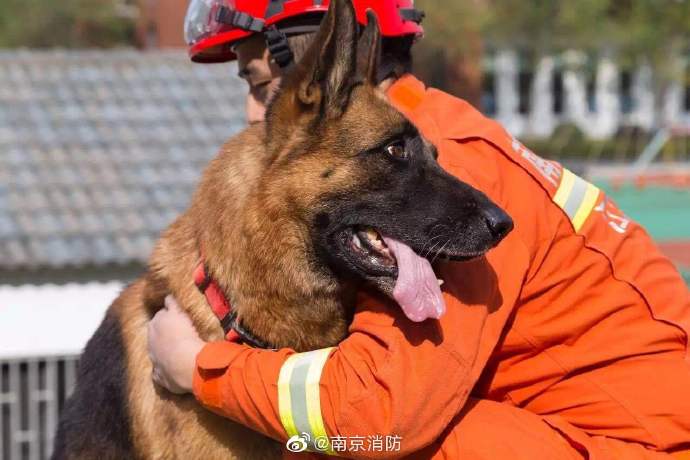
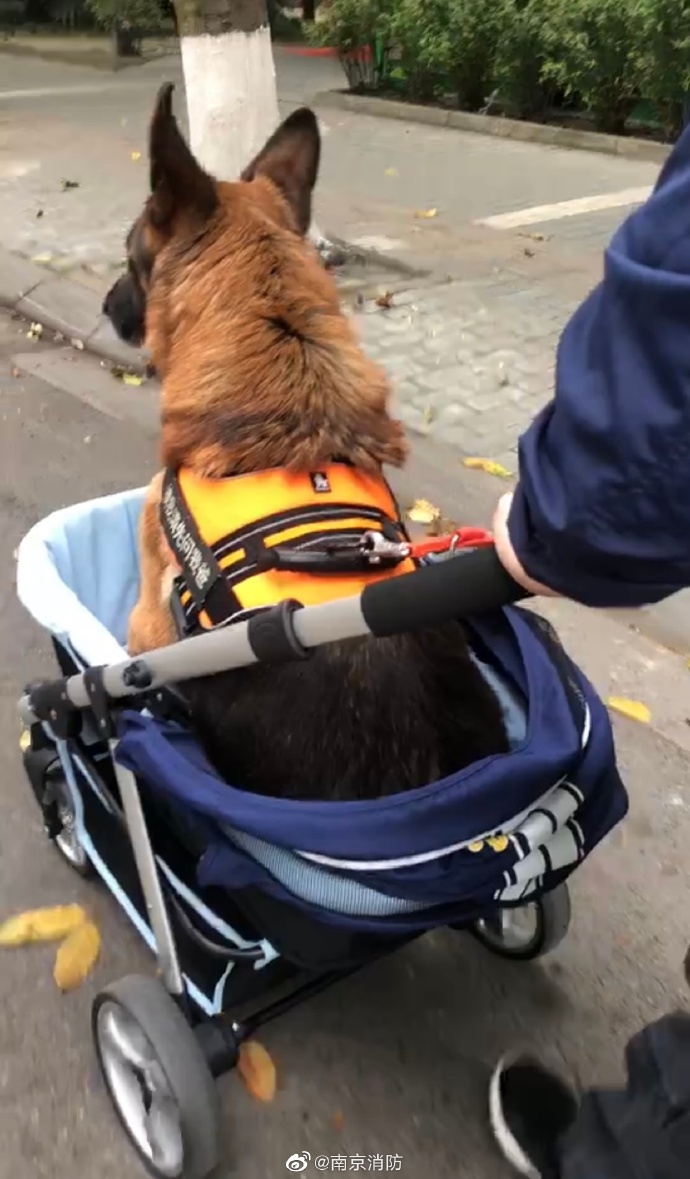
The other names: Jie Wei, Jie Nan, Jie Yuan, Xuanfeng, Haixiao, Xiling, Anlan, Jindiao, Yinhu
Wenchuan cannot be remembered only through Bingjie and Shenhu. Public materials also mention more names: Handan Fire's rescue dogs Jie Wei, Jie Nan, Jie Yuan and Xuanfeng entered the severely affected Yingxiu area on May 12, 2008; Beijing Fire dogs such as Haixiao, Xiling, Anlan, Jindiao and Yinhu were also named in public records.
These names are like a roll call from a disaster. We may not be able to find complete photographs and biographies for every dog, but once public sources confirm that they took part in rescue, they deserve a place in the archive.
Yinhu deserves special note. Public materials say that when Beijing Fire held a farewell ceremony for Yinhu in the winter of 2017, he was already 14 and had served for many years. He had joined the Wenchuan earthquake rescue and later served in major missions such as the Wangjialing mine disaster and the Tianjin Port explosion. His story reminds us that many search dogs do not appear once and vanish; their lives are spent through repeated alarms, training and deployment.
The group portrait of 67 search dogs is heavier than any single heroic story. Their paws were not steel; their noses were not machines; their lungs inhaled dust; their muscles tired. Yet they searched inch by inch because someone beneath the ruins might still be waiting.
The last bark remains deep in the ruins
If time could return to 2008, Bingjie would still be young, Shenhu in his prime, and many of the 67 dogs would be waiting beside the ruins for a command. They did not know they would be called meritorious dogs. They only knew the handler's command, rubble ahead, gaps, scent, and the possibility of a living person.
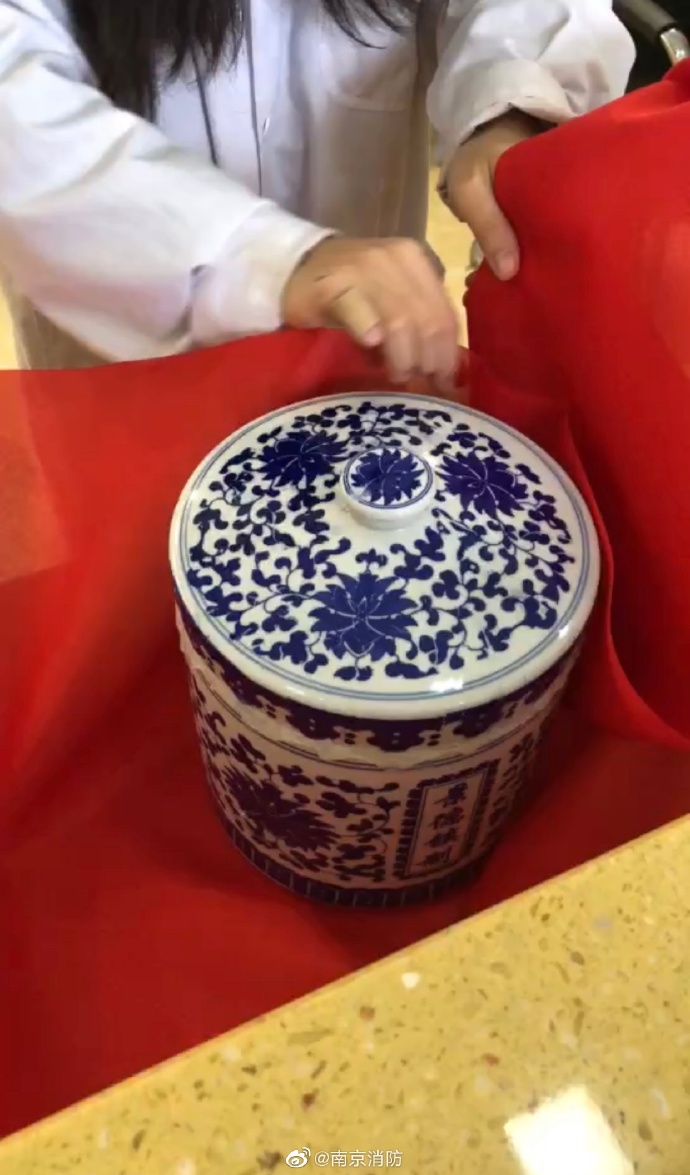
Today, they have all passed away. Shenhu, Bingjie and the 67 search dogs that entered Wenchuan's ruins can no longer hear the command to search. They can no longer bark when they find scent. They can no longer walk slowly in retirement sunlight.
But the story did not end with them. The little girl Bingjie found grew up. The people Shenhu helped save continued to have mornings and evenings. The faint breath captured by a dog's nose became entire human lives: school, work, family meals, arguments, reunion, ordinary days.
Coco's story tells us that helplessness after disaster can become long preparation. Bingjie and Shenhu tell us that preparation may one day be pushed into the field, and the cost may remain in a dog's body. Search dogs are not decorative corners of disaster narratives. They are part of rescue systems and proof that humans and animals can face catastrophe together.
Please remember them. Not to consume tears, but so that before the next disaster, more dogs and humans can be better trained, protected and cared for. They did great deeds, and they were also dogs who wanted water, rest and a handler's gentle touch. They are gone now, but if we keep honest records, their stories will continue.
Public sources and image credits
- Nippon.com: Not Much Time: My Mission to Find Earthquake Survivors
- Japan Rescue Dog Association
- CCTV News mobile: Shenhu, the Wenchuan meritorious search dog, has died
- CCTV.com: Search dog Shenhu rescued 15 people from Wenchuan ruins
- CCTV.com: Bingjie, the last Wenchuan search dog, saved 13 lives
- China News Service / Beijing Youth Daily: Dogs fighting beside humans on rescue roads
- The Paper repost: all 67 Wenchuan earthquake search dogs have died
- The Paper: the children Bingjie and her teammates searched for have grown up
💬 Leave a Message
Messages are reviewed before publication. Please keep them calm, factual, and respectful.